Extended Description of the Vector Map
Printable PDF Vector Map of Koto City Tokyo Japan detailed street map scale 1:3816 full editable Adobe PDF in Layers scalable, text all names, 58 MB ZIP
All street names, Main Objects, Buildings. Map for design, printing, arts, projects, presentations, for architects, designers, and builders, business, logistics.
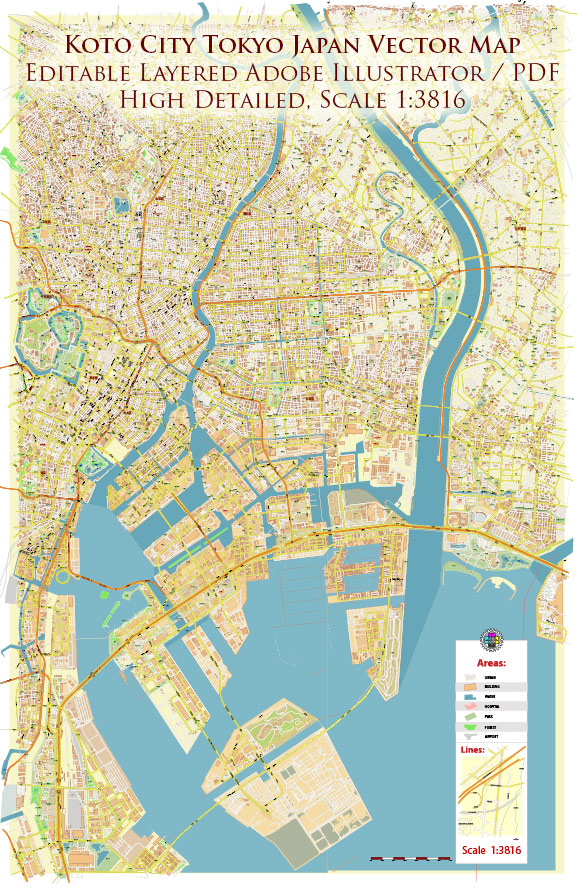
Koto City Tokyo Japan Map PDF Vector Exact City Plan High Detailed Street Map editable Adobe PDF in layers
Layers list:
- Legend and scale
- Grids
- Labels of roads
- Names of places (city, hamlet, etc.)
- Names of objects (parks, water, Hospitals)
- Names of main streets
- Names of residential streets
- Arrows of streets
- Main Streets, roads
- Residential streets
- Buildings
- Buildings 2 transparent 50%
- Airports and Heliports
- Water objects (rivers, lakes, ponds)
- Waterways
- Color fills (parks, hospital areas, land use, etc.)
- Islands
- Background and sea
The most exact and detailed map of the city in scale.
For Editing and High-Quality Printing
AO BRIEF — KŌTŌ CITY (TOKYO)
Cartographic / Production-Oriented Version
AREA OVERVIEW
- Administrative unit: Special Ward (Tokyo Metropolis)
- AO footprint: ~43 km²
- Urban type: High-density lowland coastal grid (delta + reclaimed land)
- Functional role: Residential + redevelopment + logistics interface with Tokyo Bay
TERRAIN & BASE SURFACE
- Relief: Completely flat (0–5 m, extensive sub-sea-level sectors)
- Genesis: Alluvial delta (Sumida–Arakawa system) + large-scale land reclamation
- Hydrology:
- Primary boundaries: Sumida River (W), Arakawa River (E)
- Internal: dense canal lattice (rectilinear + engineered cuts)
- Coastal interface: Artificial waterfront (Toyosu, Ariake, Shinonome)
Cartographic note:
- Use flat tone base + water network emphasis
- Canal hierarchy must be clearly differentiated (primary vs drainage)
ROAD NETWORK (PRIMARY STRUCTURE)
Pattern:
- Semi-orthogonal grid, distorted by canals and reclamation phases
- Orientation bias: E–W corridors dominate connectivity to central Tokyo
Primary arterials (map hierarchy — level 1):
- Eitai-dori (永代通り) — main W–E spine (critical outbound axis)
- Meiji-dori (明治通り / R306) — major N–S distributor
- Kiyosubashi-dori (清洲橋通り) — parallel N–S urban route
- Shiohama-dori (塩浜通り) — secondary E–W internal connector (local importance)
Secondary grid (level 2):
- Dense local streets with irregular block geometry near canals
- Fine-grain subdivision in older districts (Kiba, Monzen-nakachō)
Expressway system (level 0 / elevated):
- Shuto Expressway:
- Route 9 (Fukagawa Line)
- Bayshore Route (Wangan Line)
- Fully grade-separated, strong visual dominance
Bridges (critical features):
- Limited crossing points over Sumida / Arakawa
- Must be symbolized as mobility nodes / choke points
RAIL & TRANSIT LAYER
- High-density metro + commuter rail overlay
- Lines cut across AO with station-driven micro-centers
- Strong directional bias:
- Westbound commuter flow → central Tokyo
Cartographic note:
- Rail lines = primary structural overlay after roads
- Stations act as label anchors / density peaks
URBAN FABRIC
Zoning pattern:
- North / inland: traditional low-rise grid, dense parceling
- Central: mixed residential + canal network
- South (bayfront):
- High-rise residential clusters
- Large parcels, planned geometry
- Exhibition / logistics zones (Ariake, Toyosu)
Block morphology:
- Irregular in legacy zones
- Large-scale orthogonal blocks in reclaimed areas
DEMOGRAPHY (MAPPING CONTEXT)
- Population: ~540K+
- Density: high, but visually variable by district
- Older zones → fine-grain dense texture
- Waterfront → vertical density (towers, open spacing)
Population dynamics:
- Daytime: outflow to central Tokyo
- Nighttime: residential concentration
Cartographic implication:
- Density best expressed via building footprint intensity, not color fill
ENVIRONMENTAL FACTORS (MAP RELEVANCE)
- Flood control infrastructure critical but mostly invisible
- Liquefaction-prone zones (reclaimed land — southern AO)
- Minimal elevation variation → no need for contour emphasis
HAZARDS (STRUCTURAL)
- Flood / storm surge exposure (Tokyo Bay)
- Drainage dependency (pumping systems)
- Bridge dependency → network fragility
CARTOGRAPHIC PRIORITIES
- Emphasize:
- Water network (rivers + canals)
- Primary road hierarchy
- Bridge locations
- De-emphasize:
- Minor elevation (negligible)
- Label strategy:
- Selective road naming (Japan = limited official street names)
- Prefer district + landmark labeling over dense street labels
COMMAND TAKEAWAYS
- Flat delta megacity fragment with engineered hydrology
- Movement structure defined by E–W corridors + bridge nodes
- Urban texture shifts sharply: legacy grid → modern reclaimed blocks
- Water is the dominant organizing element (not terrain)
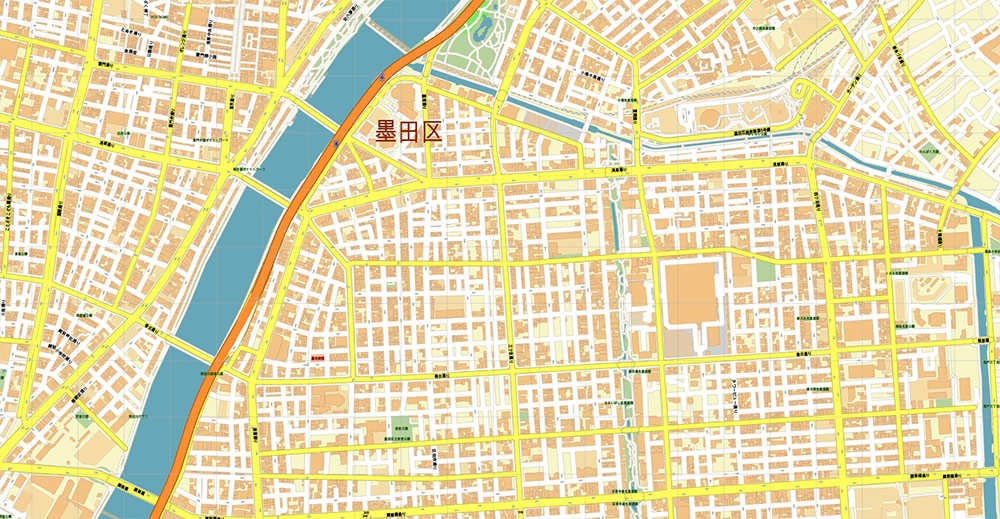
Koto City Tokyo Japan Map PDF Vector Exact City Plan High Detailed Street Map editable Adobe PDF in layers
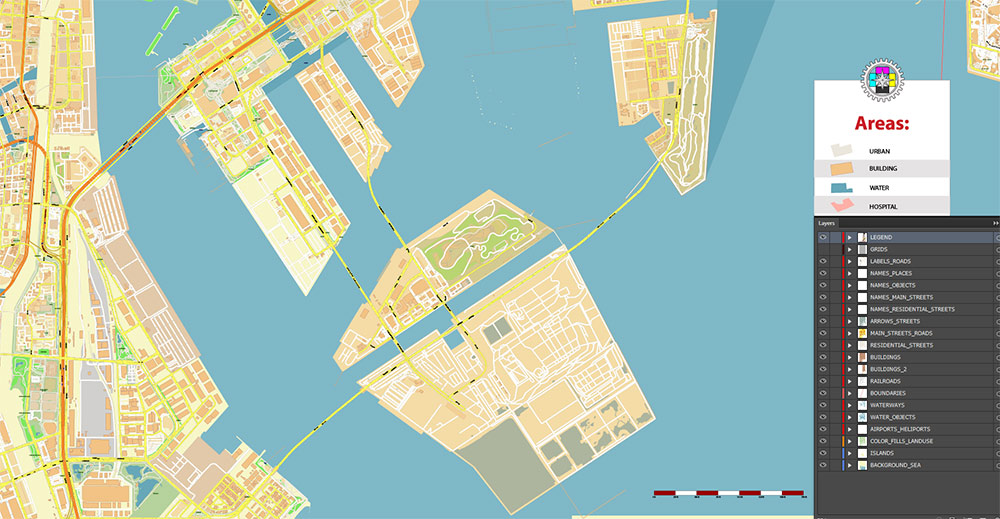
Koto City Tokyo Japan Map PDF Vector Exact City Plan High Detailed Street Map editable Adobe PDF in layers
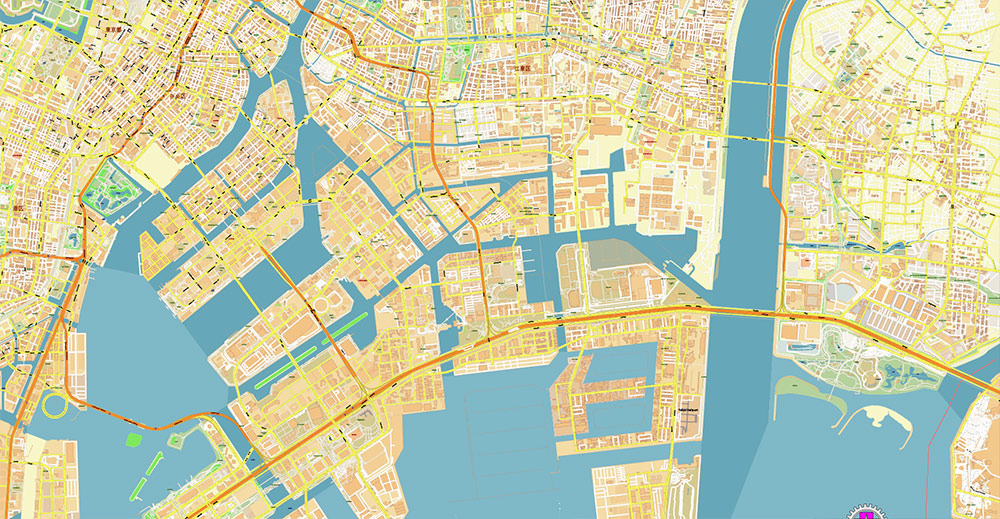
Koto City Tokyo Japan Map PDF Vector Exact City Plan High Detailed Street Map editable Adobe PDF in layers
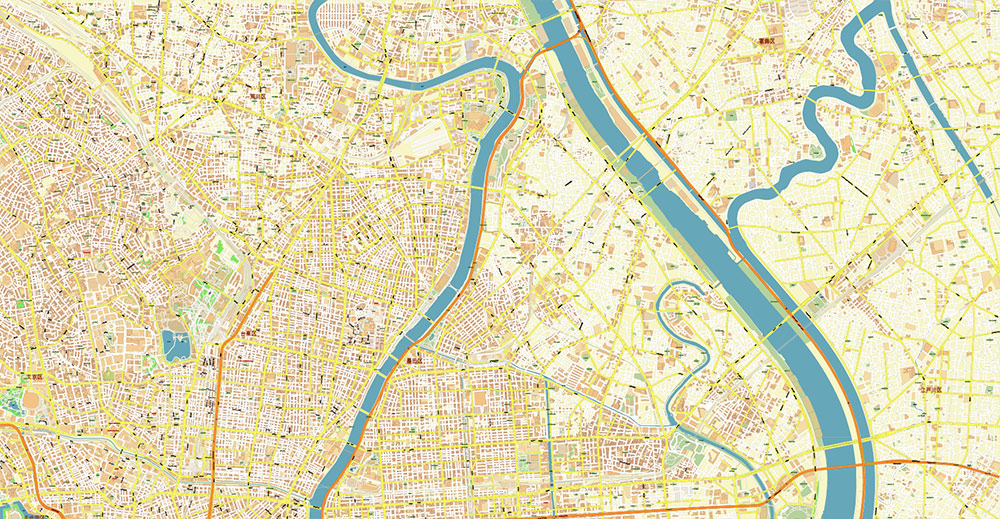
Koto City Tokyo Japan Map PDF Vector Exact City Plan High Detailed Street Map editable Adobe PDF in layers
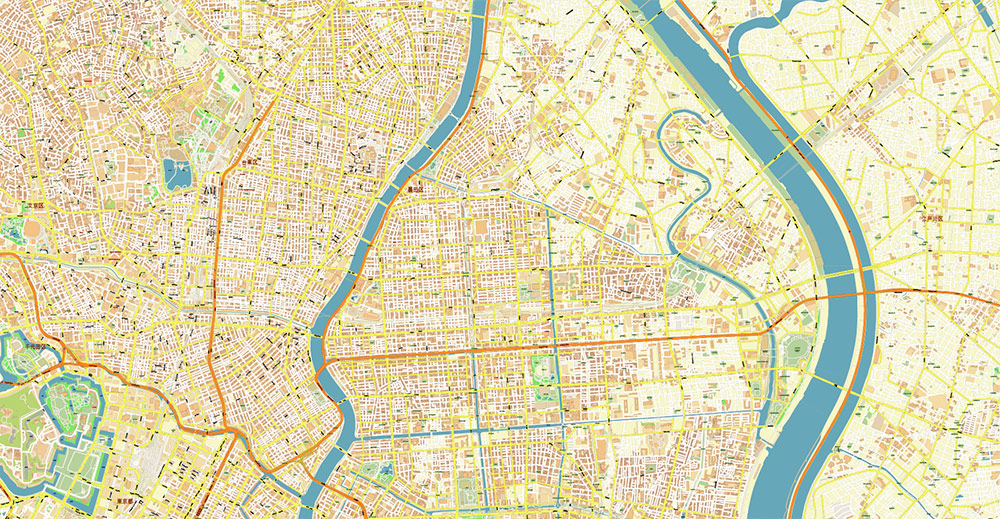
Koto City Tokyo Japan Map PDF Vector Exact City Plan High Detailed Street Map editable Adobe PDF in layers
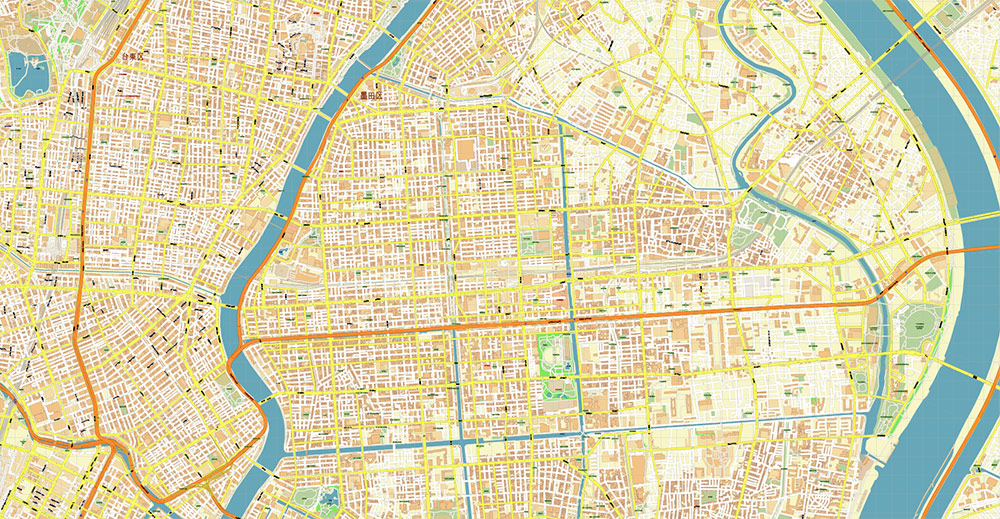
Koto City Tokyo Japan Map PDF Vector Exact City Plan High Detailed Street Map editable Adobe PDF in layers
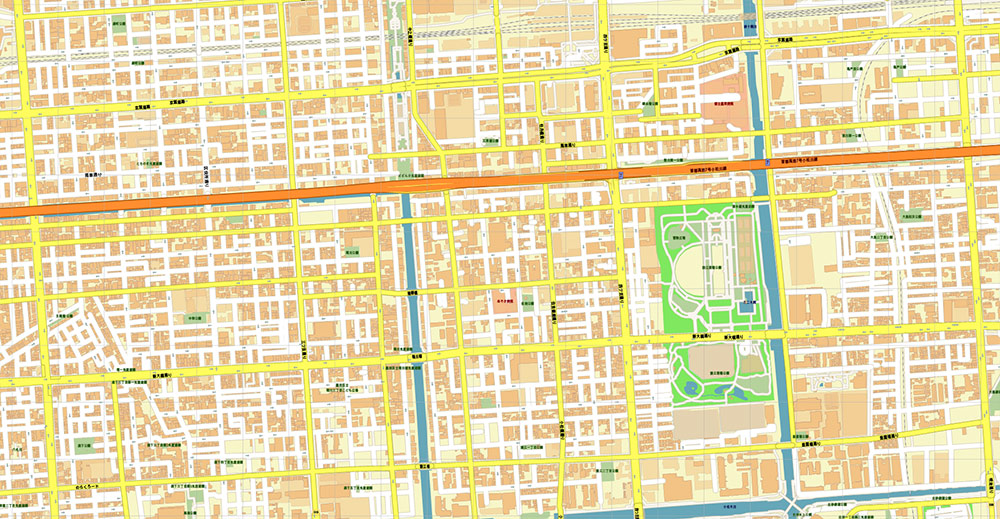
Koto City Tokyo Japan Map PDF Vector Exact City Plan High Detailed Street Map editable Adobe PDF in layers
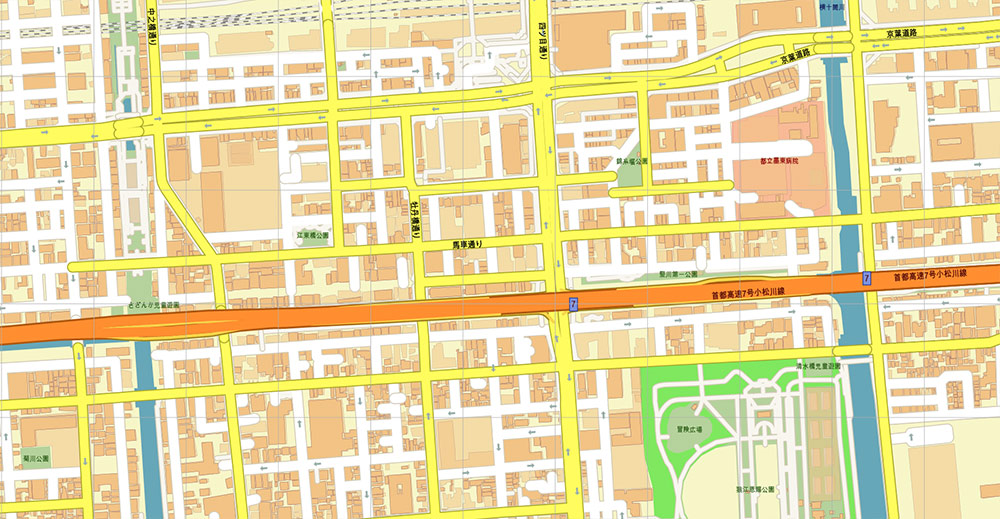
Koto City Tokyo Japan Map PDF Vector Exact City Plan High Detailed Street Map editable Adobe PDF in layers



 Author: Kirill Shrayber, Ph.D. FRGS