Urban plan Brasov Romania PDF: Cartography for Business and Tourism
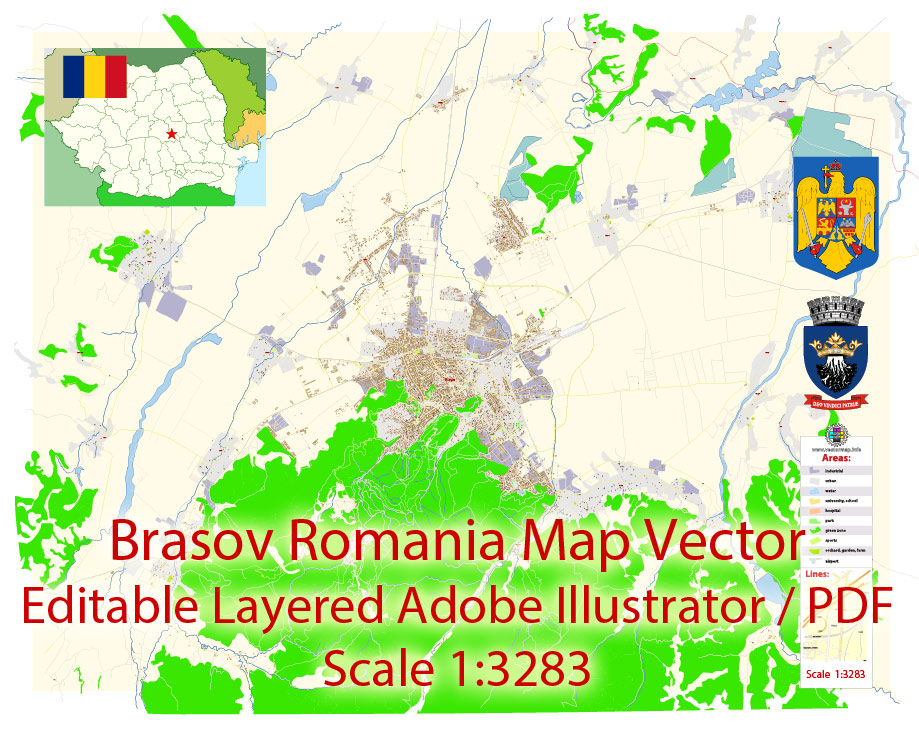
Gallery of Images "Urban plan Brasov Romania PDF":
Urban plan Brasov Romania PDF Editable Layered Maps
Brasov, Romania
Brasov (in Romanian - Braşov) is an interesting city in Romania, belonging to the ten largest cities in the country. This is not at all surprising, because Brasov is located in the center of Transylvania and is a place that all tourists who have come to Romania are interested in. What is good about Brasov? Firstly, it is located in a ring of mountain peaks of the Eastern Carpathians, which makes it attractive in the eyes of skiers in the winter season. Bright mountain extreme is provided for you! Secondly, in the summer, thanks to the good climate, Brasov is a picturesque corner of nature, where the mild climate, emerald greenery, the beauty of the mountains, and wonderful local attractions are harmoniously intertwined. Brasov will not leave anyone indifferent, regardless of what time of year you come to visit it.
History of Brasov
Brasov appeared on the map of Romania in the Middle Ages. Even today, the city is imbued with Saxon charm. And how did it all start? The Saxons appeared on Romanian soil at the beginning of the thirteenth century. Moreover, their colonial locality fell precisely on the places where Brasov is now located. Perhaps, the unique history of the city began from these moments. The first written mention of Brasov as a Corona settlement was recorded in 1235, but it is not known exactly when the city was founded, because, unfortunately, documentary written evidence of this fact was lost over time. Now there is a Black Church on the site of the Korona settlement — one of the attractions of the modern city. Some historians claim that there are mentions of Brasov dating back to 1251. Whatever it was, over the course of its history, Brasov has changed both its appearance and its names. The following variants are known: Brasco, Brosseau, Kronstadt, Stephanopolis, Orashul-Stalin, and Brasov.
The history and architecture of the city attracts many tourists
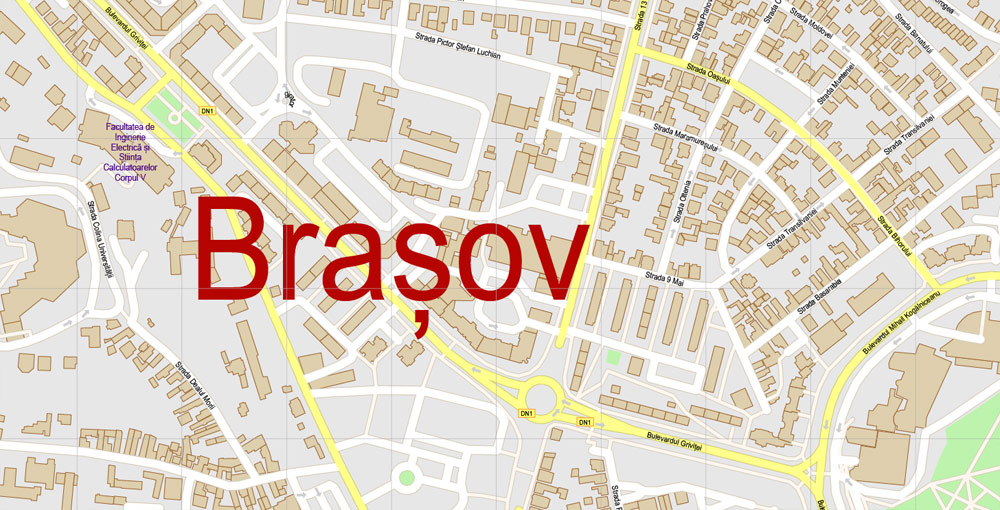
Brasov is famous for the fact that the first printing house in Transylvania was founded in the city (1535) and the first printed Romanian book was published. According to some sources, the first Romanian-language school in the country was opened in Brasov in 1559. The city is also the birthplace of the famous historical character — the leader of the Transylvanian Protestants Johannes Honterus.
Residents of the city actively participated in the revolution of 1987, which overthrew the Ceausescu regime. The struggle of the city went down in Romanian history under the name "Brasov uprising".
To date, Brasov is not only a major economic center but also the most visited Romanian city by tourists. The volume of local industrial production is so large that it can compete with the capital of Romania. More than 40 large factories and factories are successfully operating within Brasov, producing trucks, tractors, spare parts for cars, cables, cement, confectionery, and woolen fabric. By the way, the Brasov truck factory is the only one in the country. Locals work like bees, but they do not forget about the guests, welcoming them cordially in numerous hotels and generously treating them in cozy and colorful restaurants.
The medieval charm of the city often makes it a platform for filming feature films, so don't be surprised if you suddenly get caught in the camera lens.
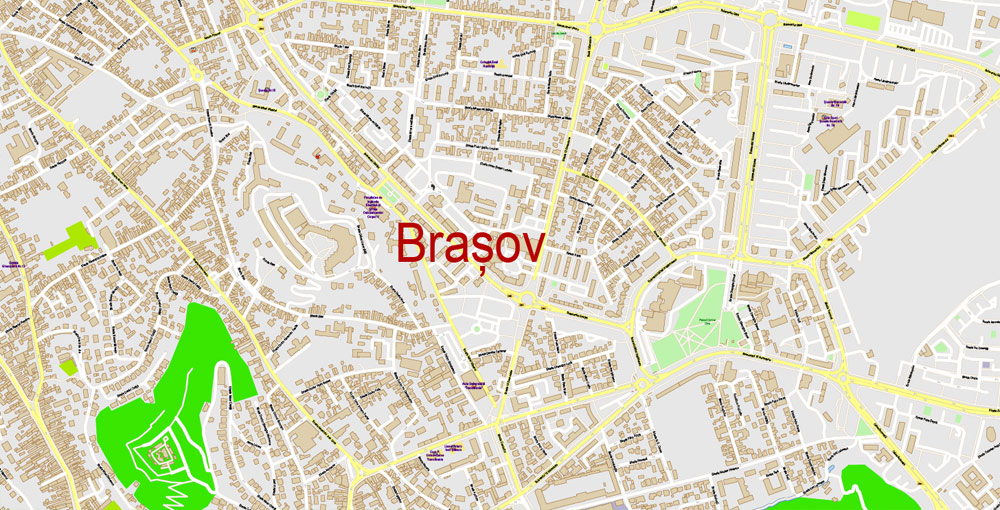
The average summer temperature is about 25 degrees Celsius. If we talk about winter, then at the foot of the mountain peaks the temperature is approximately 15 degrees Celsius. However, as you climb the mountains, it gets colder, so when planning a trip to Brasov to go skiing, take more warm clothes with you. If we compare, for example, with the Alps, then it is cooler in Brasov.
The local airport is just getting ready to open. Apparently, this joyful event will happen very soon, but for now, tourists have to move in the usual way: by train and bus. It should be noted that about 20 trains run from Bucharest to Brasov every day, so you will not have to wait long for departure from the capital. In addition, the Brasov railway connects with major cities of the Czech Republic, Slovakia and Hungary - carefully plan your route if you travel in Europe.
There is also such an option for arriving in Brasov: you can use the two nearest airports (in Sibiu and Bucharest), and then rent a car and drive about 3 hours to Brasov, admiring the oncoming landscape. It should be said that car rental is a popular service in Romania.
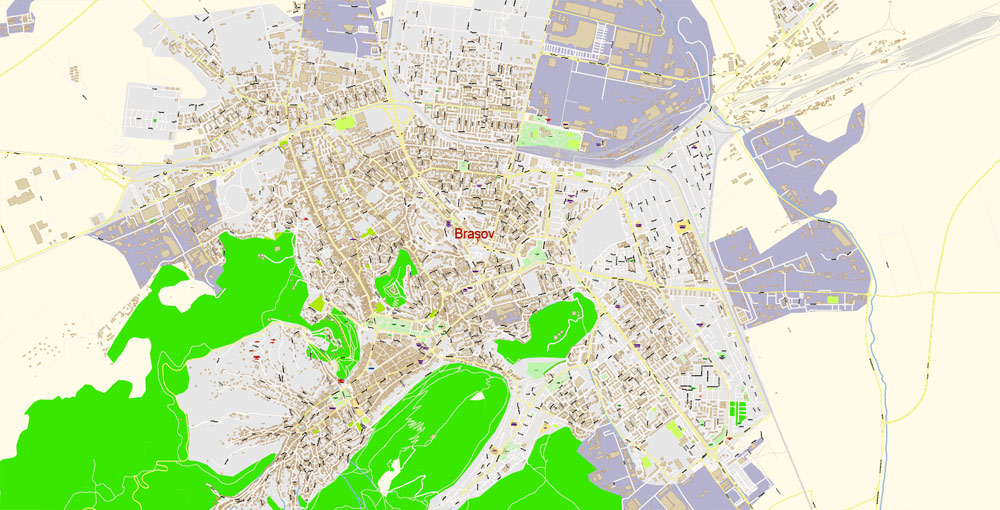
Residents of the city who do not have their own car travel by buses and trolleybuses, less often by taxi. As a rule, taxi drivers for the most part are used to serving visitors. The price of their services ranges from $ 0.4 per 1 km or 1.5 RON, however, it is recommended to immediately specify the total amount of the trip so that taxi drivers are not tempted to mercilessly round it up - this is often the sin.
Urban transport
Traveling on buses and trolleybuses will cost about 1.3 RON (about 0.33 dollars). Meanwhile, if you plan to travel all day or come, for example, for a week, it is better to get a travel card — so you will be able to save money. Do not try to ride a "hare" — they catch you often, they fine you mercilessly. Local fines are about 25-50 dollars (or 100-200 RON). By the way, stock up on coupons for the future, because not at every stop you can find a kiosk. Meanwhile, the same coupons are on sale in supermarkets and kiosks selling the press.

Sights of Brasov
In fact, Transylvania originates from this city: mountains dotted with frequent forests, mysterious Gothic temples, legendary castles - all this juicily expresses the local Romanian flavor. The older part of the city is actually located in a narrow valley between the mountains. There are a lot of narrow streets in Brasov, fabulous old houses covered with colored tiles, and ancient churches. Due to the fact that Hungarians, Germans and Jews previously lived in Brasov, the architecture of the city has a unique multinational appearance. Brasov is often called Romanian Prague or Salzburg. The scattering of local styles amazes the eyes of even the most sophisticated travelers: Baroque, Renaissance, Gothic - all this harmoniously intertwines and pleases with its splendor, both residents of the city and its guests.
If you want to see a complete panorama of Brasov, go to the tower, which is located on the city council square called Piazza Sfatului. If you are here, then also go to the historical museum located in the same building. Here you will see many exhibits telling about the foundation and development of the city. By the way, this square is the place where buildings of different historical eras are collected, here you can meet houses of both the fourteenth and nineteenth centuries. On the south side of Piazza Sfatului is the legendary house of Frau Hirschner, being a widow, Appolinaria herself supervised the construction of the building. It comes from the sixteenth century.
If you come to Brasov in the summer, you will find on this square a music festival called "Golden Deer", smoothly flowing into autumn, and a local week-long beer festival, which Romanians brew according to old recipes.
In general, the historical part of the city is perfectly preserved.

By tradition, all tourists, without exception, strive to see the main historical landmark of Brasov - the Black Church (formerly the Church of St. Mary). Perhaps it is the most mysterious Gothic cathedral of the Middle Ages in Southern and Eastern Europe. The date of the beginning of construction is 1383. The name of the church has its own history: at the end of the 17th century, a fire broke out in the cathedral, blackening the outer walls of the building to black. The Black Church is a little sinister on the outside but full of treasures on the inside. Of particular interest is the ancient organ, which still sounds loud and melodious, as well as the church bells, the largest in Romania.
In addition to the Black Church in Brasov, there is still a scattering of other interesting temples. Tourists, as a rule, visit the Church of St. Bartholomew (1223), the Church of St. Nicholas (1495), and the Church of Saints Peter and Paul.
The first school in Romania, built-in 1495, is located near the Church of St. Nicholas, here you can sit at the desks of the 19th century and find out that many Romanian printed books were from here.
Catherine's Gate and the Shakey Gate are interesting old monuments of Romanian history. The first is very ancient - originally from 1559, the second was built nearby in 1828 by order of Emperor Franz I of Austria. Catherine's Gate is very beautiful, decorated with tall spires and elegant turrets, and in the center of them is the ancient coat of arms of the city of Brasov.
Be sure to admire one of the narrowest streets in Europe, which is located in Brasov. Its width, depending on the fragments, is only 1.1-1.35 meters, and its length is 80 meters. In 2003, this street "Strada Sforii" was restored.
In addition to the aforementioned Museum of History, tourists usually visit several more colorful places, such as:
* Museum of Ethnography;
* Museum of Art;
* Puppet Theater;
* Opera Palace;
* Drama Theater;
* Philharmonic Hall.
Gallery of Images "Urban plan Brasov Romania PDF":
Brasov Region Romania: Vector City Maps and Cartography
Brasov Romania: Digital Cartography products, vector maps of Romanian Cities
Editable Layered Vector Maps of Brasov Romania: AutoCAD DWG DXF, Adobe Illustrator, PDF
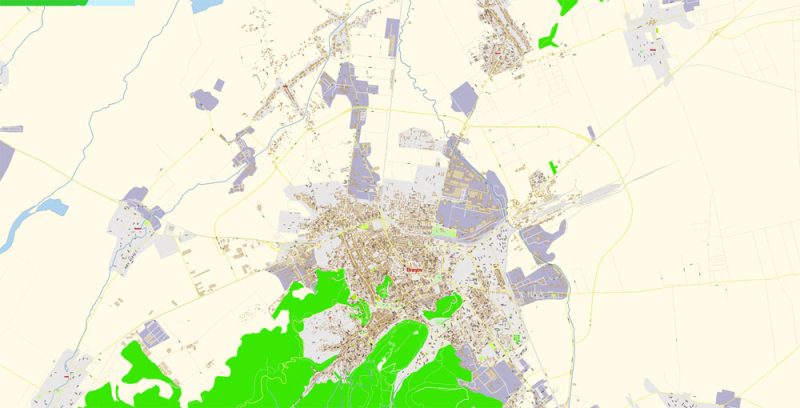
BRASOV Romania, Travel and Tourism: Vector Maps
Urban Plans in Romania: Editable Maps for Printing
- Urban plan La Porte Baytown Texas ai
- Urban plan Arcata Eureka California PDF
- Urban plan Staten Island New York PDF
- Urban plan Montreal Grande area Canada
- Urban plan Sacramento California 17
- Urban plan Edmonton PDF
- Urban plan Nantucket Marthas Vineyard
- Urban plan Denmark Admin
- Urban plan Austria Vector Relief Roads
- Urban plan Dominican Republic Detailed a3
- Urban plan Albuquerque Rio Rancho New Mexico SVG
- Urban plan Flagstaff Arizona PDF
- Urban plan New York City CDR
- Urban plan Saint Petersburg S1
- Urban plan Spokane PDF
- Urban plan Nice France PDF
- Urban plan Bucharest Romania PDF
- Urban plan Shreveport Bossier PDF
- Urban plan San Antonio Texas 3 10 PDF
- Urban plan Sochi Russia
- Urban plan Washington DC pdf
- Urban plan Canada Admin Road
- Urban plan Munchen Germany
- Urban plan US Canada all roads pdf
- Urban plan Moscow 4
- Urban plan Denver Colorado PDF
- Urban plan Toa Baja Puerto Rico PDF
- Urban plan Krakow Poland
- Urban plan Cape Canaveral Florida PDF
- Urban plan Launceston Tasmania
- Urban plan Tomsk
- Urban plan Ankara Turkey pdf
- Urban plan Alameda Oakland California
- Urban plan Austria Vector Roads CDR
- Urban plan Salt Lake City Utah ai
- Urban plan Brasov Romania
- Urban plan Macon Georgia PDF
- Urban plan Macon Georgia
- Urban plan Karachi Pakistan
- Urban plan Amsterdam Netherlands 17 AI
- Urban plan Lahore Pakistan
- Urban plan Lagos Nigeria
- Urban plan Linz Austria PDF
- Urban plan Heathrow Feltham Hounslow AI
- Urban plan Luxembourg City PDF
- Urban plan Pforzheim Germany pdf
- Urban plan Tampa Bay Florida
- Urban plan Monaco DWG DXF
- Urban plan Reykjavik Iceland PDF
- Urban plan Minsk Belarus pdf
- Urban plan Perm
- Urban plan Kaliningrad PDF Russia
- Urban plan Belfast Ireland PDF
- Urban plan Oxford UK
- Urban plan Inari Saariselka
- Urban plan Rouen Metro France PDF
- Urban plan Yuzhno Sakhalinsk
- Urban plan Graz Austria PDF
- Urban plan Bern Switzerland
- Urban plan Germany Admin PDF
- Urban plan Bologna Italy pdf
- Urban plan Genoa
- Urban plan Newport Norfolk Virginia Beach CDR
- Urban plan Budapest Hungary
- Urban plan Saint Petersburg Russia
- Urban plan San Jose California PDF
- Urban plan Yokohama Japan 13 ai
- Urban plan Adelaide Australia ZIP PDF
- Urban plan Brisbane Australia 13 PDF
- Urban plan Yakutsk
- Urban plan Marseille France
- Urban plan UK Ireland PDF
- Urban plan Pacific Coast US Canada
- Urban plan Bergen Norway pdf
- Urban plan Wroclaw Poland
- Urban plan Ireland Admin
- Urban plan Randolph county North Carolina
- Urban plan Toronto Billy Bishop PDF
- Urban plan Bordeaux France
- Urban plan Sevastopol Ukraine
- Urban plan Jefferson City Missouri
- Urban plan Smolensk pdf
- Urban plan Las Vegas Nevada 3 10
- Urban plan Leipzig PDF
- Urban plan Chicago Illinois CDR
- Urban plan Barcelona Spain
- Urban plan Nantes France
- Urban plan full Poland 2
- Urban plan Linz Austria
- Urban plan Tucson Arizona
- Urban plan Portland Oregon
- Urban plan Rochester New York PDF
- Urban plan Cincinnati Ohio
- Urban plan Sydney Australia 4
- Urban plan Evansville Indiana CDR
- Urban plan Portland Maine
- Urban plan Amsterdam Netherlands 13 PDF
- Urban plan Christchurch New Zealand