Urban plan Kaliningrad PDF Russia: for business and education
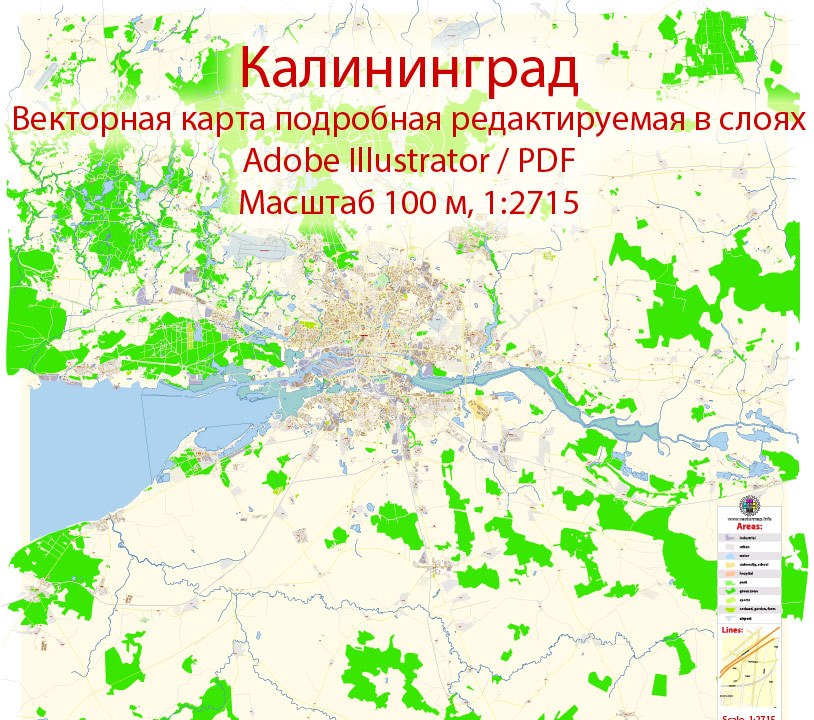
Video: Simple Vector Map Works "Urban plan Kaliningrad PDF Russia":
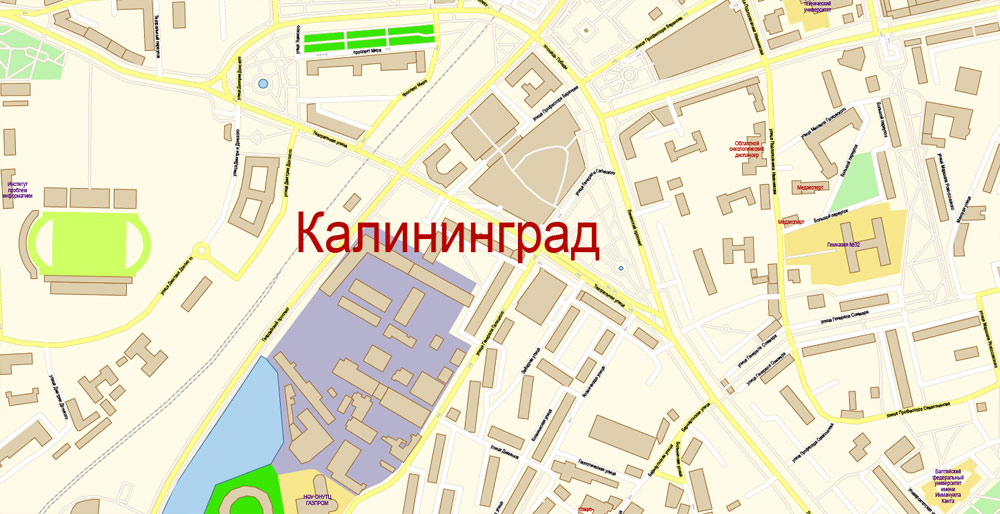
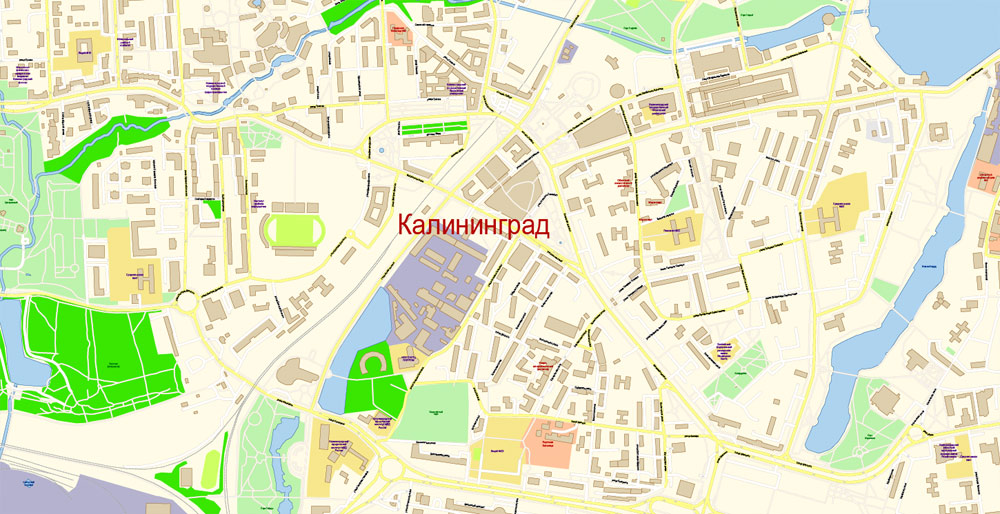
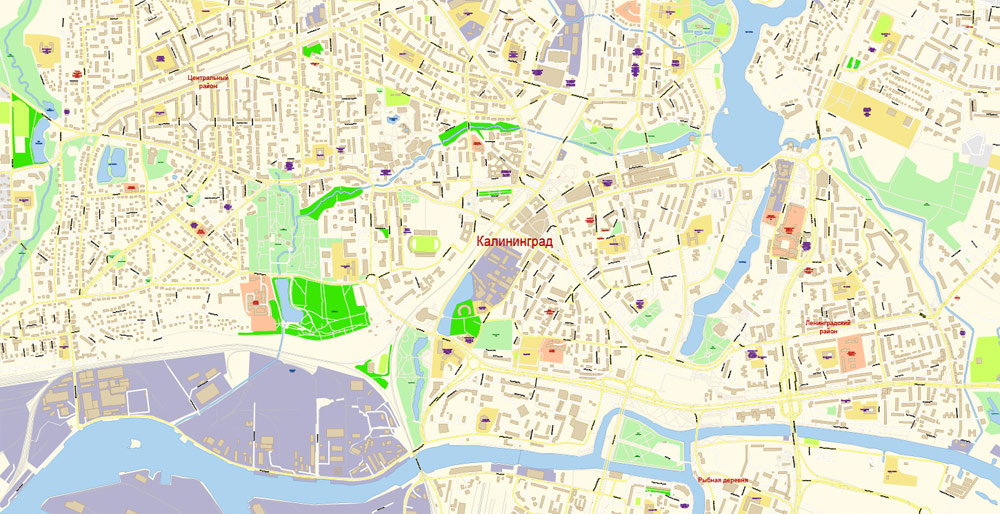
Urban plan Kaliningrad PDF Russia: High Detailed City Map
Kaliningrad is a city in the northwest of Russia, the administrative center of the Kaliningrad region. It is unique in that it has no borders with other regions of Russia, is adjacent only to Poland and Lithuania, and is washed by the Baltic Sea.
A city with a rich past, Kaliningrad belonged to Germany for a long time. The history of the city began in 1255 when the knights of the Teutonic Order founded a fortress on a hill and named it Konigsberg (Royal Mountain).
For the first time, the city passed to Russia in 1758, after the victory in the Seven Years' War. However, in 1762 the lands were returned to the Kingdom of Prussia.
Konigsberg became Russian again in 1946, when, after the end of the Great Patriotic War, part of the German territory was transferred to the USSR. At the same time, a new name appeared – Kaliningrad, in honor of the Soviet party leader Mikhail Ivanovich Kalinin. Kaliningrad has no direct access to the sea, the city is located at the confluence of the Pregoli River into the Kaliningrad Bay, but there is a large port and the headquarters of the Baltic Fleet of the Russian Navy.
There are beaches in towns in Kaliningrad's surrounding areas, they can be reached by bus, minibus or train. But the city itself smells of the sea, sometimes it is windy and rainy here.
The City of Philosophers
One of the world's greatest thinkers, Immanuel Kant, was born and lived in Konigsberg. His grave is located near the walls of the Cathedral of the XIV century, there is also a Kant museum and a concert hall where organ concerts take place.
Interestingly, the philosopher lived just at the time when the city first passed to the Russian Empire, so he took the oath to Empress Elizabeth. When the province returned to Prussia, Kant did not want to break his oath, so he remained a citizen of Russia until his death.
Cultural City
Kaliningrad regularly hosts a variety of musical events, including international ones: the M. Tariverdiev Organ Competition, the Kaliningrad City Jazz Jazz Festival, the Kaliningrad In Rock Festival, and many others. Every autumn, the Baltic Seasons Art Festival takes place – theater troupes from all over Russia present their best performances.
City of Amber
One of the symbols of the city is the famous amber museum in the red brick tower, once it was part of the system of defensive structures of the city. The museum's collection includes "solar" stones of different shades, shapes, and sizes – the most "serious" exhibit weighs more than 4 kilograms. The world's largest amber mosaic "Rus" is also located here – it weighs more than 70 kilograms and consists of almost 3,000 fragments.
A city with academic traditions
More than 20 higher educational institutions have been opened in Kaliningrad. The largest is the I. Kant BFU, part of its buildings once belonged to the University of Koenigsberg "Albertina", it began its work in 1544.
The city's universities also train military sailors, fisheries specialists, lawyers, and others. Unfortunately, during the Second World War, the historical center of Kaliningrad was severely destroyed. But nowadays many buildings are being restored.
For example, in 2007, the Fish Village was reconstructed – a trade and craft quarter in the German style. The Kaliningrad Zoo is one of the largest and oldest in Russia and is a member of the European Association of Zoos and Aquariums.
It was opened in 1896 by German entrepreneur Hermann Klass. The Museum of the World Ocean is a unique exhibition complex, some of the "exhibits" are located on the water: real ships (research and military) are moored along the Embankment of the historical fleet, and museum expositions are inside. The second part of the complex is on land, where you can see aquariums with exotic fish, collections of shells, corals, and the skeleton of a huge sperm whale. The Royal Gates are located near the Museum of the World Ocean, their image was chosen as a symbol of the city during the celebration of the 750th anniversary of Konigsberg. Today there is an exposition "The Great Embassy", telling about the origin and development of the city. Visitors to the gate are greeted by the keeper of the city keys - a Prussian cat, it is customary to stroke him for good luck.
The population is 489,359 people (2021).
The leading industries of modern Kaliningrad are mechanical engineering and metalworking. Among the largest enterprises are the shipbuilding and ship repair plant "Yantar", the plants "Wagon Builder" and "Electric Welding", the car assembly plant, the plant "Stroydormash", plants for the production of ship and fish processing equipment, fishing equipment. Pulp and paper, food (mainly fish and canned fish), and light industries are also developed.
Kaliningrad is a major center of marine fisheries and the fishing industry. Trawling, refrigerated, and expeditionary tuna fishing fleets are based here.
The pride of Kaliningrad is the amber industry. The Kaliningrad Amber Combine in the village of Yantarny produces over 350 items of amber products.
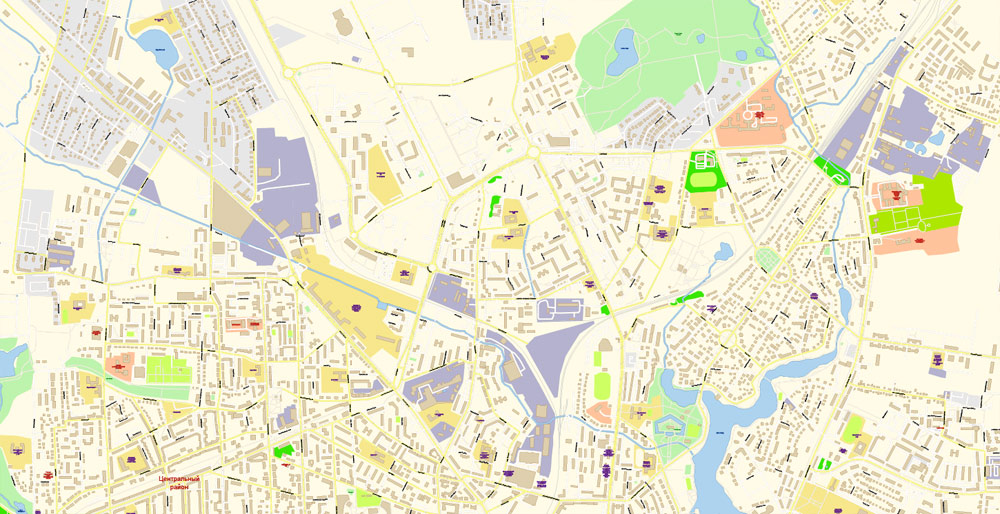
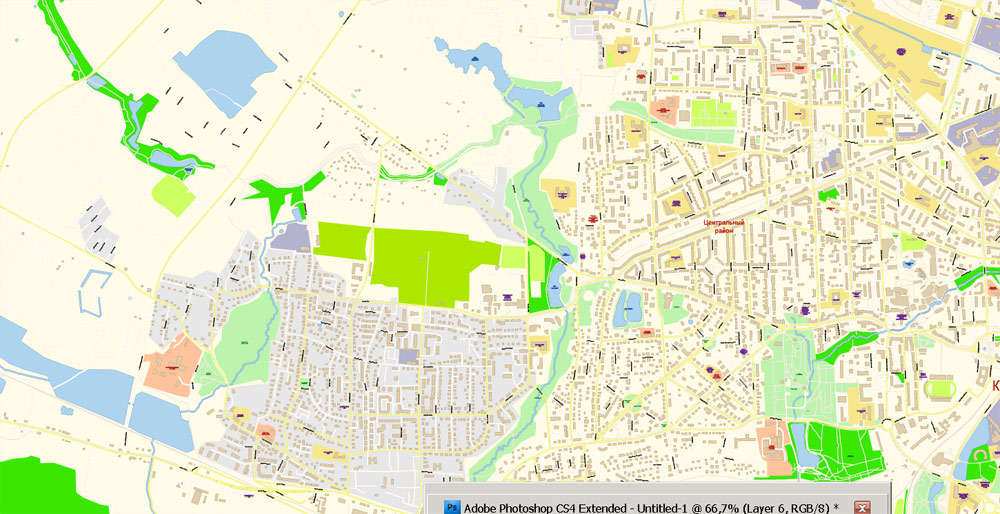
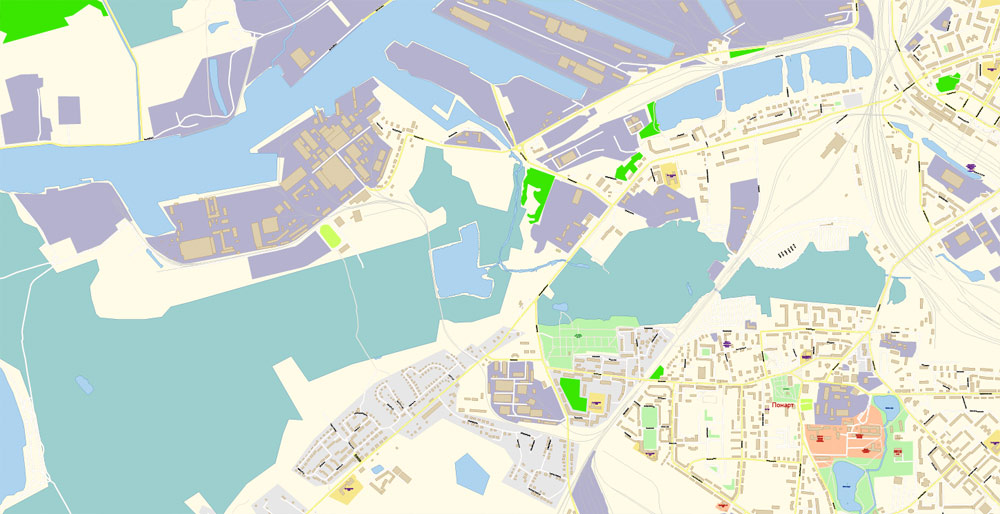
Related Images "Urban plan Kaliningrad PDF Russia":
Russias Exclave of Kaliningrad map for Historic Research and Education, fully editable Vector
Urban Planning Kaliningrad Russia editable printable maps
- Urban plan Baltimore Counties PDF
- Urban plan Boston
- Urban plan Cairns Australia PDF 17
- Urban plan Yaroslavl
- Urban plan Adelaide Australia 13
- Urban plan Toledo Spain pdf
- Urban plan Reading Pennsylvania PDF
- Urban plan Cleveland Ohio Low
- Urban plan Laval Quebec PDF
- Urban plan World Relief Political PDF
- Urban plan Raleigh North Carolina ai
- Urban plan Cincinnati Ohio ai
- Urban plan Turku Finland
- Urban plan Milano
- Urban plan Launceston Tasmania PDF
- Urban plan Charleston South Carolina
- Urban plan Relief US flat
- Urban plan Beijing China AI 15 eng
- Urban plan Istanbul Turkey PDF
- Urban plan New Haven Connecticut
- Urban plan Brisbane Australia 13 PDF
- Urban plan Delray
- Urban plan Annapolis Maryland
- Urban plan Frankfurt am Main metro PDF
- Urban plan Fiji
- Urban plan Tehran Iran PDF
- Urban plan Aarhus Denmark pdf
- Urban plan Belfast
- Urban plan Paris
- Urban plan Albany New York
- Urban plan Tbilisi Georgia
- Urban plan Albany NY
- Urban plan Manila Grande Philippines pdf
- Urban plan Prague Praha metro Czech Republic
- Urban plan Spokane Washington AI
- Urban plan Istanbul Turkey ai
- Urban plan Moscow S1
- Urban plan Miami Florida
- Urban plan Vienna Wien Austria pdf
- Urban plan Albury Wodonga Australia PDF 17
- Urban plan Minneapolis Saint Paul Minnesota
- Urban plan Travis County Austin Texas PDF
- Urban plan Oakland Berkeley California
- Urban plan Vladivostok