Urban plan Barcelona Spain: City Map for Education, Business, Tourism
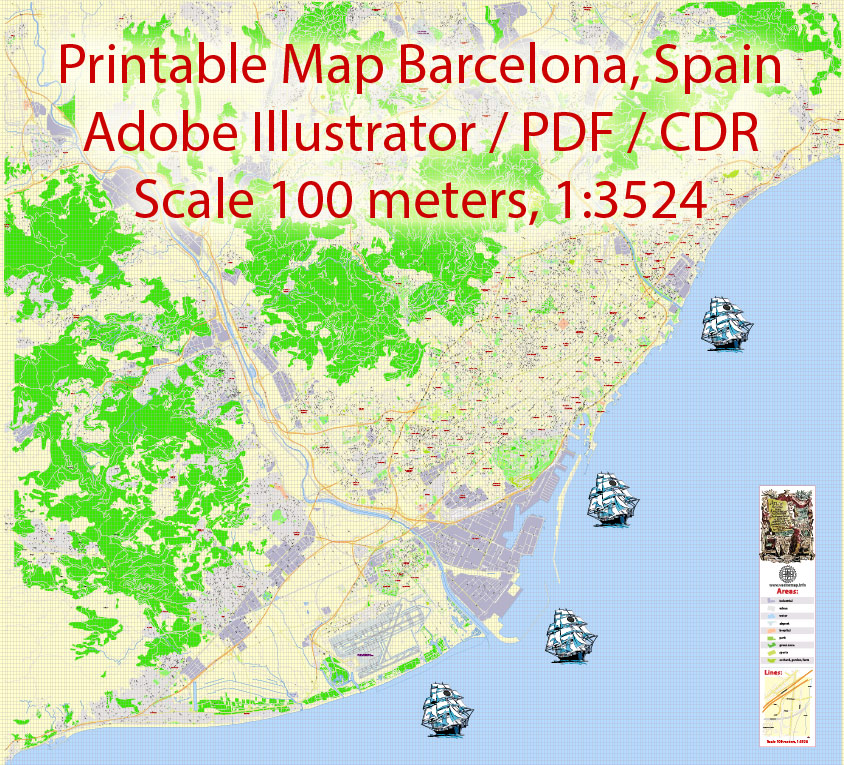
Urban plan Barcelona Spain: Digital Cartography
Barcelona is the main symbol and capital of the Spanish autonomous community of Catalonia, a major seaport. It is located on the Mediterranean coast in the northeastern part of the Iberian Peninsula. It occupies an area of a little more than 100 square kilometers, 1.6 million people live here. In commercial, economic, and cultural terms, the city is one of the largest in Europe.
The centuries-old history, impressive sights, amazing Catalan cuisine, amazing atmosphere of carelessness and freedom make Barcelona one of the popular destinations of educational tourism. Three of the ten administrative districts of the city are of the greatest interest to travelers: the Old Town, which is the historical center of Catalonia, the Eixample (New Town), built in the XIX century and showing the main works of the famous architect Gaudi, and Montjuic, spread out on the slopes of the hill of the same name.
The heart of Barcelona is Plaza Catalunya, from which the main pedestrian street, La Rambla, departs. The city is famous for its temples, architectural monuments, interesting museums, galleries, picturesque parks, beaches, modern shopping malls, colorful markets, and the titled Barcelona football club. Spectacular holidays, festivals, and large-scale sports competitions are held here every year.
Barcelona is an architectural gem of Spain, the sights of which attract a huge number of tourists. This is a real open-air museum, where Gothic monuments of the Middle Ages, experimental modernist masterpieces, and modern high-tech buildings are harmoniously combined. An interesting fact is that in Barcelona, a modern and active city, the historical center has remained virtually untouched.
Barcelona is a city in the northeast of Spain, the capital of Catalonia. It is the largest metropolis on the Mediterranean coast with a population of more than one and a half million people and the second-largest in the country. Barcelona is a vibrant seaside town and port with a magnificent cultural and historical heritage, a unique atmosphere, and charming architecture. The center of Catalonia attracts with its mild climate and relaxed lifestyle, surreal buildings - Gaudi's masterpieces, beaches and the sea, delicious food and entertainment for every taste.

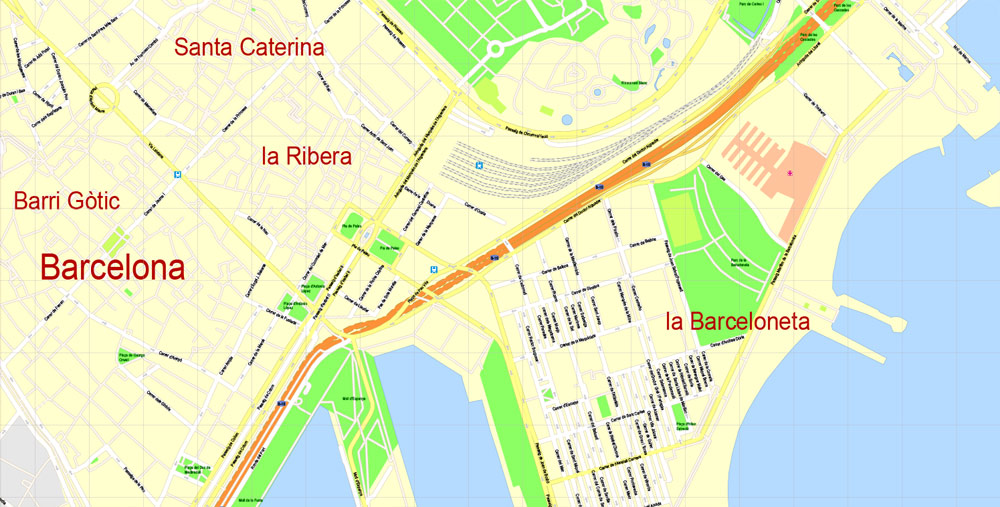
The sights of Barcelona cover almost 2000 years of its history and include the medieval old town, a unique grid of streets that reflect the trends of urban planning of the 19th century, and many interesting, unusual, and even a little fabulous structures, of which the architectural delights of Antonio Gaudi stand out. On the streets of the capital of Catalonia, you can easily find ancient rarities of the Roman past, medieval quarters and cathedrals, sculptural and architectural masterpieces of modernism and modernity. Barcelona is a city where Pablo Picasso and Joan Miro drew inspiration, where you can wander aimlessly through its streets, bumping into charming corners, listening to street musicians, or having a good time in cozy cafes.
Districts:
Ciutat Vella is the oldest part of Barcelona, the central area right on the Mediterranean coast. This is the main place of attraction, where most of the historical sights of the city are concentrated.
Eixample - modernist quarter, building squares, and street geometry.
Gràcia - located in the northern part of Barcelona. This once separate city (founded in the 17th century) was annexed to the capital of Catalonia in the 20th century.
Sants-Montjuïc is the southern outskirts of the city. The port is located here.
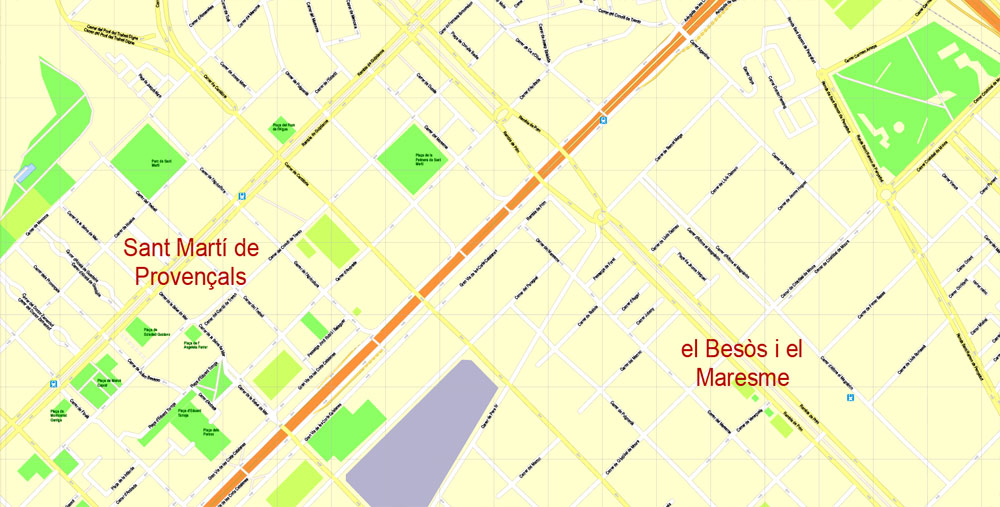
Sant Martí is the eastern outskirts of the city.
Inland Suburbs - suburbs. The famous Camp Nou Stadium and the highest point of Barcelona are located here.
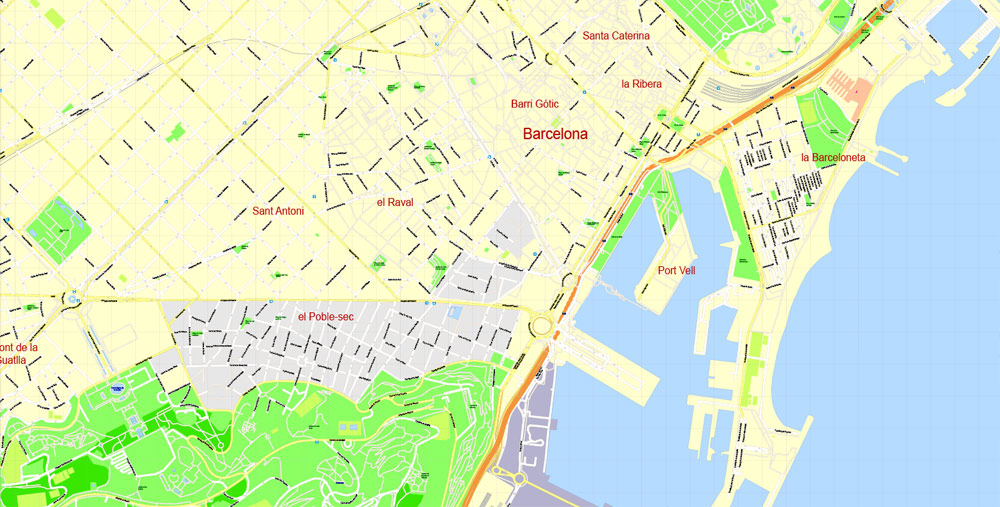
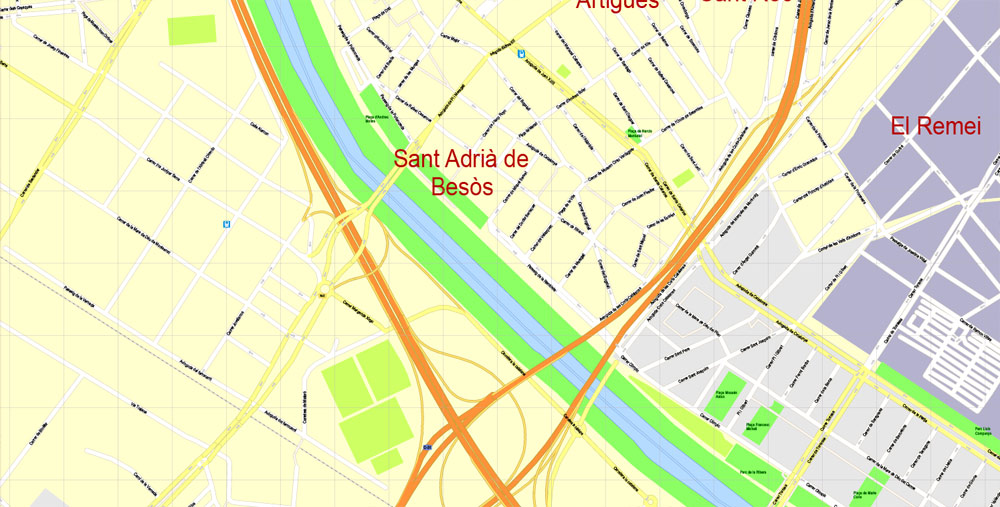
Barcelona is located on the Iberian Peninsula on the Mediterranean coast, 120 km from the border with France. From the south, the city is bounded by the Kolserola Mountains and the Llobregat River, and from the north by the Besos River. The highest point is Tibidabo. The city itself lies on five hills, which gave the name to the urban areas.
The population is 1.62 million people.
The area is 101.4 square kilometers.
The language is Spanish and Catalan.
The currency is the euro.
Visa - Schengen.
The time is Central European UTC +1, summer +2.
62% of Barcelona residents are Catalans.
50% of the population professes Catholicism.
Avoid walking alone in the El Raval and La Rambla areas late at night.
Credit cards are accepted in most hotels, shops and restaurants.
Tips, if you liked the service, are usually left in the amount of 3-5% of the bill.
Tourist offices are located at the following addresses: Plaça Sant Jaume, Plaza Catalunya, Estació de Sant, and in the center of the Gothic quarter College d' Arquitectos de Catalunya.
VAT is 21%. Tax-free can be refunded from a purchase of 90 euros.
Smoking is prohibited in public places.
Holidays: January 1 - New Year, January 6 - the Day of the Three Kings, Good Friday and Easter, May 1 - World Labor Day, June 24 - the Feast of St. John the Baptist, August 15 - Assumption of the Virgin, September 11 - the national holiday of Catalonia, October 12 - the national holiday of Spain, November 1 - All Saints' Day, December 6 - Constitution Day, December 25 and 26 - Christmas.
Barcelona has a metro network that consists of 11 lines. Public transport also includes buses and trams. The Montjuic and Tibidabo hills can be reached by funicular.
A single ticket is valid on public transport. The cost of one trip is 2.2 euros. Tickets can be bought on buses and at metro stations.
History
There are several legends of the founding of the city. One of the attributes the foundation of Barcelona to the legend of myths - Hercules, the other - to the Carthaginians. It is known for certain that the Iberians lived here. Their city was conquered by the Romans in the 2nd century BC. The Romans built a fortification here, the center of which was located near St. Peter's Square. James. Due to its location and access to the sea, the city grew, became richer, and strengthened until it was conquered by the Visigoths in the 5th century. Interestingly, the remains of ancient Roman fortifications and structures can still be found on the streets of Barcelona.
After the conquest by the Visigoths, the capital of their kingdom was located here for some time. At the beginning of the 6th century, a battle took place in the vicinity of Barcelona between the Visigoths and the Ostrogoths, in which the latter won. In the 8th century, the Berbers took Barcelona. At the very beginning of the 9th century, the city was conquered by the son of Charlemagne and made it the capital of the Spanish brand. At the end of the 10th century, after the raid of Al-Mansur, the Carolingians lost control of the capital of Catalonia, which gained independence.
In the 12th century, Catalonia merged with Valencia to form the Kingdom of Aragon, which lasted until the 15th century. In the 1410 century, control of the city passed to the Castilian dynasty. In the second half of the 17th century, after the fall of the Catalan Republic, Barcelona was plundered. At the beginning of the 18th century, Catalonia was conquered by Spain, of which it remains to this day. In the 19th century, Barcelona experienced an industrial boom, which contributes to the growth of the city. In the 20th century, the capital of Catalonia turns into one of the most important and largest cities in Spain. Despite this, nationalist sentiments and tendencies towards political autonomy have historically been strong in the region.
Barcelona International Airport is one of the largest in Europe. It is located about 12 km from the city and consists of two terminals. Terminal T1 is new, it accepts a number of major international and European airlines. Terminal T2, which is mainly intended for small carriers and charters. You can get from the airport to the center of Barcelona (Plaza Catalunya) by bus A1 (from T1) and A2 (from T2). The trip will take 30 minutes. Buses run from 5.30 to 1.00. A cheaper option is bus 46, which serves both terminals and goes to the Plaza de Espana stop. The airport is also connected to the city by metro (line 9) and the natural train line.
Barcelona has developed rail links with Nice, Paris, Marseille, Milan, Zurich, Madrid, and other European cities. There are bus connections with most major cities in Spain and European countries, including London, Amsterdam, Cologne, Brussels, Paris, etc. By sea, you can get to Barcelona from Rome, Sardinia, Genoa, Livorno, Algeria.
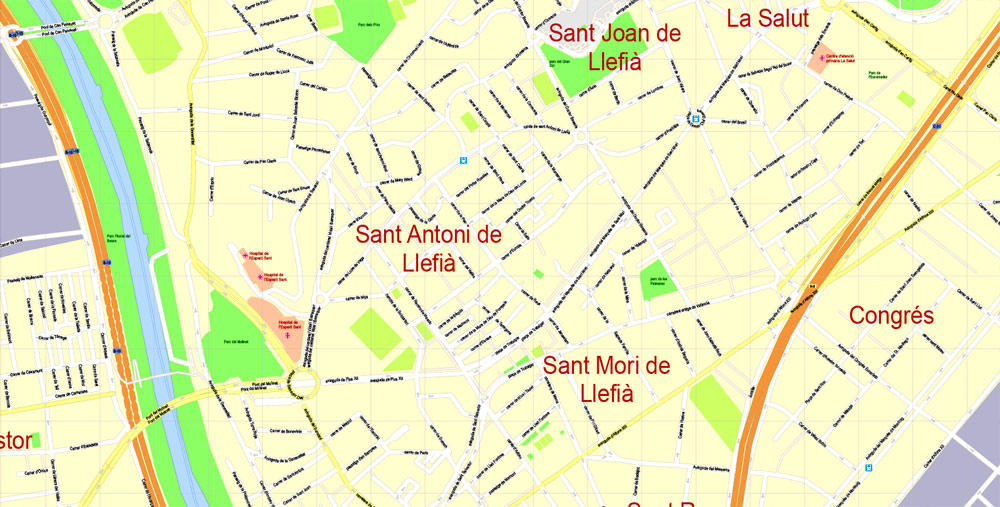
Gallery of Images "Urban plan Barcelona Spain":
- Urban plan New Haven Connecticut PDF
- Urban plan San Francisco Oakland California PDF
- Urban plan Long Beach California
- Urban plan Golden Gate Park San Francisco
- Urban plan Atvidaberg Ostergotland Sweden
- Urban plan Travis County Austin Texas PDF
- Urban plan Tel Aviv Israel pdf
- Urban plan Bohol Panglao Philippines PDF
- Urban plan Sydney Australia PDF
- Urban plan Cleveland Ohio CDR
- Urban plan Jackson Mississippi
- Urban plan Rouen France
- Urban plan Vienna Wien Austria pdf
- Urban plan Belgium Admin
- Urban plan Paris full Grande France pdf
- Urban plan Hamburg PDF
- Urban plan Islamabad Rawalpindi PDF
- Urban plan Helena Montana
- Urban plan UK FULL Ireland
- Urban plan Turin Torino Italy
- Urban plan Dayton Ohio 3 10 PDF
- Urban plan Tbilisi PDF
- Urban plan Houston Texas
- Urban plan New Orleans Louisiana PDF
- Urban plan Cannes Area
- Urban plan London Center UK 16 PDF
- Urban plan Denver Colorado PDF
- Urban plan Orlando Florida
- Urban plan Trenton New Jersey CDR
- Urban plan Netherlands Admin PDF
- Urban plan UK Great Britain
- Urban plan Manchester New Hampshire
- Urban plan Singapore AI 15
- Urban plan US Relef Rivers
- Urban plan Ufa Russia pdf
- Urban plan Greenwich Connecticut PDF
- Urban plan Gainesville Florida
- Urban plan Sioux Falls South Dakota PDF
- Urban plan Delhi India ENG PDF
- Urban plan Athens Pireas Greece PDF
- Urban plan Essen Germany pdf
- Urban plan Moscow 4
- Urban plan Oklahoma City Oklahoma v309
- Urban plan Camden New Jersey
- Urban plan Zacatecas Mexico
- Urban plan Santa Fe New Mexico PDF
- Urban plan Washington DC pdf
- Urban plan Onancock Virginia PDF
- Urban plan Genoa
- Urban plan Los Angeles
- Urban plan Salisbury UK PDF
- Urban plan Toulouse France
- Urban plan full Italy adm phys
- Urban plan Edinburgh Metro Scotland
- Urban plan Launceston Tasmania
- Urban plan Cleveland Ohio Low
- Urban plan Indianapolis PDF
- Urban plan Moscow S1
- Urban plan Toowoomba Australia
- Urban plan Wroclaw Poland
- Urban plan Chicago
- Urban plan Minneapolis Saint Paul Minnesota CDR
- Urban plan Murmansk Russia
- Urban plan Montgomery County Texas PDF
- Urban plan Mexico Country Roads
- Urban plan Leipzig Germany
- Urban plan Volgograd
- Urban plan Havana Cuba
- Urban plan Haifa Israel ENG AI
- Urban plan Milwaukee Wisconsin ai
- Urban plan Charleston South Carolina 3 10 PDF Center
- Urban plan Mexico Country Roads Relief
- Urban plan Winnipeg Steinbach Canada
- Urban plan admin Indonesia
- Urban plan Saint Petersburg Tampa CDR
- Urban plan Jakarta Grande Indonesia 13 AI
- Urban plan UK Admin
- Urban plan Sacramento California pdf
- Urban plan San Juan Puerto Rico PDF
- Urban plan Sioux City Iowa
- Urban plan Montreal Canada
- Urban plan Winnipeg Canada PDF
- Urban plan Charleston South Carolina PDF
- Urban plan World Gall Peters
- Urban plan Prague Praha metro Czech Republic PDF
- Urban plan Charlotte North Carolina PDF
- Urban plan Amsterdam Netherlands 13 PDF
- Urban plan Vienna Wien Austria PDF
- Urban plan Dublin Ireland PDF
- Urban plan La Porte Baytown Texas ai
- Urban plan Detroit Michigan CDR
- Urban plan Riga Latvia pdf
- Urban plan Aarhus Denmark
- Urban plan Randolph county North Carolina
- Urban plan Omsk
- Urban plan Pacific Coast US Canada PDF
- Urban plan Guangzhou China ENG AI
- Urban plan San Antonio Texas
- Urban plan Gyumri Armenia autocad
- Urban plan full Poland Relief
- Urban plan Riga Latvia pdf
- Urban plan Smolensk pdf
- Urban plan Lyon
- Urban plan Germany Admin