Square Bolts with Left-Hand Threads
A Niche Cartographer’s Way
Cartography is not the act of drawing pretty shapes.
It is the discipline of orientation.
A map is not decoration.
It is an instrument of direction, a decision about what matters, what connects, what separates, what becomes visible and what remains silent.
Every line implies a path.
Every boundary implies authority.
Every projection is a choice about how the world should be perceived.
Cartography is geometry with consequences.
And if you work in this field long enough, you understand something simple:
You are not selling pictures.
You are building reference points.
The Niche Is Not Small — It Is Precise
There are two ways to run a business.
One is the mass market: scale, noise, constant growth pressure.
The other is the niche.
If you are the only one making square bolts with left-hand threads — and someone, somewhere in the world genuinely needs them — you are not small. You are essential.
Vector maps work in a similar way.
A client in Perth does not need New York.
A client in New York does not need Aarhus.
A designer working on a documentary needs a very specific city, at a very specific level of detail, in a very specific format.
Geographic demand is discrete.
Each location is its own micro-monopoly.
Each map is an independent probability engine.
You do not grow by selling the same product to the same client again and again.
You grow by building a library wide enough that somewhere, at some moment, someone needs exactly what you already made.
Digital Assets Do Not Expire
Physical goods:
-
require storage,
-
depreciate,
-
freeze capital.
A well-built vector map:
-
does not decay,
-
does not require warehousing,
-
does not lose structural value,
-
remains indexed and searchable for years.
Every new map is not inventory.
It is infrastructure.
Sometimes a client requests a map that does not yet exist.
The map is built.
The client disappears.
In most businesses, that would be a failure.
Here, it becomes a permanent addition to the archive.
Demand may vanish today.
The asset remains tomorrow.
Public Layers and Professional Depth
A public version of a map may exist — simplified, lighter, suitable for educational or reference use.
Platforms such as Wikipedia and Wikimedia Commons function as public infrastructure.
When a simplified SVG is available there, it serves:
-
clarity,
-
accessibility,
-
neutrality.
But a professional designer does not need a reference image.
They need:
-
structured layers,
-
editable geometry,
-
production-ready detail,
-
typographic control,
-
full transport networks,
-
administrative precision.
The public layer builds trust.
The professional layer builds work.
They are not competitors.
They are different depths of the same craft.
Why Speed Matters More Than Credit
In many industries, growth depends on financing.
In niche production, survival depends on cash flow velocity.
When work cycles are short, when clients pre-fund projects, when delivery is precise — capital does not stagnate.
The healthiest systems are not those with the cheapest loans.
They are those where money moves efficiently and predictably.
Cartography, when structured correctly, behaves the same way.
Precision reduces friction.
Structure reduces waste.
Clarity accelerates decision-making.
The Archive as a System
If you cover enough locations, eventually you approach saturation.
At that point, growth is no longer about geography.
It becomes about:
-
depth,
-
refinement,
-
credibility,
-
technological excellence.
Tutorials on cartographic structure.
Historical reflections on projection systems.
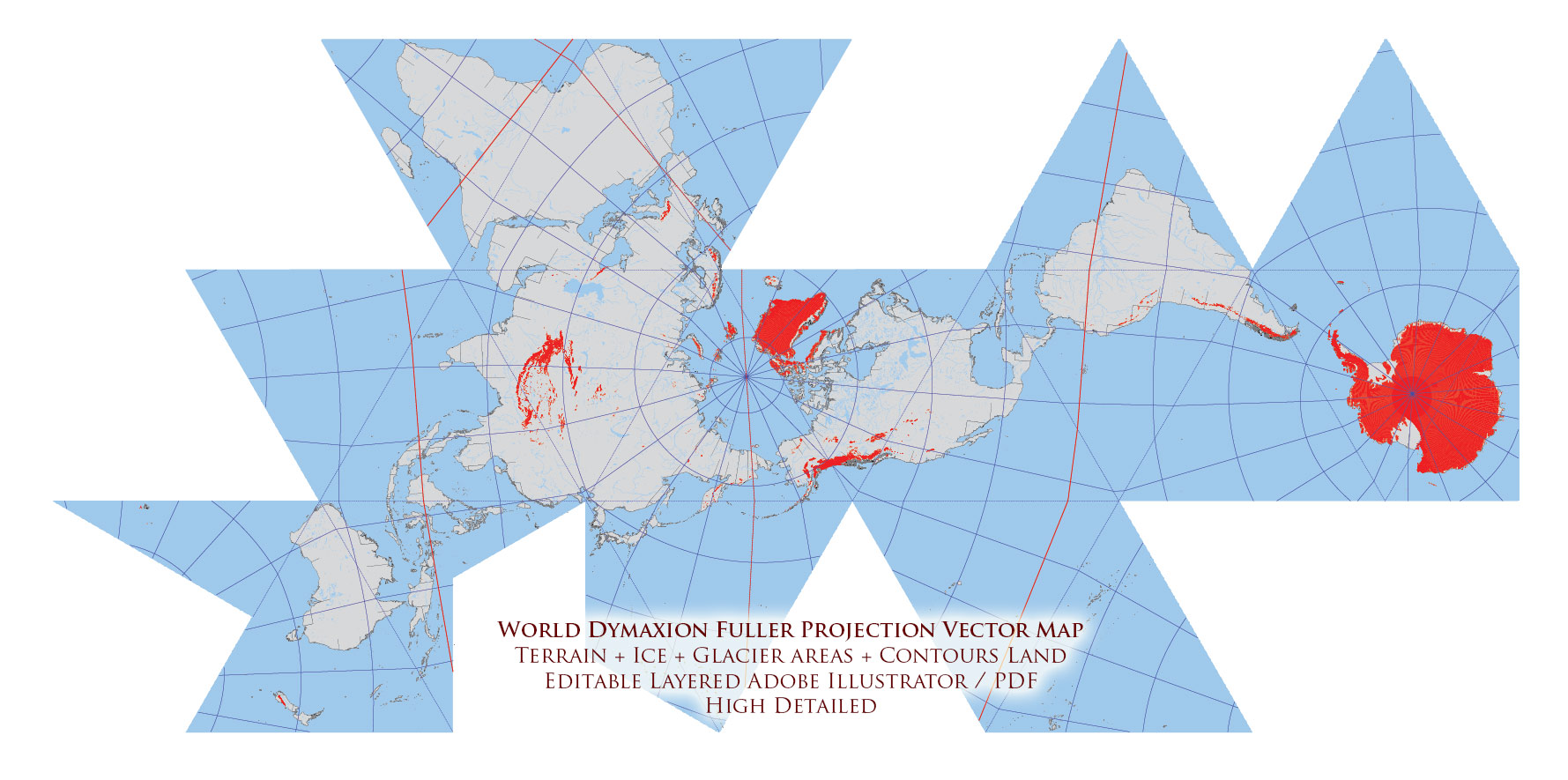
Analyses of mapmakers such as Gerardus Mercator or Buckminster Fuller.
Not as nostalgia — but as context.
Because cartography has always been philosophical.
A projection is a statement.
A boundary is a thesis.
A grid is an ideology.
Maps do not merely describe territory.
They shape perception of territory.
The Samurai Principle
There is a saying:
The samurai has no goal.
The samurai has only the path.
Applied to digital cartography, this means:
-
not chasing trends,
-
not diluting precision for mass appeal,
-
not sacrificing depth for scale.
Each new map strengthens the structure.
Each refined layer increases resistance to imitation.
Each published piece of technical knowledge reinforces authority.
This is not a startup sprint.
It is cumulative craftsmanship.
What Remains
Companies close.
Designers change jobs.
Files are lost.
Websites disappear.
Cities remain.
Demand reappears in cycles.
A well-built archive does not rely on hype.
It relies on existence.
If you make something rare, specific, and structurally sound —
eventually the world will need it.
And when it does, it will look for a reference point.
Cartography, at its best, is exactly that:
A reference point in a world that constantly shifts.