Urban plan UK Great Britain: Fully Editable Vector Maps
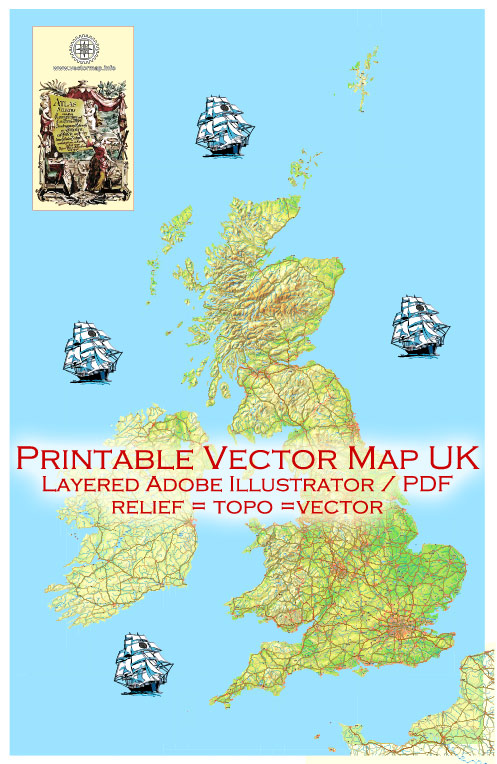
Related Images "Urban plan UK Great Britain" (781 pics):
Urban plans UK Great Britain: Digital Vector Maps of the UK Country and Cities
Great Britain "I wouldn't want to change anything in England except the weather." Oscar Wilde
Centuries pass, epochs, people, cities, and life itself changes, but one thing remains unchanged in the UK – traditions. British traditions are unshakable, like its centuries-old history, the majestic Tower, the Parliament with the Big Ben Tower, the unhurried Thames, and the status of the English queen. Britain is an indispensable tea party "five o'clock" and meetings with friends in the relaxed atmosphere of your favorite pub, it's elegant austerity of the Victorian style and "sweet home" with a nice coziness - preferably from Laura Ashley, it's external equanimity, often mistaken for prudery, and subtle English humor based on deep self-irony. At the same time, the UK is one of the most progressive countries in the world, the British always keep up with the times, introducing the most advanced technologies, developing science and creating new directions in all areas of art – from music to fashion. But wherever you find yourself - among the emerald cliffs and the most beautiful fjords of Ireland, in fabulous Scotland with its amazing palaces, majestic mountains and transparent lakes, surrounded by enchanting nature and ancient castles of legendary Wales or in the heart of the country - good old England, there is a certain general atmosphere everywhere, regardless of the difference in landscapes and lifestyle. This is something that the British do not want to change and are proud of – the glorious and unchanging traditions of the United Kingdom.
Geographical location
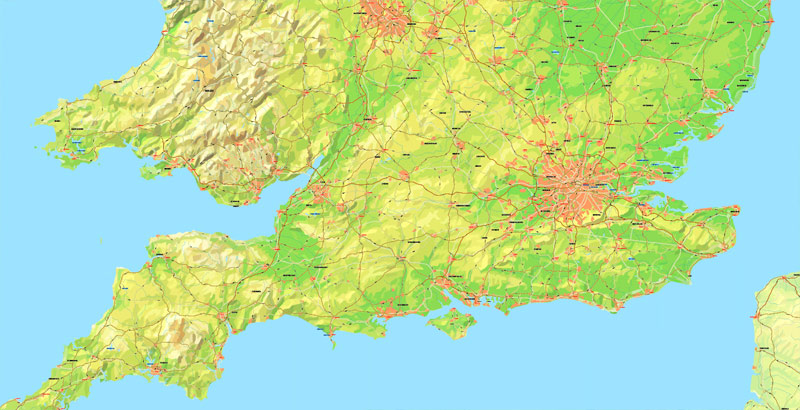
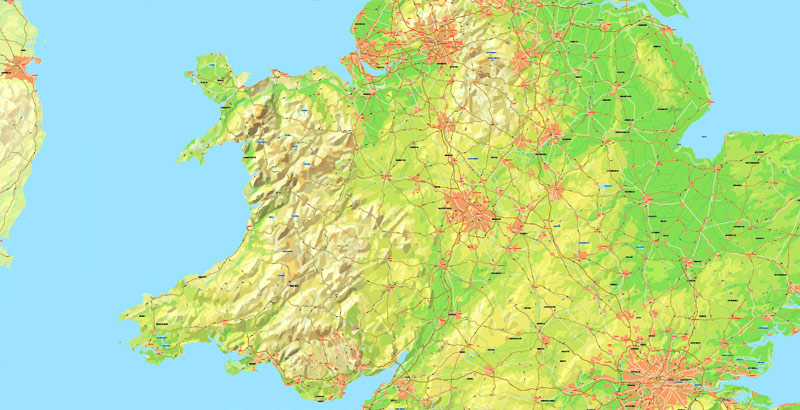
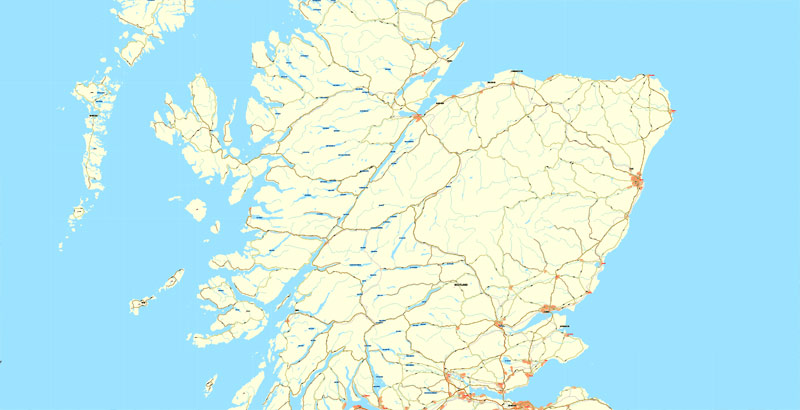
The United Kingdom of Great Britain and Northern Ireland is located on the British Isles, which are washed by the Atlantic Ocean and its seas. The state is separated from mainland Europe by the North Sea, the Straits of Pas-de-Calais, and the English Channel. The UK covers an area of 244,820 km2, of which 240,590 km2 is on land. The population of the whole kingdom is more than 61 million people. Great Britain consists of 4 historical administrative and political parts: England, Scotland, and Wales, located on the largest island of Great Britain, and Northern Ireland, occupying the northern part of the second-largest island of Ireland. Independent administrative units also form the Isle of Man, located in the Irish Sea, and the Channel Islands.
Climate
The climate in the British Isles is quite mild, moderately continental, marine type, but changeable, as it is determined by warm sea currents, such as the Gulf Stream passing along the western shores, as well as westerly winds. However, there are no significant temperature contrasts either. So, in most of Scotland, as well as in the mountainous areas of Wales and England, it is cooler in summer and colder in winter compared to the rest of England. In general, the climate of Great Britain is characterized by warm winters and mild summers. The temperature here rarely rises to +30 and falls below -10, and its average annual fluctuations are between +10 and +20 °C. The average temperature of the coldest month - January - varies in the direction from north to south from +2.7 to +5.9 °C, and the warmest - July - from +13.4 to +16.0 °C. At the same time, the weather on the islands is known for its instability and abundance of precipitation, especially in spring and autumn, so when traveling to the UK, you definitely need to take warm woolen and waterproof things.
A little history
The name of the country comes from the English – Great Britain, and Britain - from the name of the Britons tribe. In the V-VI centuries, the British Isles were conquered by the Anglo-Saxons. In 1066, after the Norman conquest of England, the political unification of the country took place, in the second half of the XIII century, the English parliament arose, and the estate monarchy took shape. In 1534, during the Reformation, the English Church was established. In the XVII century, the English Revolution took place, which led to the establishment of capitalism, which, in turn, formed the emergence of political parties - Tories (conservative) and Whigs (liberal). In 1707, England and Scotland were united by the "Act of Union" into the Kingdom of Great Britain with a general legislative assembly, and from 1801 the state became known as the United Kingdom of Great Britain and Ireland. At the end of the XVIII – beginning of the XIX century. the creation of the British colonial empire began, and in the XIX century, the British Empire became the largest colonial power in the world. In 1922 Six Irish provinces separated and formed an independent state of Ireland, and in 1929 Great Britain changed its name to the modern one - the United Kingdom of Great Britain and Northern Ireland. During the First World War, Great Britain was one of the main participants in the Entente, and during the Second - the anti-Hitler coalition. Today, the UK is one of the most developed countries in the world, it heads the Commonwealth of Nations, and is also a member of NATO, the EU, and the G8.
Cultural heritage
The culture of Great Britain is incredibly diverse, because here, in addition to the ancestral, there are cultures that came to the country during its colonial conquests - from Africa, India, and the Caribbean. The UK's contribution to world heritage is significant in all areas of culture.
Architecture: the monument of primitive art in Stonehenge, Roman architectural monuments in Bath and London, the remains of Romanesque castles in Dover, Nottingham, Rochester, Newcastle; the Tower of London and the White Tower in the Tower, Buckingham Palace, Westminster Abbey, and Westminster Cathedral, St. Paul's Cathedral, Kensington Palace, Tower Bridge, Parliament, and the Clock Tower Big Ben, etc.
Paintings: William Blake, Frank Bramley, Samuel Birch, Thomas Gainsborough, George Dow, John Constable, Joseph Crowell, Walter Langley, Thomas Lawrence, Richard Redgrave, Joshua Reynolds, William Turner, Edward Alexander Wadsworth, and others.
Literature: Shakespeare, Byron, Percy Bysshe Shelley, Robert Burns, Charles. Dickens, Arthur Conan Doyle, Jonathan Swift, Rudyard Kipling, Walter Scott, Oscar Wilde, Lewis Carroll, Agatha Christie, John Ronald Tolkien, George Orwell, Young Fleming, J.K. Rowling, and many others.
Music: Andrew Lloyd Webber, Elton John, John Lennon, Freddie Mercury, Chris Norman, The Beatles, The Rolling Stones, Pink Floyd, Led Zeppelin, Queen, and others.
Science: Charles Darwin, Isaac Newton, John Stuart Bell, Robert Boyle, Max Born, James Joule, Henry Cavendish, James Maxwell, Rutherford, Michael Faraday, Thomas Jung, and others.
Cinematography: Peter Ustinov, Harry Oldman, Sean Connery, Roger Moore, Malcolm McDowell, Rowan Atkinson, Hugh Grant, and others.
Kitchen
British cuisine, as well as its culture, is extremely diverse. In addition to the traditional dishes of Great Britain itself, including culinary recipes from England, Scotland, Wales, and Ireland, British cuisine also combines the traditions of Chinese, Indian, Italian and French cuisines. But some dishes are undoubtedly associated with the cuisine of the United Kingdom. At first glance, British cuisine is unpretentious and heavy - on the example of the traditional dish fish & chips (fish with fried potatoes). However, this is not quite true. Many dishes that are prepared in the UK are exquisite and very tasty, while each part of the Kingdom is famous for its dishes. In Wales - lamb in mint sauce, red algae loaves, and fruit bread, in Northern Ireland – beautifully cooked trout, "champ" or "colcannon" - potatoes with green onions or cabbage, in Scotland, soups "bought skink" (fish) and "coca-leeks" (chicken), potato salads "clapshot" (with rutabaga) and "stoves" (with meat) are very tasty, or the famous "haggis" is lamb tripe with giblets and seasoning. The tenderest roast beef, steak baked in the dough, shepherd's pie with lamb, as well as traditional puddings with various fillings and additives are extremely tasty, among which, perhaps, the most popular and easy to prepare is Yorkshire pudding. Great Britain is also famous all over the world for its first-class drinks – excellent Scotch and Irish whiskey, London gin, and English ale known since the XV century. And, of course, it is impossible not to recall the "afternoon" English tea that the British drink everywhere – at work, at home, in tea shops, cafes. A constant addition to the traditional English tea party are scones - croutons fried in milk and butter, and "muffins" (muffins) - hot muffins with cream or jam, as well as other pastries and desserts.
British holidays
New Year - January 1;
Easter - April;
Easter Monday
May Day - the first Monday in May;
Spring Bank Holiday - the last Monday in May;
August Bank Holiday – the last Monday in August;
Christmas - December 25;
Boxing Day - the second day of Christmas, December 26;
Christmas Bank Holiday - December 27.
And also: in England - St. George's Day (April 23), in Wales - St. David's Day (March 1), in Northern Ireland - St. Patrick's Day (March 17) and Orangemen's Day (July), and in Scotland - St. Andrew's Day (November 30).
Gallery of Images "Urban plan UK Great Britain":
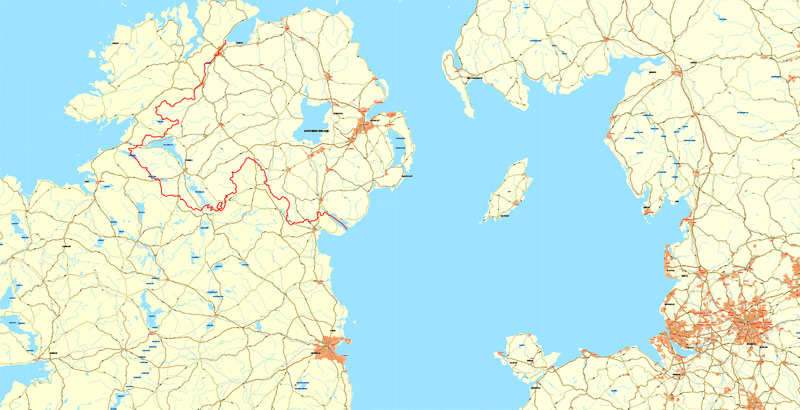
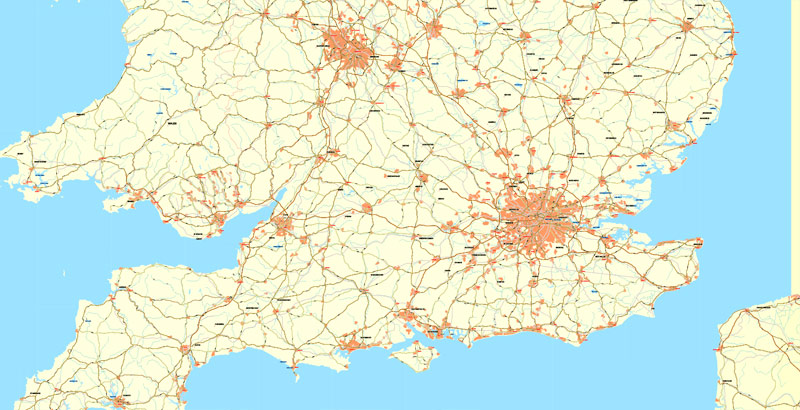
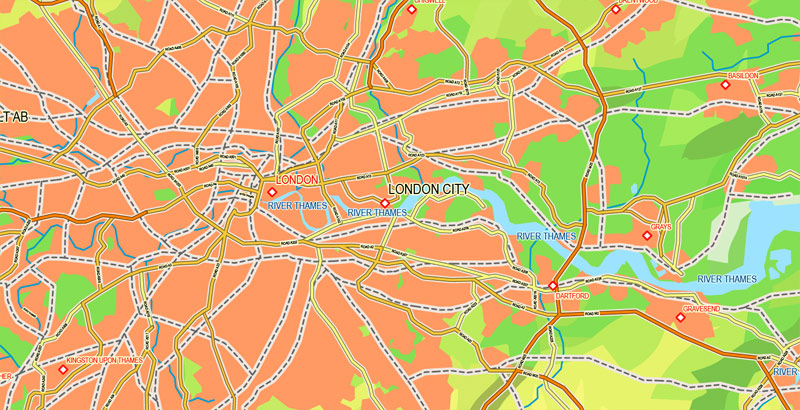
Country Map of United Kingdom Editable High Detailed Maps
Great Britain: Digital Cartography for Printing
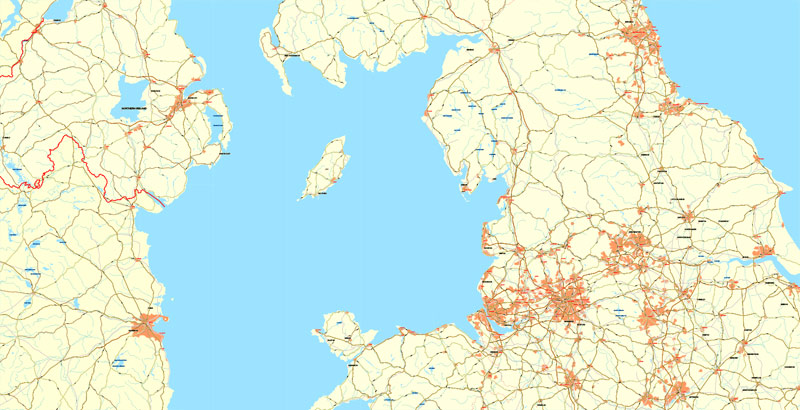
Tourism Maps: the United Kingdom, fully editable maps in AutoCAD DWG DXF PDF Ai.
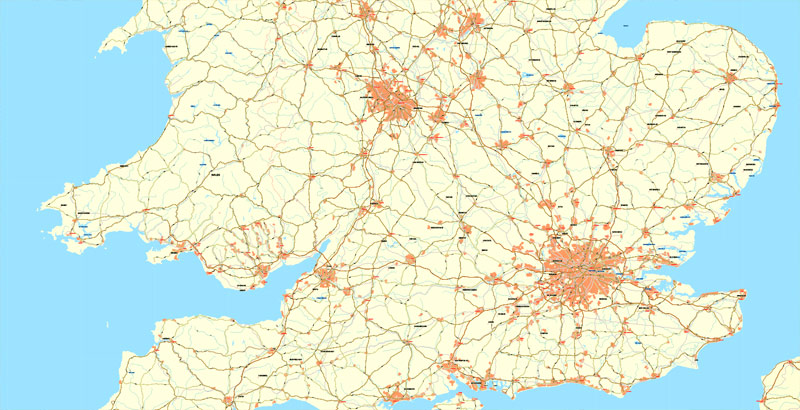
Maps of the United Kingdom: For Printing, Logistics, Research
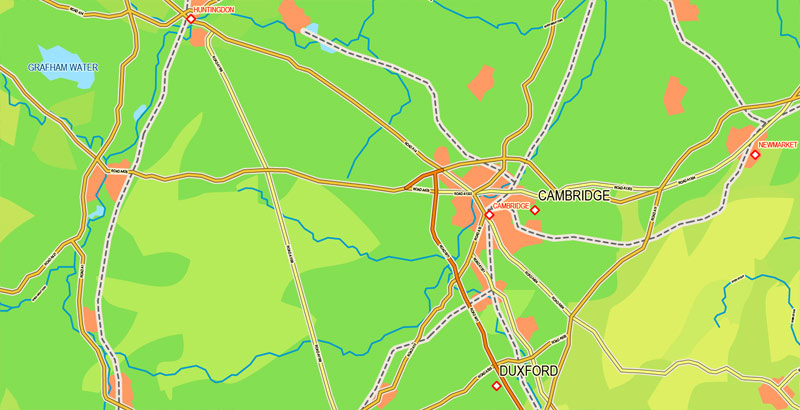
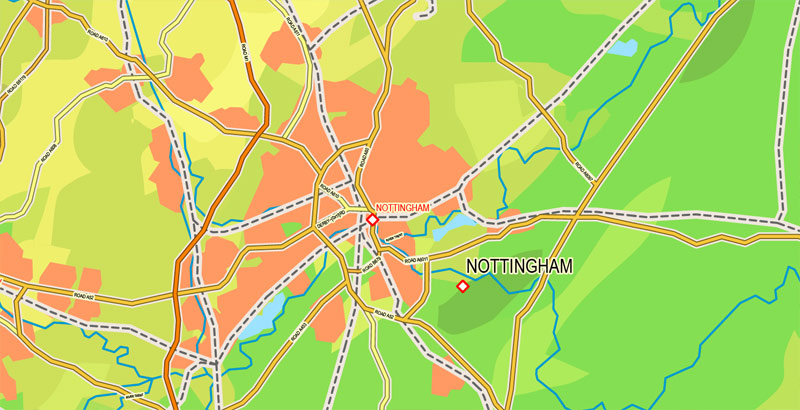
- Urban plan Cambridge UK PDF
- Urban plan Tver pdf
- Urban plan Golden Cirkle Iceland PDF
- Urban plan full Germany Adm Phys CDR
- Urban plan Copenhagen Kobenhavn Denmark pdf
- Urban plan Syracuse New York
- Urban plan Seoul South Korea
- Urban plan Laval Mayenne
- Urban plan Abu Dhabi United Arab Emirates PDF
- Urban plan South Africa Admin AI
- Urban plan Detroit
- Urban plan Greater Miami Florida 4 PDF
- Urban plan Aarhus Denmark
- Urban plan Atlanta Georgia PDF
- Urban plan Edmonton CA
- Urban plan Nuremberg Germany pdf
- Urban plan Las Palmas Spain pdf
- Urban plan Pforzheim Germany pdf
- Urban plan Saint Louis Missouri ai
- Urban plan Cincinnati Ohio CDR
- Urban plan Karachi Pakistan
- Urban plan Manila Grande Philippines pdf
- Urban plan Milan Milano Italy
- Urban plan Singapore
- Urban plan San Antonio Texas 25
- Urban plan Hong Kong Shenzhen China 13 PDF
- Urban plan Arcata Eureka California PDF
- Urban plan San Luis Obispo California
- Urban plan Israel
- Urban plan Charleston South Carolina 3 10 PDF Center
- Urban plan Wichita Kansas PDF
- Urban plan Travis County Austin Texas PDF
- Urban plan Belgium Administrative
- Urban plan San Antonio Texas
- Urban plan Buenos Aires Argentina
- Urban plan Abuja Nigeria
- Urban plan Moscow S2 CDR
- Urban plan Portland Vancouver pdf
- Urban plan Sofia Bulgaria ai
- Urban plan Barnaul
- Urban plan Honolulu Oahu Hawaii pdf
- Urban plan La Porte Baytown Texas pdf
- Urban plan Copenhagen Kobenhavn Denmark PDF low
- Urban plan UK FULL Ireland
- Urban plan Stavropol pdf
- Urban plan UK Admin
- Urban plan Kuala Lumpur Malaysia
- Urban plan Madrid Spain AI
- Urban plan Montreal Canada 25
- Urban plan Saint Petersburg Tampa PDF
- Urban plan Cleveland Ohio 25
- Urban plan World Gall Peters PDF
- Urban plan Paris
- Urban plan Novgorod PDF Russia
- Urban plan Stockholm Sweden Sverige
- Urban plan Dublin Ireland ai
- Urban plan Murmansk PDF Russia
- Urban plan Cologne Koln Germany
- Urban plan Toulon France
- Urban plan Berlin Germany
- Urban plan Dominican Republic Detailed PDF 12 5
- Urban plan Odessa Ukraine
- Urban plan Beijing China AI 13
- Urban plan Alphen Aan Den Rijn Netherlands
- Urban plan Frankfurt am Main Germany pdf
- Urban plan Lagos Nigeria 16
- Urban plan Cartagena Colombia
- Urban plan Lyon
- Urban plan Montreal metro area
- Urban plan Hawaii Islands
- Urban plan Milwaukee Wisconsin
- Urban plan Menlo Park California 17
- Urban plan Milwaukee Wisconsin ai
- Urban plan Denver Metro
- Urban plan Louisiana Museum Denmark PDF
- Urban plan Orel PDF Russia
- Urban plan Veracruz Mexico
- Urban plan Detroit Michigan CDR
- Urban plan Sacramento California
- Urban plan Prague Czech Republic
- Urban plan Perm pdf
- Urban plan Kansas City Missouri PDF
- Urban plan Barnaul PDF
- Urban plan Dominicana Haiti
- Urban plan San Francisco
- Urban plan Hawaii Islands
- Urban plan Kiev Ukraine
- Urban plan Derby UK
- Urban plan Cape Canaveral Florida
- Urban plan Saint Petersburg Tampa CDR
- Urban plan Portsmouth UK ai
- Urban plan Baltimore Maryland PDF
- Urban plan World Relief Political
- Urban plan Austria Vector Roads CDR
- Urban plan Toulouse France
- Urban plan Montreal Canada