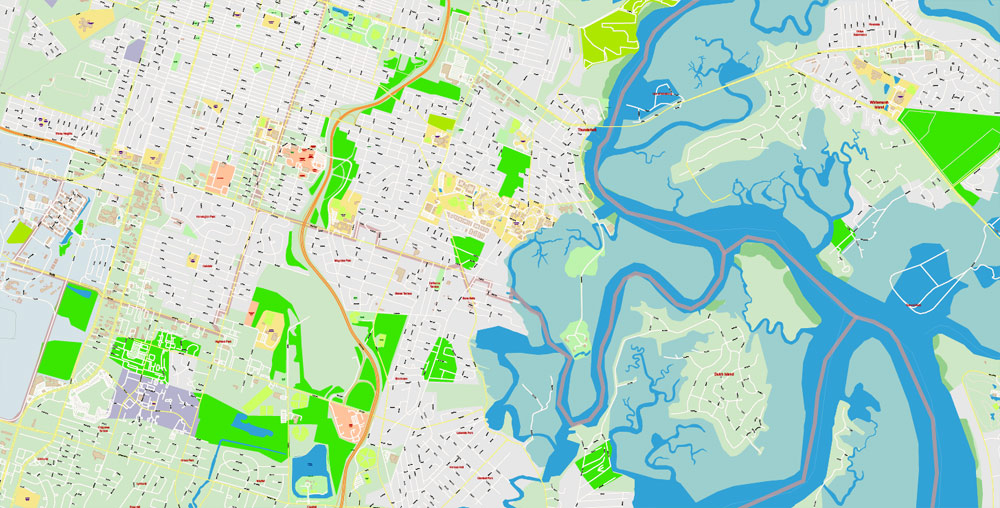
Urban plan Savannah Chatham County Georgia PDF

Gallery of Images "Urban plan Savannah Chatham County Georgia PDF":
Urban plan Savannah Chatham County Georgia PDF Ai AutoCAD DWG DXF
Savannah, Georgia
There is America, where there is no turmoil, the frenzied pace of the running crowd and incredibly tall buildings. The cozy small town of Savannah in the southern United States is a prime example. He took refuge among gloomy forests and impenetrable swamps. In this city, the American rural Gothic of low-rise houses is adjacent to ancient oaks, on which the legendary Spanish moss hangs. It is customary here not to run, snacking on the go, but to sit at breakfast in local cafes until noon. And many houses and streets remained in their pristine state. Savannah is a quiet pool in which interesting adventures await you.
Areas of Savannah
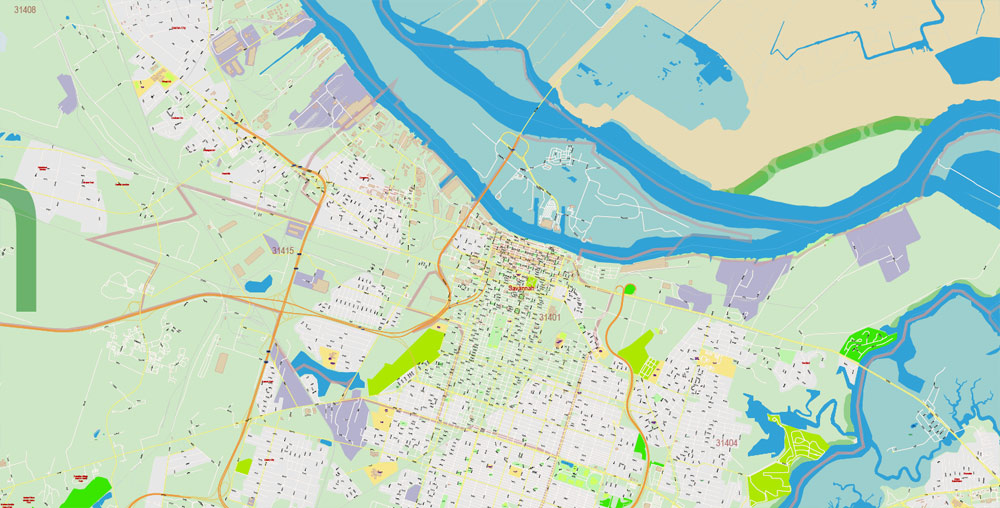
The entire city is divided into six main districts: Downtown, Midtown, Southside, Eastside, Westside, and Southwest/West Chatham.
Downtown is home to the Historic Landmark District — the heart of the city and one of the largest preserved historic districts in the United States. Here attractions can be found on every corner. Oaks with the legendary Spanish moss grows everywhere and buildings with spectacular architecture are quite common. This area offers advantageous accommodation in the city center with first-class hotels and rooftop pools. Also in the Downtown district is the Victorian District, where the former plantation estates have turned into a quiet residential area. In it, you can feel like a real American living at a measured pace of life.
In the Starland District, students from the Savannah College of Art and Design have turned worn-out buildings into trendy shops, galleries, and studios.
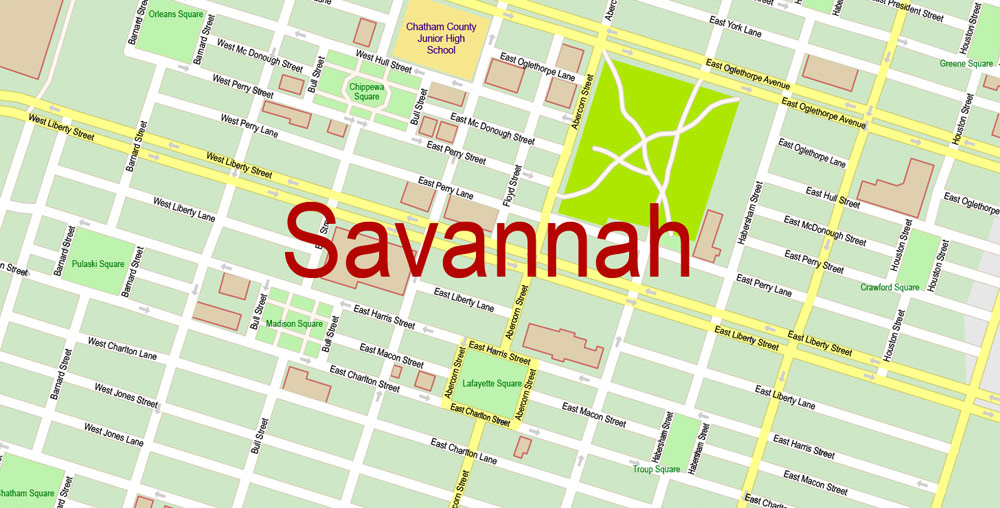
Midtown is known for Grayson Stadium and many popular restaurants, boutiques, nightclubs, and hotels.
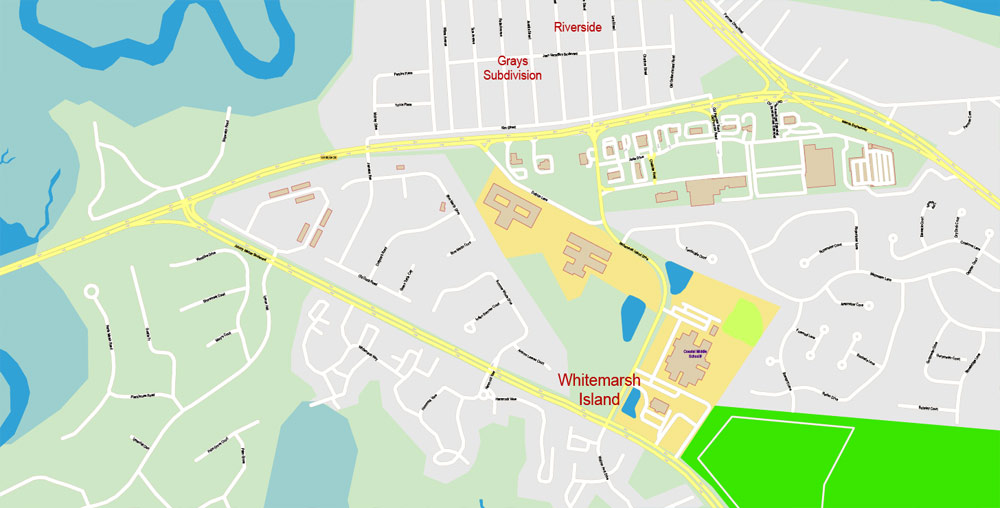
When traveling through Savannah, it's best to stay at Southside. Located on the banks of the Vernon River, this vibrant commercial area is close to the airport, a 15-minute drive from the city center. It offers a wide selection of inexpensive hotels, many restaurants, and three main shopping areas.
In other areas, there are no such important attractions that would be interesting to tourists.
Attractions
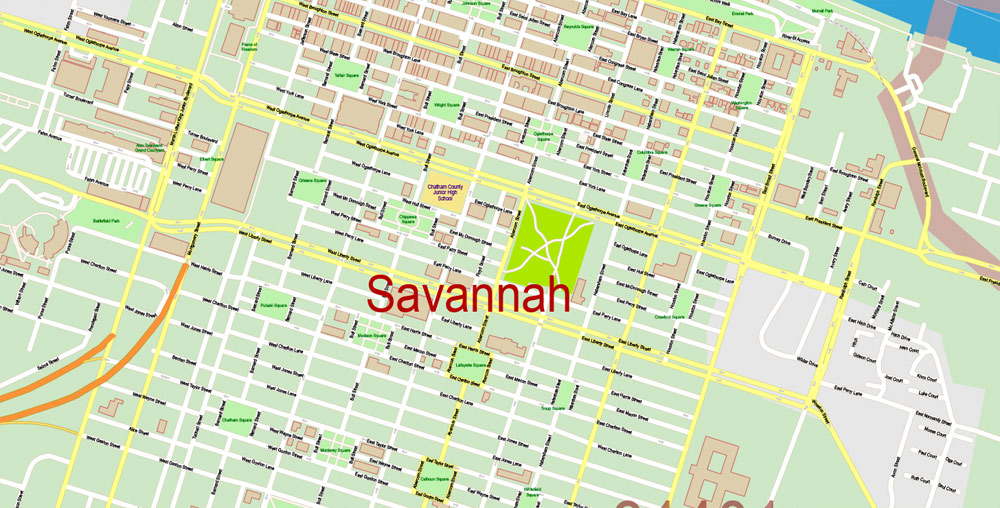
Savannah is shrouded in mystery and mysticism, attracting not only scientists in search of paranormal phenomena but also travelers interested in this topic. Unlike other American cities, it houses not gray gloomy skyscrapers, but exceptionally cozy neighborhoods with low estates. In Savannah, it will be enough to enjoy the quiet and measured lifestyle of an American town with a rich flora. The city is divided into several squares with squares, where everywhere you can notice the main highlight of the city — Spanish moss. And the parks and alleys of the city will definitely lead to an interesting architectural structure.
Population
The population of Savannah is 149,000 people. Over the past ten years, the population of the city has increased significantly and has reached its peak since 1960. Blacks in Savannah — 56%, Whites - 39%, Asians - 2% and almost 3% - residents of another race. There are many students living in the city, as there are two state universities and a College of Art and Design located in it. Almost 22% of the city's population lives below the federal poverty level.
A brief history
The history of Savannah begins in February 1733, when General James Oglethorpe and 120 passengers of the ship "Ann" landed on the banks of the Savannah River. Savannah became the first city in Georgia and consisted of 24 perfect squares with squares and parks.
Since then, she has witnessed the American Revolution and the Civil War. During the colonial uprising, Savannah remained under the rule of England until 1782. After independence, the city began to flourish. The largest cotton plantations expanded and turned Savannah into the largest slave port. The local cotton exchange set world prices for this commodity.

During the Civil War, General Sherman organized a successful campaign known as the "march to the sea", as a result of which the city was "presented" to President Lincoln for Christmas.
With the beginning of the Reconstruction period, the freed slaves created a thriving community with their own churches and schools. In the twentieth century, the city again became the king of cotton, in addition, new industrial industries developed here. Savannah was becoming the most economically powerful African-American city in the country. But everything changed when insect pests destroyed most of the cotton farm crops and the Great Depression began.
In the 1950s, a group of local activists united to preserve historic structures that were threatened with destruction. Their efforts led to the foundation of the Savannah Historical Foundation, thanks to which it became possible to preserve the beautiful architecture of the city. Today, Savannah has become one of the most hospitable and popular holiday destinations in the country.
Climate
Savannah has a warm and mild climate, where in winter it is usually +7°C - +16°C, and in summer +30°C - +35 °C. Thanks to such a pleasant temperature, this city receives thousands of tourists at various festivals at any time of the year. Literally every month there are at least three events that will make a trip to Savannah unforgettable. For example, in early November, the popular Savannah Food & Wine Festival takes place, which lasts a week and offers snacks and wines from the best restaurants in Savannah.
In February, you can visit the American Traditions Vocal Competition, where the best vocalists of the country together with the symphony orchestra perform compositions of jazz, country, and many other musical genres, and also compete for the main prize — 35 thousand dollars.
Savannah is the second-largest city in terms of St. Patrick's Day celebrations in the United States. The fountain in Forsyth Park turns green and the city is filled with crowds of visitors and locals. The whole Savannah turns into one friendly family, in which a festive enchanting atmosphere reigns.
Related Images "Urban plan Savannah Chatham County Georgia PDF":
SAVANNAH GEORGIA City Maps for business, education, transportation
Savannah, Georgia Digital Cartography: Fully Editable Digital Product
- Urban plan Bruxelles Brussels Belgium
- Urban plan Palermo Italy
- Urban plan Moscow S2
- Urban plan Hillsboro Oregon
- Urban plan Montpelier Vermont PDF
- Urban plan Flags Countries
- Urban plan Cleveland Ohio Low
- Urban plan Montreal Grande area Canada
- Urban plan Dallas Fort Worth TX
- Urban plan Jakarta Indonesia 16 ai
- Urban plan Laval Quebec
- Urban plan Bremerhaven Germany ai
- Urban plan Odessa Ukraine PDF
- Urban plan Krasnoyarsk PDF Russia
- Urban plan Ryazan Russia
- Urban plan Louisiana Museum Denmark PDF
- Urban plan Alphen Aan Den Rijn Netherlands
- Urban plan Harrisburg Pennsylvania 3 10 PDF
- Urban plan Madison Wisconsin
- Urban plan Sacramento California PDF
- Urban plan Kazan PDF Russia
- Urban plan Santo Domingo
- Urban plan Savannah Chatham County Georgia PDF
- Urban plan Jerusalem Israel pdf
- Urban plan World Relief Political PDF
- Urban plan Edinburgh
- Urban plan Tel Aviv Yafo Israel hebrew 17 PDF
- Urban plan Prague Czech Republic
- Urban plan Kuala Lumpur Malaysia
- Urban plan Palo Alto Mountain View California ai
- Urban plan Karlsruhe Germany PDF
- Urban plan Allentown Pennsylvania PDF
- Urban plan Brasilia City Brazil
- Urban plan Raleigh North Carolina ai
- Urban plan Boston Massachusetts pdf
- Urban plan Kansas City Missoury
- Urban plan Manila Grande Philippines 13 ai
- Urban plan Bratislava metro Slovakia
- Urban plan Romania
- Urban plan Barnaul PDF
- Urban plan Geneve Switzerland PDF
- Urban plan Lawrence Kansas 3 10 PDF
- Urban plan Canberra Australia 17