Urban plan Jakarta Indonesia: Digital Cartography
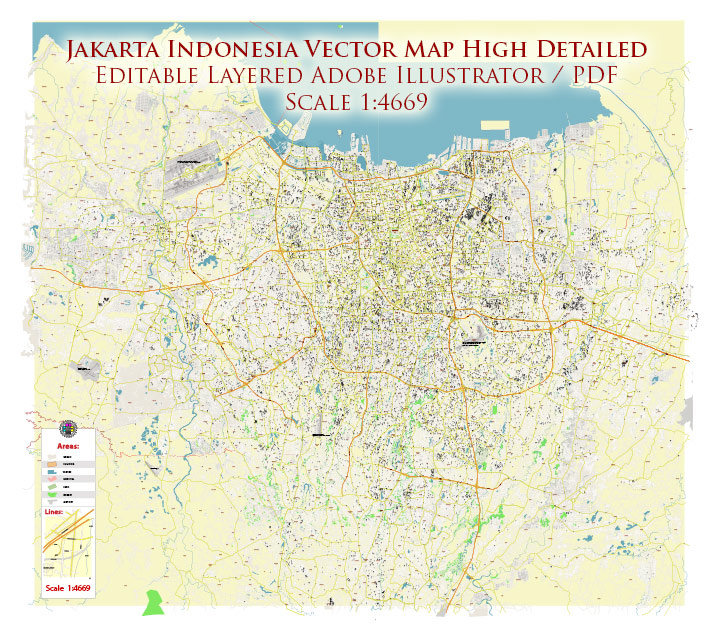
Related Images "Urban plan Jakarta Indonesia 16 ai" (718 pics):
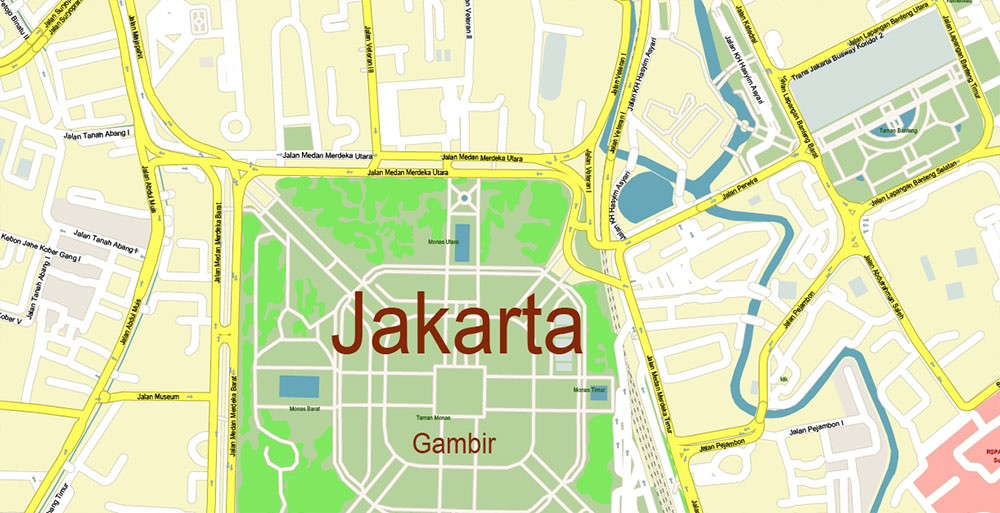
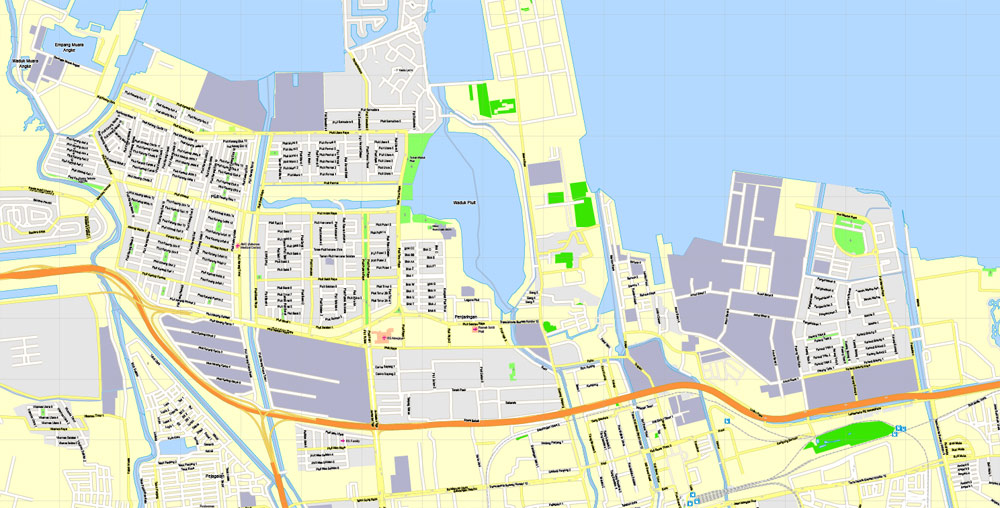
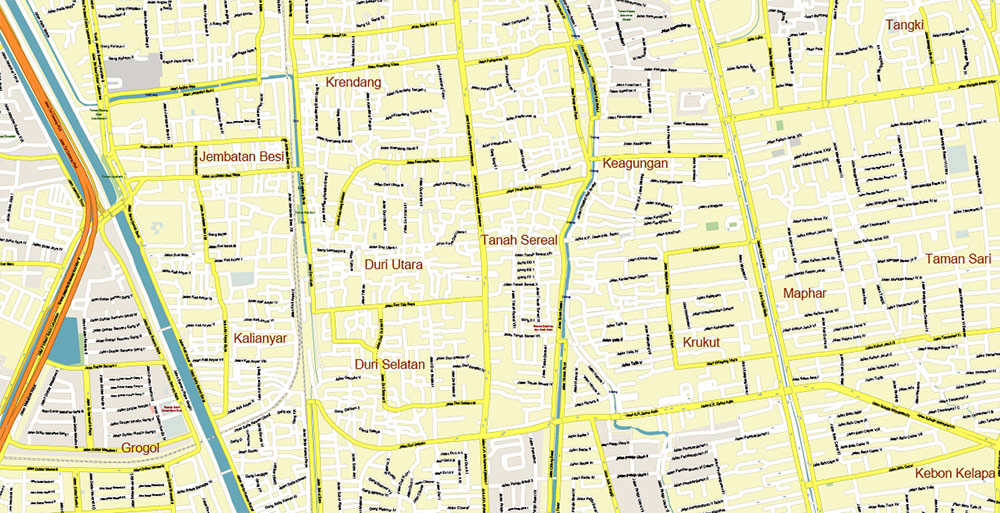
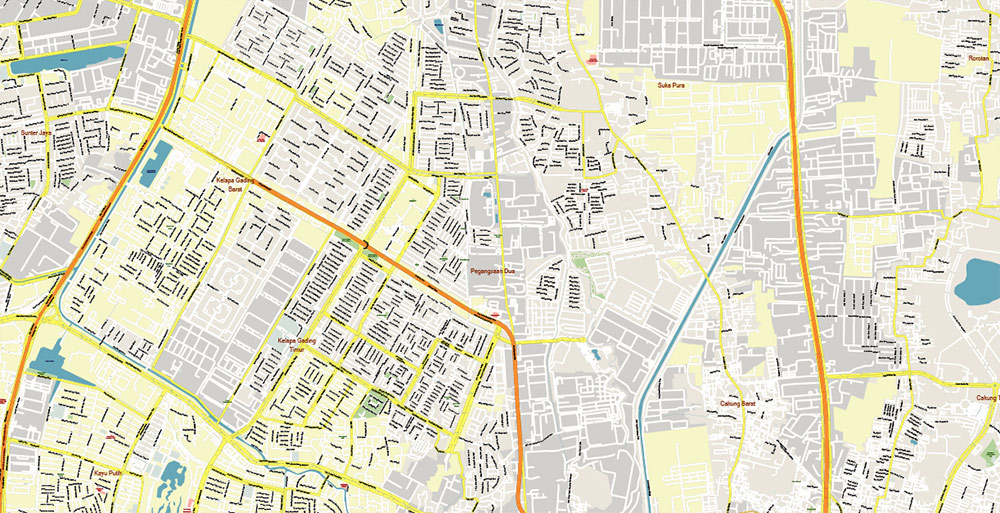
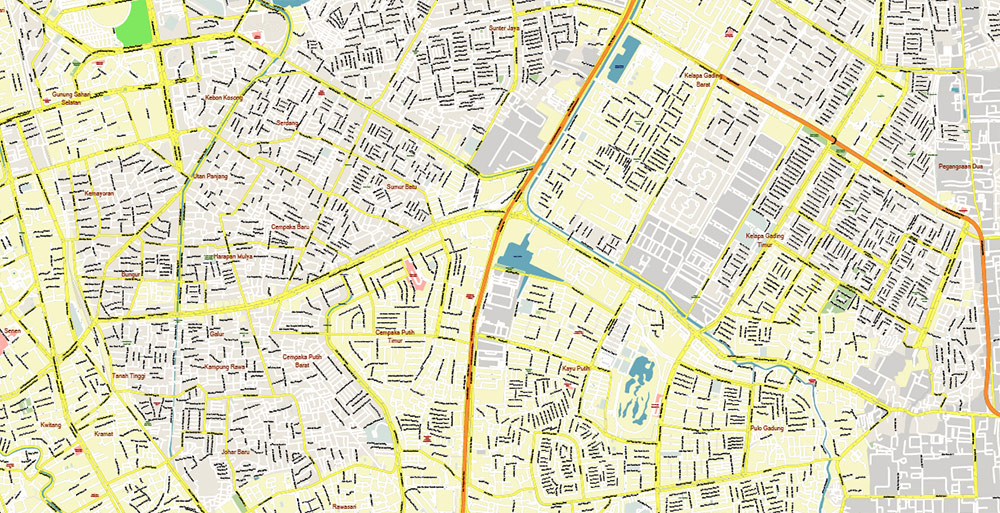
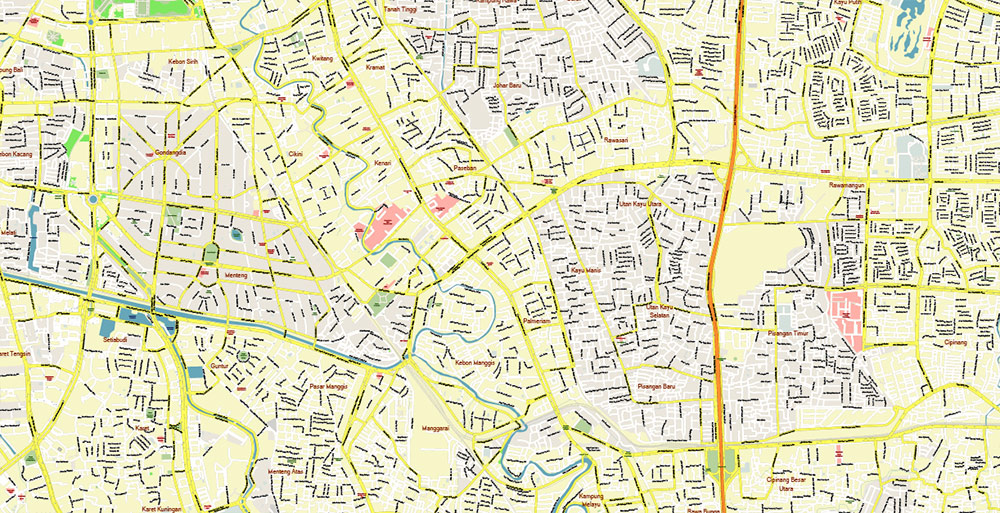
Urban plan Jakarta Indonesia in Adobe Illustrator, PDF and DWG
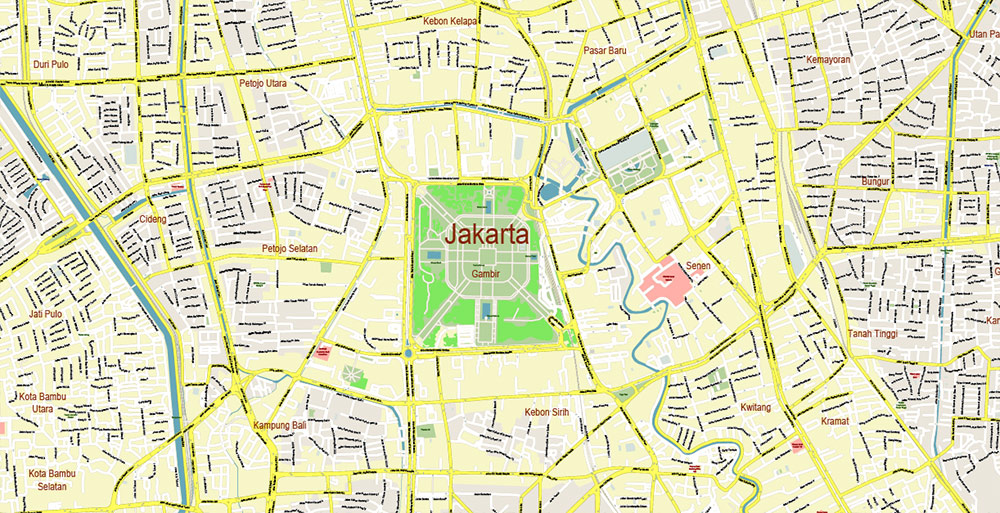
The capital of Indonesia, Jakarta, is located at the mouth of the Chilung River on the northwest coast of Java. It is a huge multinational metropolis with a population density of about 13 people per square meter. The number of residents of the city is growing rapidly. Currently, more than 9 million people live in Jakarta. For comparison, in the 50s, about 800 thousand residents were registered in the capital of Indonesia. The main religion of the city is Islam. There are also temples of Protestants, Catholics, and Buddhists. Jakarta consists of 5 city municipalities and the Thousand Islands Administrative District. Its area is 650 km2 . The main offices of many financial institutions and banks are located in the central part of the capital. More than 27 thousand enterprises of various industries operate in the city. In the main industrial zones, cars and electronics are assembled. They produce medicines, food, clothes. Ship repair and shipbuilding yards are functioning. The list of production directions is constantly growing.
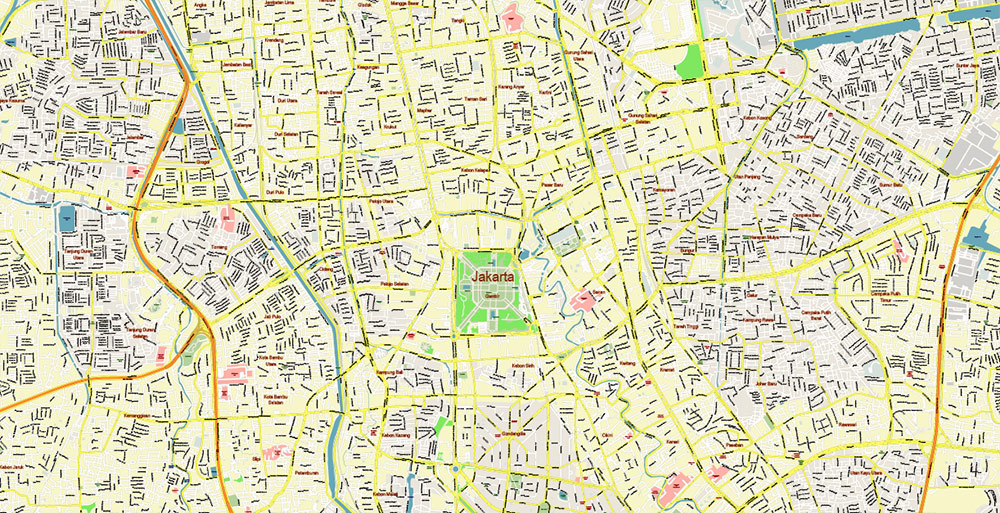
There are over a hundred higher educational institutions in the Indonesian capital. There are 18 universities among them. The history of the creation and development of Jakarta is a whole era of transformation of a small fishing village into a modern metropolis.
In the XVI century, Indonesia was called the kingdom of Sunda Kalapa. She willingly established friendly and trade relations with Portugal, which had its own interests here. The island state was a storehouse of exotic spices, rice and gold. In turn, the King of Sunda Kalapa counted on the protection of his territories in case of danger. However, during another attack by the Muslim troops led by Fatahill, reinforcements from Portugal did not arrive on time. The port city of Banten and the spice trade center were captured. It happened on June 22, 1527, since then the city has been renamed Jayavikarta. Translated, the name means "complete victory". June 22 is the city Day in Jakarta.
A century later, Prince Jayavikarta erected a military post near the Silivung River to control the movement of ships from the Netherlands and Portugal. In addition, he allowed the British governor to build a similar fortification, as relations with the Netherlands became increasingly bitter.
In the winter of 1618, the siege of the Dutch fortress by the British and Jayavikarta soldiers took place. The siege ended with the arrest of the Dutch commander-in-chief. In response, on May 30, 1619, troops arriving from Holland destroyed the city to the ground. Only the Padrao Stone remains of the former Jayavikarta. It is now in the National Museum of Jakarta.
Thus, a new trading post was built on the site of the former city, called Batavia. A couple of years later, the same name was given to the town formed around it. The XIX century was the heyday of Batavia. Brand-new buildings in the neoclassical style were erected here. In addition, luxurious boulevards with huge lush gardens were laid out. The new city has become even more beautiful than during the reign of Prince Jayavikarta.
Jakarta received its current name during the Japanese occupation of 1942-1945. At the same time, it acquired the status of the capital of Indonesia, becoming the main economic, political and cultural center of the country.
Currently, the metropolis continues to develop at a very rapid pace. You can view the panorama of Jakarta from the observation deck located on the Monas obelisk. It is considered a symbol of Indonesia's independence. The top of the monument is decorated with a huge gilded torch, which took more than 30 kilograms of gold to decorate. From a height of 137 meters, the majestic skyscrapers of the central part of Jakarta and the one- and two-story buildings of the rest of the city are visible.
The metropolis is interesting for tourists with a huge number of attractions, which will take more than one day to inspect. From the old town, only Fa-Tahillah Square remains here. There is an old Si Yago cannon there. The townspeople consider it a symbol of fertility. Near her, you can always see gifts brought by young couples who are going to conceive a child. Along the edges of the square, buildings from the time of colonization have been preserved, in which museums are now open.
The building in the southern part of the square, built-in 1710, is the former city hall. It houses the Jakarta Historical Museum, where household items, furniture and works of art of the XVII century are exhibited. In the rear of the building, underground rooms were built, which served as prison cells. In those distant times, public executions and tortures were carried out near the town hall.
The Wayang Museum is located in the western part of the square. Its exposition presents a variety of dolls and masks from Indonesia, China and Thailand. Opposite it is the building in which the Palace of Justice was located. Now there is a museum of fine arts, where you can admire rare Chinese porcelain from the Song Dynasty, Javanese jugs. Many items date back to the XIV century. Several other old houses have been preserved around the square. The beautiful Dutch houses of the XVIII century, located behind the museum, deserve attention. A huge mansion of the former Governor-General Van Imhoff is built on the opposite bank of the canal. Its wooden parts are decorated with original Chinese carvings, which were characteristic of many buildings of that period. After walking a few meters, we will see the building of the Chartered Bank, which also belongs to the XVIII century. An old wooden bridge over the canal has been preserved not far from here. Adjacent to this old European part of the city is the colorful Glodok Chinatown. There are numerous small souvenir shops on its crowded streets. Here, in the Gang-Petak-Sembilian district, there is the majestic Chinese temple of Jing-e Yuan, which was built back in 1650. The relics of Taoist and Buddhist saints rest in it. Continuing to get acquainted with ancient Jakarta, be sure to visit the ancient port of Sunda Kelapa. It was from here, fifteen hundred years ago, that the history of this city began. Sailing ships making flights to Sulawesi and Kalimantan are still docked at the local pier, which is 1.5 kilometers long. The Uitkijk watchtower, built in 1839, is visible from the port. Once upon a time, a powerful Dutch fort stood in this place, protecting the local harbor from invasions from the sea. The remains of one of its walls can be viewed on Jalan-Pasar-Ikan Street. The Bahari Maritime Museum is open in the tower, which presents sailing vessels traditional for this region. On the same street, there is the Pasar Ikan fish market, where numerous merchants offer a variety of seafood. Auctions for the sale of large quantities of fish are held here early in the morning.
In the Medan Merdeka district, there is a majestic presidential palace built in the neoclassical style of the XIX century. Indonesian President Sukarno, who lived in it, arranged luxurious balls in its courtyard. A huge Istiklal Mosque has been built to the east of the palace, which is the largest in all of East Asia. Not far from here is the building of the National Museum, built-in 1868. It presents old documents and books. The main exposition of the museum is considered to be a rich treasury of royal jewels. Most of them are war trophies. You can admire its splendor every Sunday in the morning.
Many of Jakarta's attractions are located in the Lapangen Banteng area - on the Wild Bull Square. In its northern part stands the ancient Neo-Gothic National Cathedral. To the east are the buildings of the Ministry of Finance and the Supreme Court. On the south side, the square is bounded by the huge Borobudur Hotel. In the center you will see a monument dedicated to the liberation of Irian Jaya - the western part of New Guinea, annexed to Indonesia. He is a muscular giant who has broken the heavy shackles.
The cultural life of the capital is concentrated on Jalan-Menteng-Raya Street, where the Tamai Ismail Marzuki Art Complex is located. It includes several exhibition halls, a planetarium, a college of fine arts, five theaters and an art gallery. It constantly hosts theatrical performances, performances of dance groups, exhibitions of local artists.
Shopping lovers should visit the elite suburb of Kebayoran, where you can stroll through the numerous boutiques of the Block M shopping center. You can buy the products of Indonesian artisans in the Pasa-Raya department store.
There are various entertainment centers in the suburbs of Jakarta. On the territory of the Ankol Dreamland Park, located on the shore of a picturesque bay, there is an amusement park "Dunya Fantasy", which is called the local Disneyland. In addition, there are swimming pools, a golf course, and an oceanarium.
It is also worth visiting Taman Mini Park, located 10 kilometers south of the capital. Its pavilions feature miniatures of all Indonesian provinces. Not far from here there is an orchid garden, a tropical bird sanctuary, a water palace, and many other interesting sights of Jakarta.
The beautiful historical, business, and entertainment areas of the metropolis contrast sharply with the poor quarters of the city. There is poverty, constant noise, and unsanitary conditions. Tourists are strongly advised to refrain from visiting them.
Related Images "Urban plan Jakarta Indonesia 16 ai":
- Urban plan Charlotte North Carolina PDF
- Urban plan Albury Wodonga Australia 17
- Urban plan full Poland Relief
- Urban plan Hartford Connecticut
- Urban plan New York City PDF
- Urban plan Essen Germany 25
- Urban plan Gold Coast
- Urban plan Yale University New Haven Connecticut SVG
- Urban plan Wichita Kansas PDF
- Urban plan Charleston South Carolina 3 10 CDR Center
- Urban plan Charleston South Carolina 3 10 AI
- Urban plan Bristol Urban Area PDF
- Urban plan Genova Genoa Italy
- Urban plan Jerusalem Israel Hebrew
- Urban plan Las Vegas Nevada 3 10
- Urban plan Santo Domingo Dominicana
- Urban plan Miami
- Urban plan Derry Ireland
- Urban plan Singapore AI 15
- Urban plan Bordeaux France
- Urban plan Relief US flat CDR
- Urban plan Oulu Finland
- Urban plan Copenhagen Denmark
- Urban plan Boston Massachusetts low
- Urban plan US Main Roads
- Urban plan Liege Belgium PDF
- Urban plan Stanford University PDF
- Urban plan Beijing
- Urban plan Rybinsk
- Urban plan Moscow low detailed pdf
- Urban plan Boston Massachusetts pdf
- Urban plan Camden New Jersey CDR
- Urban plan Gothenburg Sweden PDF
- Urban plan Allentown Pennsylvania PDF 4 10
- Urban plan Sioux Falls South Dakota PDF
- Urban plan Bend Oregon PDF
- Urban plan Sioux City Iova ai
- Urban plan Delray Beach PDF
- Urban plan Philadelphia Pennsylvania pdf 309
- Urban plan San Diego Tijuana PDF
- Urban plan Kemerovo Russia
- Urban plan Monaco DWG DXF
- Urban plan Hobart Tasmania 3 10 PDF
- Urban plan South America Topo
- Urban plan Luxembourg City PDF
- Urban plan Christchurch New Zealand
- Urban plan Laval Mayenne
- Urban plan Fortaleza Brazil PDF
- Urban plan New York City CDR
- Urban plan Netherlands Admin
- Urban plan Ivanovo PDF Russia
- Urban plan Helena Montana PDF
- Urban plan Belgium Administrative
- Urban plan Golden Cirkle Iceland PDF
- Urban plan Shreveport Bossier PDF
- Urban plan Edinburgh Scotland
- Urban plan Hague den Haag Netherlands 4P ai
- Urban plan Raleigh Chapel Hill Durham North Carolina
- Urban plan Izhevsk Russia
- Urban plan Havana Cuba
- Urban plan Jackson Mississippi
- Urban plan Macon Georgia PDF
- Urban plan Amsterdam Netherlands AI
- Urban plan Cincinnati Ohio PDF
- Urban plan Indianapolis PDF
- Urban plan Des Moines Iowa
- Urban plan Spain Admin
- Urban plan Edmonton Canada
- Urban plan Mexico topo roads admin
- Urban plan Adelaide Australia 3 11
- Urban plan Edinburgh Metro Scotland PDF
- Urban plan Spokane Washington AI
- Urban plan Irkutsk PDF Russia
- Urban plan Prague 25
- Urban plan Manila Grande Philippines 13 ai
- Urban plan Santo Domingo 2 PDF
- Urban plan Kuala Lumpur
- Urban plan Cork Ireland pdf
- Urban plan Pforzheim Germany ai
- Urban plan Lille France
- Urban plan Toowoomba Australia
- Urban plan Portland Oregon
- Urban plan Kemerovo PDF Russia
- Urban plan Manila Grande Philippines 16 AI
- Urban plan Orlando Florida CDR
- Urban plan Helsinki Espoo Vantaa PDF
- Urban plan Launceston Tasmania
- Urban plan Syktyvkar
- Urban plan Netherlands Admin PDF
- Urban plan Ballarat Australia PDF 17
- Urban plan Columbus Ohio ai
- Urban plan Republica Dominicana dxf dwg autocad
- Urban plan Istanbul Turkey CDR
- Urban plan Wind Point Wisconsin
- Urban plan Thailand Admin Roads
- Urban plan Lagos Nigeria
- Urban plan Genoa
- Urban plan Saint Petersburg Tampa CDR
- Urban plan Baltimore Maryland PDF