Urban plan Edinburgh Scotland: Editable Maps
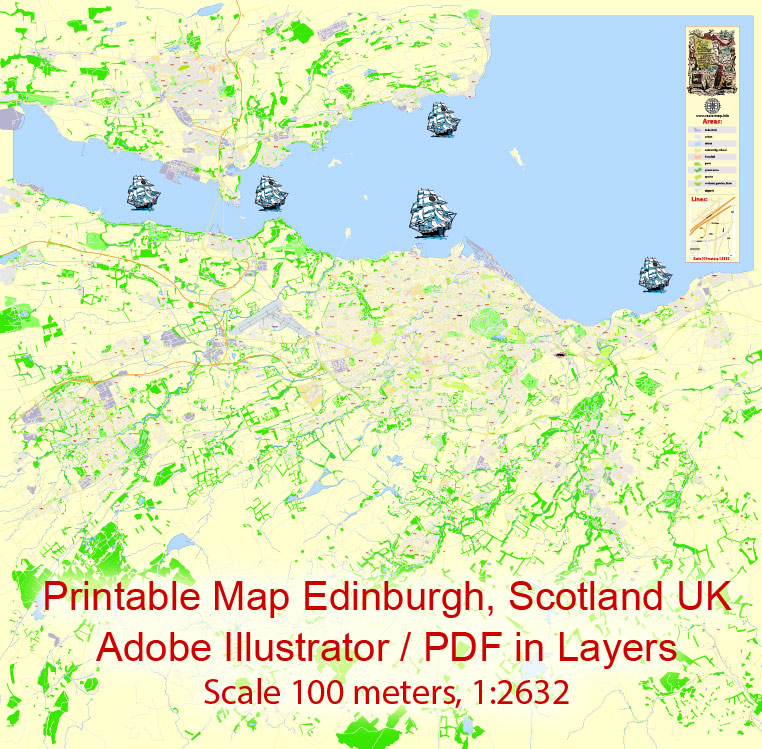
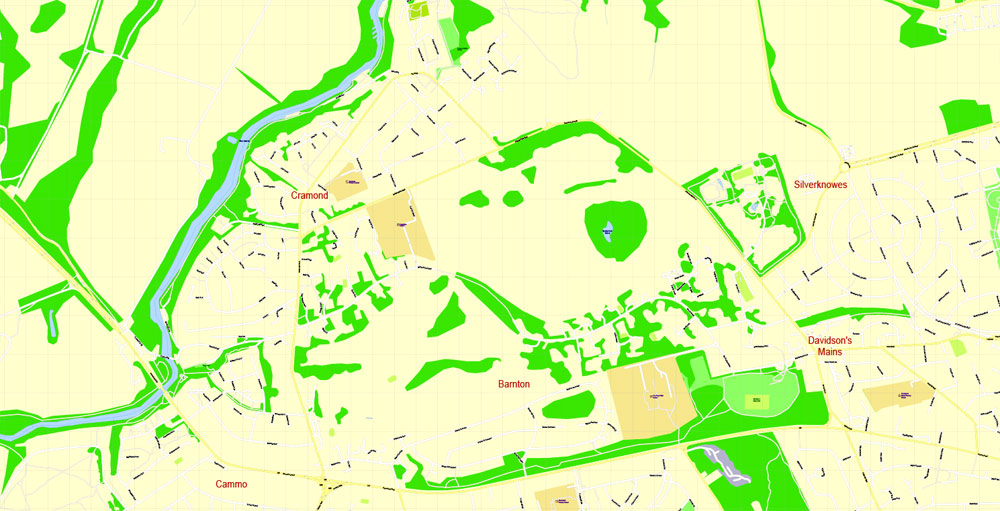
Gallery of Images "Urban plan Edinburgh Scotland":
Edinburgh Scotland Editable Digital Maps for Business and Logistics
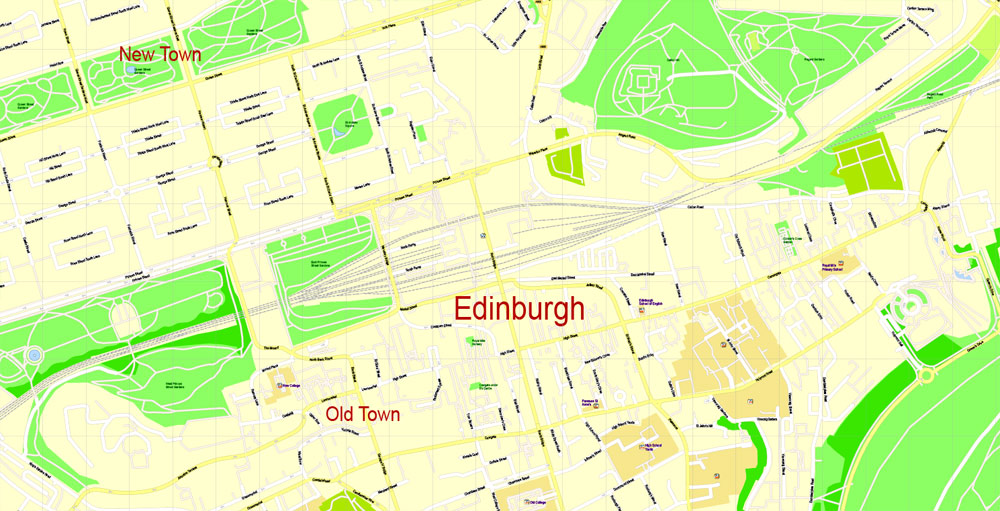
Edinburgh Urban Plan: Digital Cartography for Historical Research
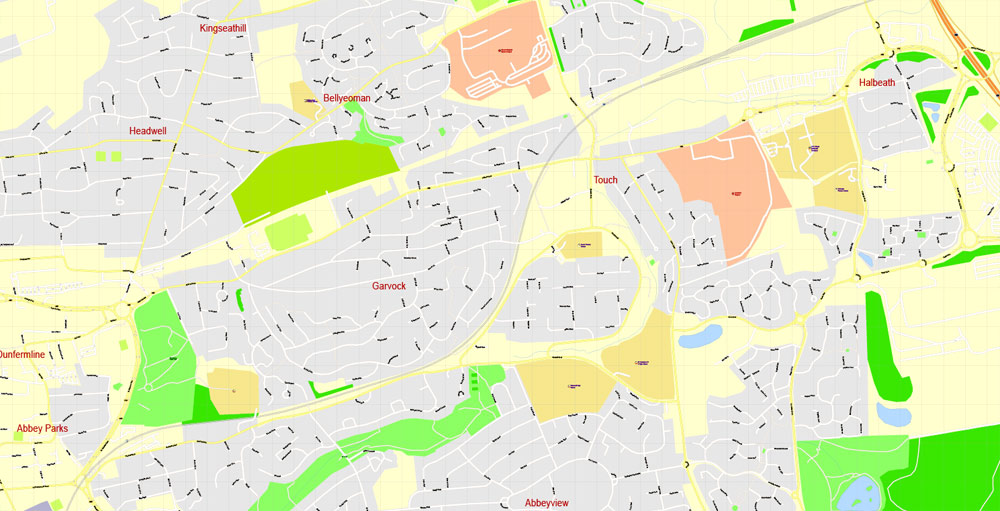
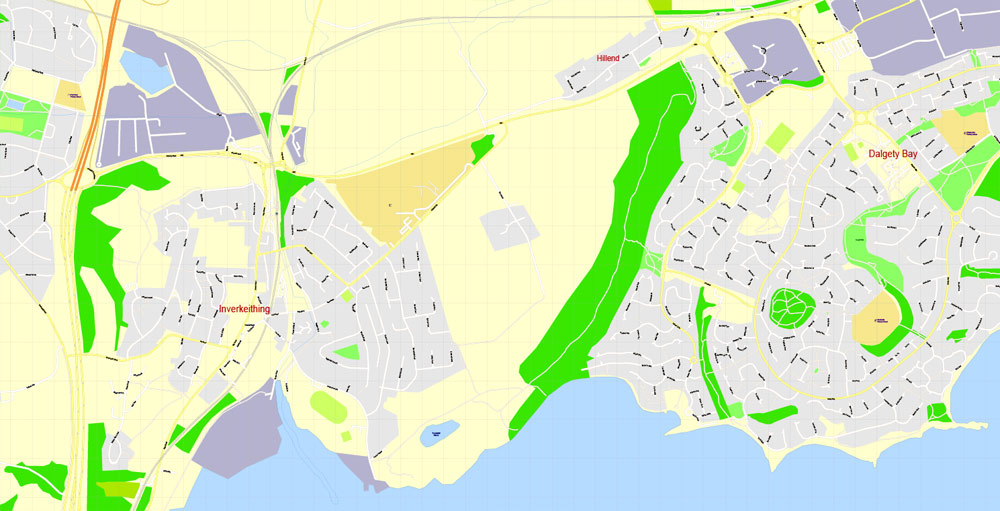
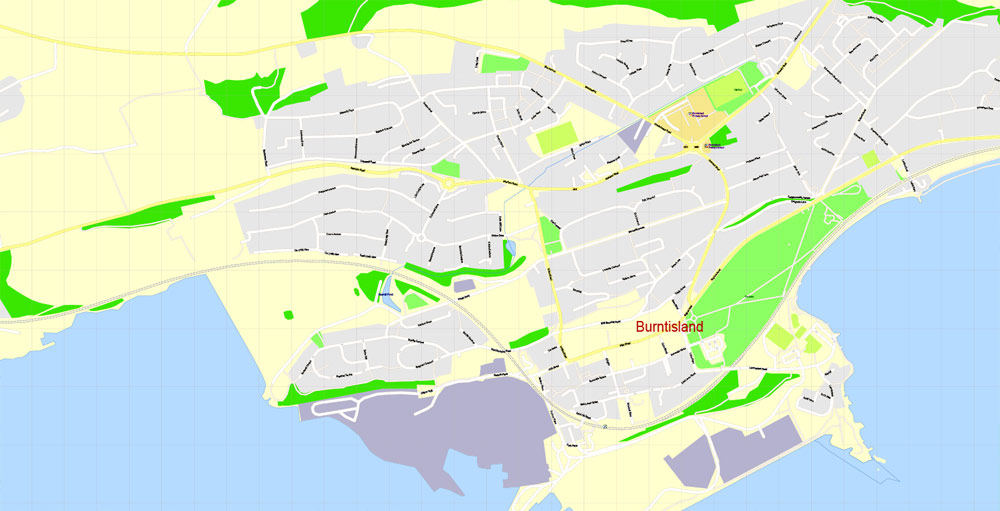
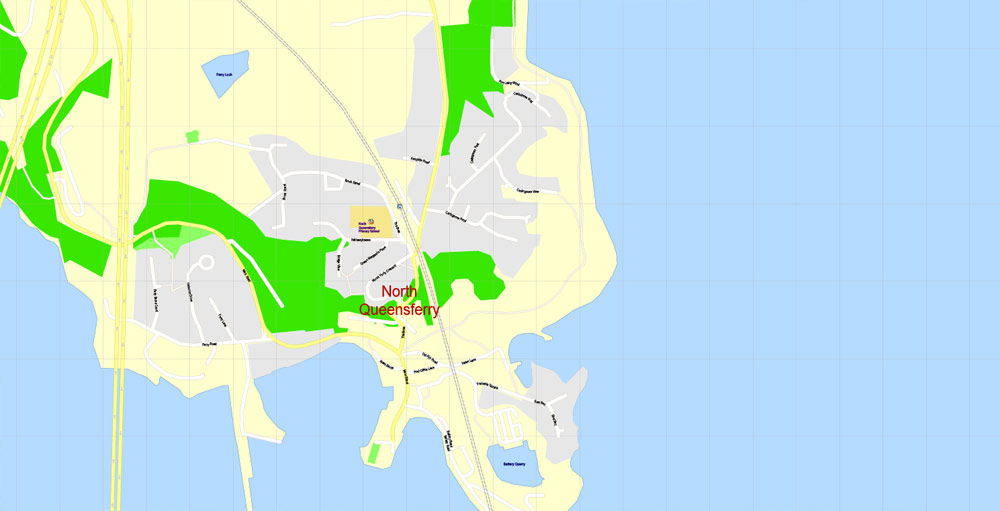
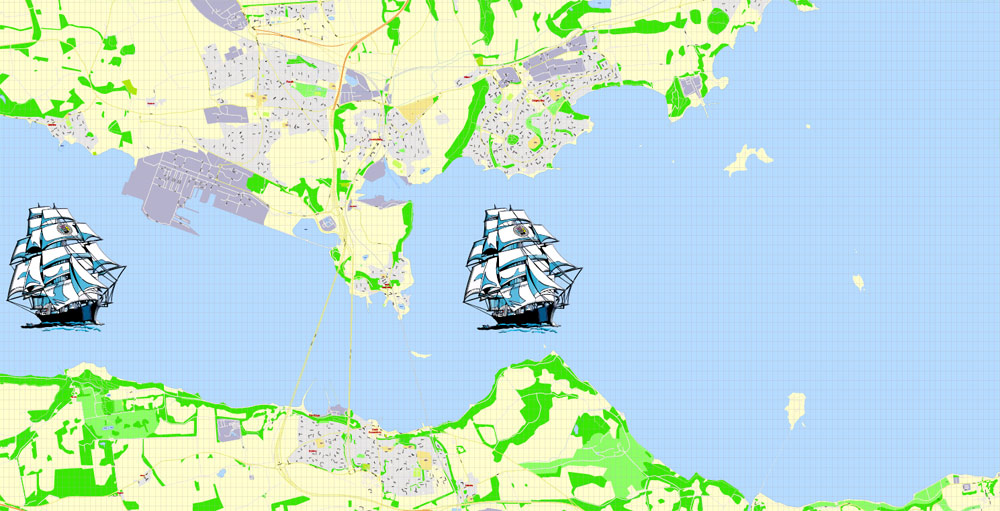
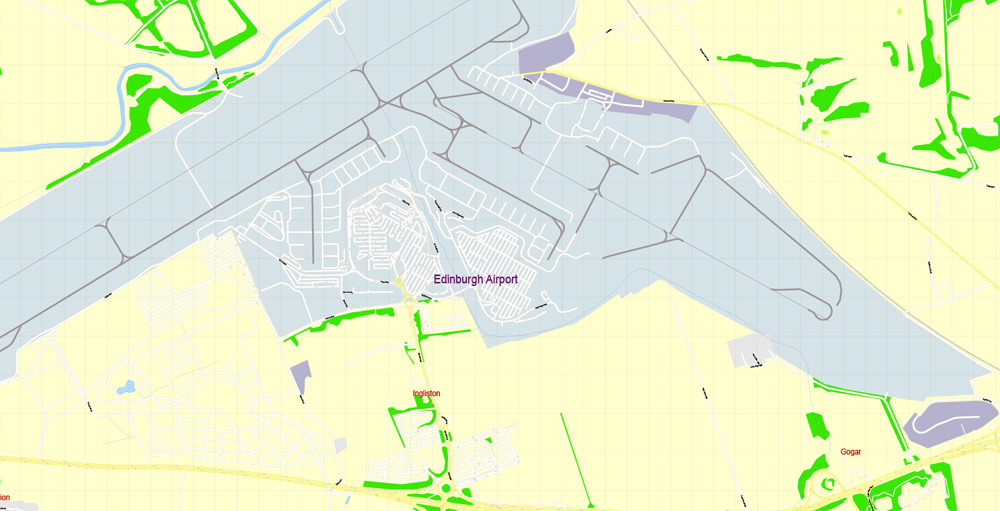
Urban plan Edinburgh Scotland: Digital Cartography in Vector Formats: AutoCAD DWG DXF, Adobe Illustrator, PDF
Edinburgh, Scotland
Edinburgh is located in the eastern part of the coast of Scotland at the southern shore of the bay called the Firth of Forth. This city is the capital of Scotland, the administrative center of the region of the same name and the second largest settlement in this part of the UK. From a geographical point of view, it is located on the territory of the Sredneshotland lowland, the area of the city is 259 square kilometers. There are approximately 450,000 residents in Edinburgh.
The capital of Scotland is a thriving economic, cultural, financial, and tourist center of Great Britain. It is the second after London in economic development and the fifth business center in Europe. In addition, the city is called the main transport hub of the central-western part of Scotland.
Edinburgh is located in a temperate maritime climate zone, which is characterized by softness, despite its northern geographical location. Winter in the city is quite warm, the temperature is kept at +4 °C and rarely decreases to 0 °C. In summer, it remains cool here, the thermometer is usually at the level of +13 ... +23 ° C. Coming to Edinburgh. Be prepared for changeable weather, the city is characterized by frequent rains. The most constant feature of the weather of the capital of Scotland is the windiness. In general, the climate of Edinburgh depends on the air flows coming from the North Sea.
Historically, Scotland was an independent kingdom centered in Edinburgh. And the heart of the city, of course, is the royal castle of Edinburgh.
People have settled here since ancient times and the fortification on the site of Edinburgh Castle, apparently, was a very long time ago, but the first written evidence is associated with King David I of Scotland (1084-1153).
The majestic Edinburgh Castle dominates the city, occupying the top of the Castle Rock (these are the remains of an ancient volcano whose activity ended 350 million years ago). There are almost steep slopes on three sides of the castle, and once there was a lake under it, drained during the expansion of Edinburgh's development.
One of the main attractions and the most famous street (or rather, a series of streets) leads to Edinburgh Castle Edinburgh - The Royal Mile, running from the Palace of Holyrood. Its length is indeed exactly a mile (the Scottish one, which is longer than the English one).
For the Middle Ages, Edinburgh Castle was not just a formal residence of monarchs, but a very formidable military fortress. Even in the XVII century. it was considered a powerful fortification, was rebuilt for the use of modern artillery for that period. By the way, the guns in the castle continue to fire regularly. A "one-hour cannon" is installed on the Mills Mount battery, which fires a shot every day, except Sundays, at exactly one o'clock in the afternoon.
Throughout its history, Edinburgh Castle has been regarded as the "key to Scotland" and one of the symbols of its independence. It is here, along with another royal regalia, that the famous Stone of Destiny (Clach Sgàin), otherwise called Skunsky (according to the Abbey of Skun) is stored - a heavy, one and a half hundredweight stone block on which the ancient Scottish kings were crowned. Where did the stone come from — only legends are told, in which Egyptian pharaohs and biblical characters are recalled (allegedly this is even the base of the stairway to heaven - Jacob's ladder). More prosaic versions consider the stone an ancient altar of a local religious cult.
In 1296, the English captured the sacred Scottish stone as a war trophy. King Edward I the Long-Legged placed the relic under the seat of his throne, on which English kings have since been crowned ("automatically" becoming kings of Scotland). The Scots were constantly making attempts to reclaim their Stone of Destiny. In 1951, there was even a successful theft of a stone from Westminster Abbey, but the stone was returned back.
It was only in 1996 that the UK government decided to transfer the stone to Scotland, but with the condition to borrow it during the coronations. 10,000 Scots greeted the relic, lining up along the Royal Mile.
Nowadays, Edinburgh is open to the public and is the most important Scottish tourist attraction, receiving about a million tourists a year.
Scotland is a country in the north of the island of Great Britain, which is part of the state of the United Kingdom of Great Britain and Northern Ireland. It borders on land with England and is washed by the Atlantic Ocean seas: the Northern (in the east) and the Irish (in the west). The capital of Scotland is Edinburgh, and the largest city is Glasgow. The country has an amazing authentic atmosphere, rich traditions and broad autonomy.
Scotland is one of the most beautiful places in Britain, which is famous for its magnificent dramatic landscapes of rugged mountains and green valleys, picturesque hills, fields, forests and rugged coastline. Here, history surrounds almost everywhere, revealing the veils of secrets of legendary battles, romantic ruins, and old stone churches. Scotland is a country of amazing diversity, where you can find almost a complete set of tourist attractions: beautiful medieval cities, fabulous castles, and beautiful natural landscapes. But the main highlight of Scotland is the loneliness of remote moorlands and islands, wild mountains and secluded sandy beaches.
The population is 5.3 million people.
The area is 78,722 km2.
The language is English, Gaelic, and Scottish.
The currency is the pound sterling.
The time is UTC 0, in summer +1.
The UK is not a party to the Schengen Agreement. You can get a visa by personally visiting accredited visa centers located in Moscow, Novosibirsk, St. Petersburg, Rostov-on-Don and Yekaterinburg.
The state system is a parliamentary constitutional monarchy.
The predominant religion is Presbyterianism (a branch of Christian Protestantism).
The voltage of the electrical network is 230 V, 50 Hz.
Automobile traffic is left-hand traffic. Drunk driving is not allowed. Most intersections are equipped with roundabouts.
The most popular souvenirs are whiskey (scotch) and kilt. A real kilt is made of wool and is quite expensive (300 - 400 pounds).
Geography and nature
Scotland occupies the northern part of the UK. In terms of area, its territory is approximately equal to the Czech Republic. The country is washed by the seas of the Atlantic Ocean: Northern and Irish. Scotland is separated from the island of Ireland by a strait. Despite all the diversity of nature and relief, the country's territory can be divided into three physical and geographical regions: the North Scottish Highlands (occupies the north and west), the Mid-Scottish Lowlands and the South Scottish Highlands. In the central part of the highlands, there is the largest mountain range in Scotland - the Grampian Mountains (including the highest point in Scotland and Great Britain, Ben Nevis, with a height of 1,344 m).
In terms of terrain, Scotland is a country of low mountains and hills. The North Scottish Highlands occupy 60% of the country's territory, and the South Scottish Highlands - 20%. Thanks to this, Scotland has many untouched natural landscapes. The country has a significant sea coast (the length of the coastline, not counting numerous islands, is almost 10,000 km). The west coast of Scotland is mainly characterized by rugged coastline, reminiscent of Scandinavian fjords, and cliffs. The eastern coast, on the contrary, has a more even outline and numerous sandy beaches. Also, the coastal waters include more than 700 islands, which are grouped into the following groups (archipelagos): the Shetland Islands, Orkney Islands, and the Hebrides.
Scotland is famous for its many picturesque lakes and small rivers. The largest rivers are Tay, Spey, Clyde, Dee, Don, Tweed. The largest lakes: Loch Lomond (the largest lake in the UK by area), Loch Ness (the largest by volume), Loch O. Scotland also has a stunning and diverse nature: rugged mountains with fast rivers and waterfalls, meadows and coniferous forests, heath marshes and wastelands, plains and a picturesque coast with fjords and sandy beaches.
Gallery of Images "Urban plan Edinburgh Scotland":
Strategic Development Plan - The City of Edinburgh Editable Vector Maps
Digital Vector Maps of Scotland: For business, travel, education
- Urban plan UK FULL Ireland
- Urban plan Poland Relief CDR 2
- Urban plan San Francisco Bay California
- Urban plan Birmingham Alabama pdf
- Urban plan Durban South Africa PDF
- Urban plan Hanover Germany
- Urban plan Dortmund Germany
- Urban plan Oslo Norway pdf
- Urban plan Toronto Canada PDF
- Urban plan Vantaa Finland ai
- Urban plan Moscow
- Urban plan Yale University New Haven Connecticut SVG
- Urban plan Ottawa Canada
- Urban plan Saint Petersburg S1
- Urban plan Geneve Switzerland
- Urban plan Liverpool UK pdf
- Urban plan Dortmund Germany ai
- Urban plan Barnaul
- Urban plan Derby UK
- Urban plan Melbourne Australia PDF
- Urban plan Washington Baltimore PDF
- Urban plan La Plata Argentina PDF
- Urban plan Singapore PDF
- Urban plan Santa Fe New Mexico PDF
- Urban plan Saint Petersburg Tampa CDR
- Urban plan Tampere Finland ai
- Urban plan Bremen Germany ai
- Urban plan Jackson Mississippi
- Urban plan Prague Praha Czech Republic ai
- Urban plan Osaka Japan
- Urban plan Budapest Hungary
- Urban plan Belfast Ireland
- Urban plan Victoria Canada
- Urban plan Galway Ireland
- Urban plan Macon Georgia
- Urban plan Wellington New Zealand 13 PDF
- Urban plan Yuzhno Sakhalinsk pdf
- Urban plan Bend Oregon
- Urban plan Jerusalem Israel Hebrew
- Urban plan Las Vegas Nevada 3 10
- Urban plan Warsaw Poland
- Urban plan Burlington Vermont
- Urban plan Karlsruhe Germany pdf
- Urban plan Miami Florida 4
- Urban plan Berlin
- Urban plan Ottawa
- Urban plan Edmonton Canada PDF
- Urban plan Staten Island New York
- Urban plan San Jose California pdf
- Urban plan Barcelona Spain
- Urban plan Fiji PDF
- Urban plan Tel Aviv Yafo Israel 12 PDF
- Urban plan Denmark Admin
- Urban plan Essen Germany 25
- Urban plan Las Vegas Nevada 3 10 PDF
- Urban plan Detroit
- Urban plan Hong Kong China 17 AI ENG
- Urban plan Gainesville Florida
- Urban plan Bangkok Thailand
- Urban plan Reno Nevada PDF
- Urban plan San Diego Tijuana California
- Urban plan ai Finland
- Urban plan Istanbul Turkey ai
- Urban plan Boston Massachusetts
- Urban plan Acre Israel
- Urban plan Berlin
- Urban plan Jakarta Indonesia autocad dwg
- Urban plan Glasgow Scotland
- Urban plan San Francisco
- Urban plan Seoul South Korea
- Urban plan Australia ZIP PDF
- Urban plan Antwerpen Belgium
- Urban plan Cincinnati Ohio pdf
- Urban plan Seattle Washington
- Urban plan Lahore Pakistan