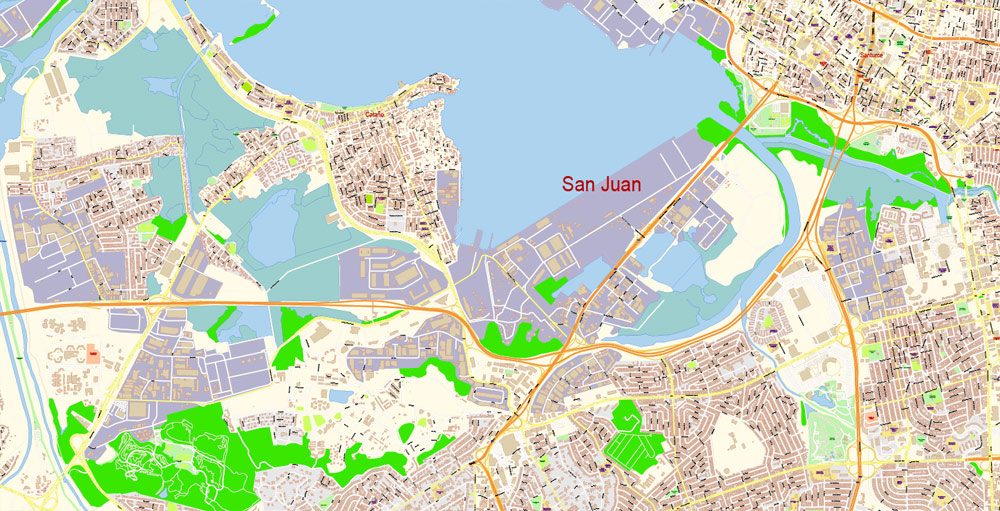
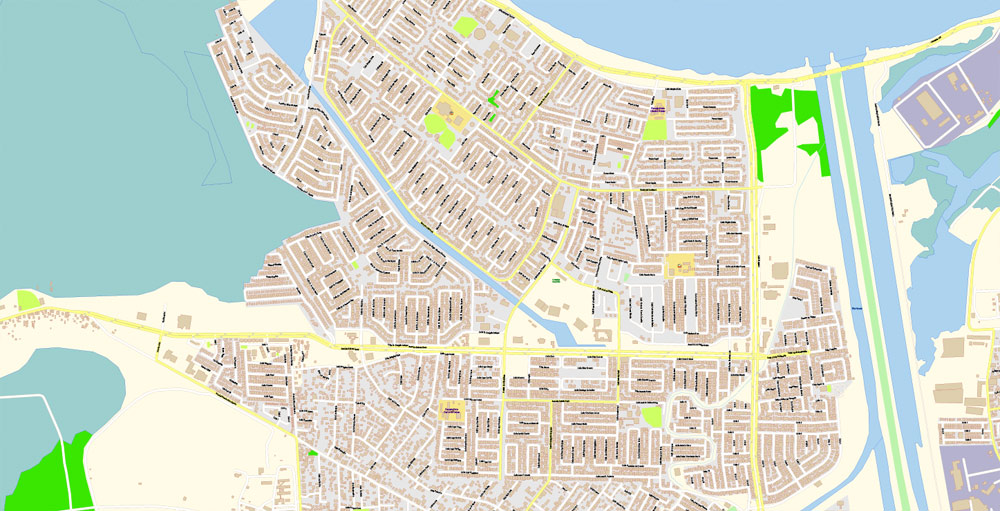
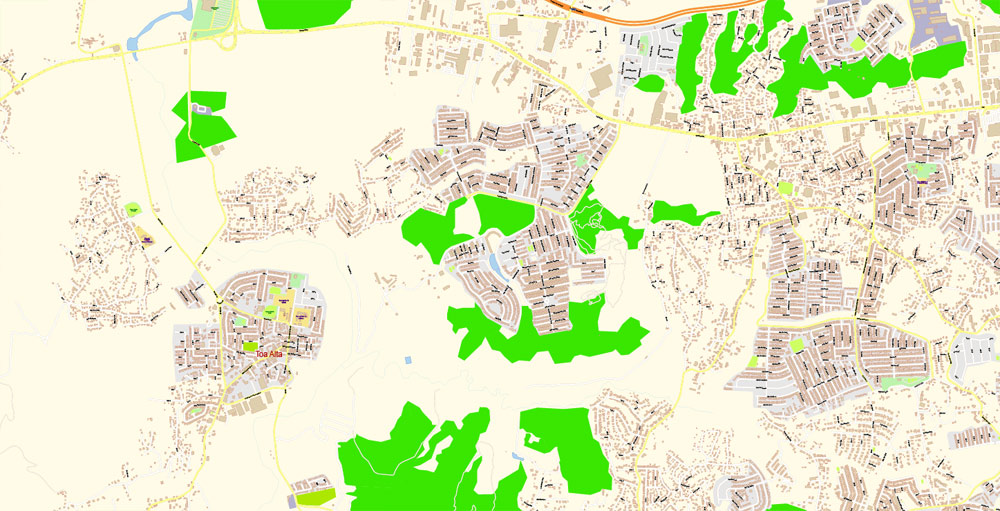
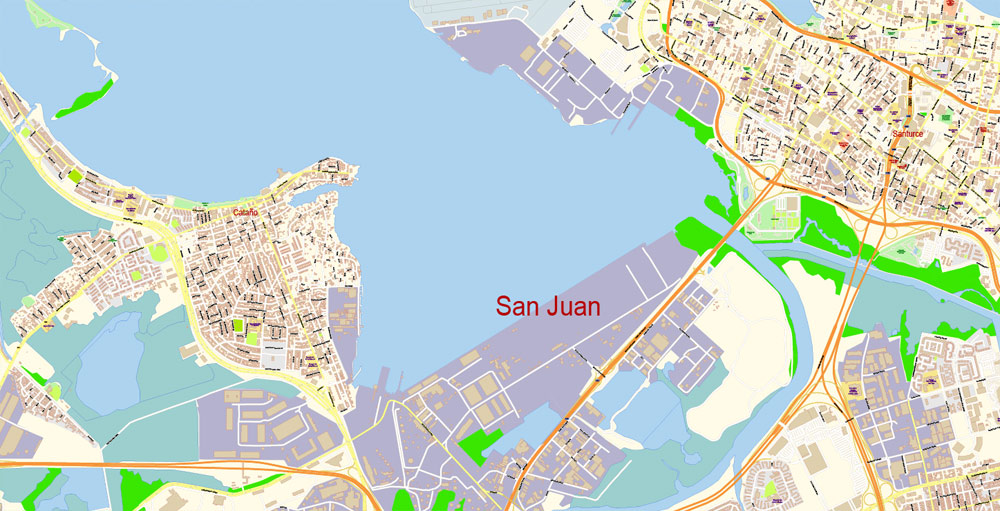
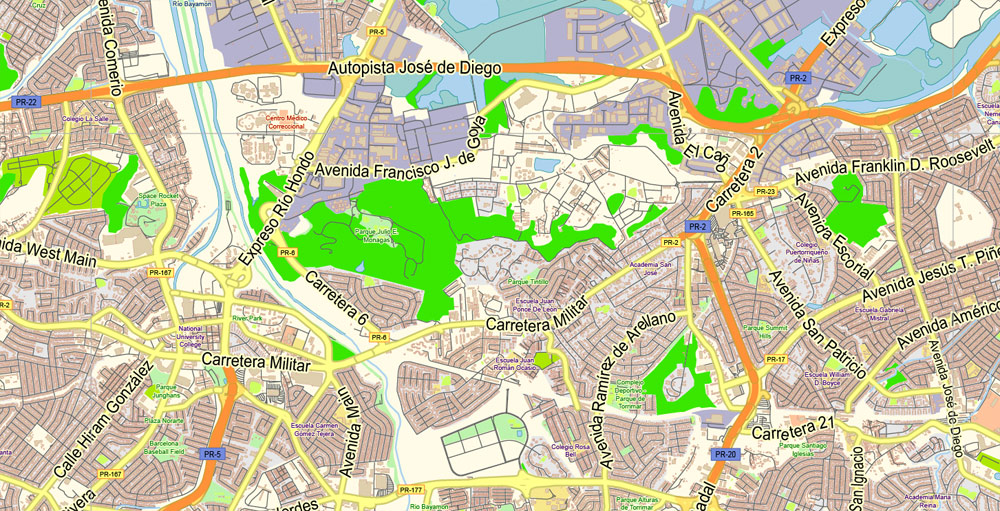
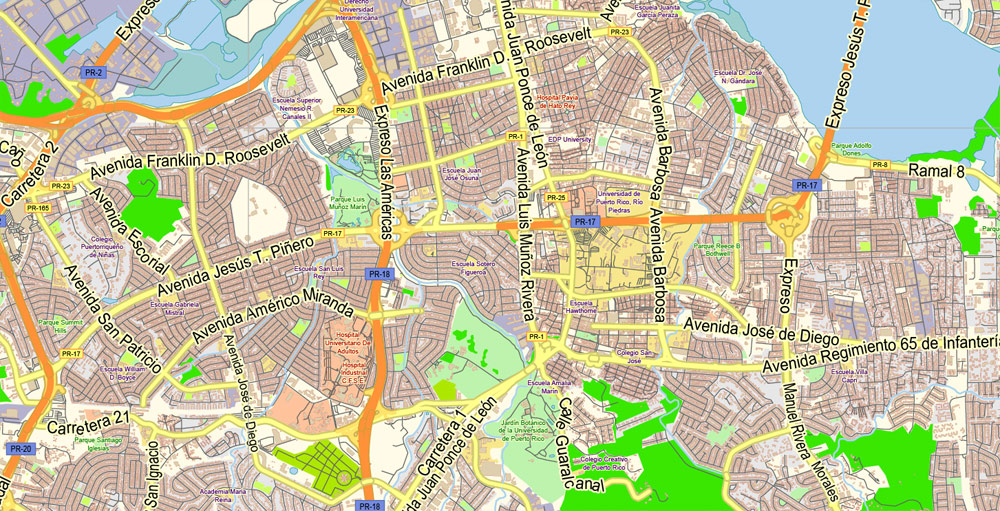
Urban plan San Juan metro area puerto rico
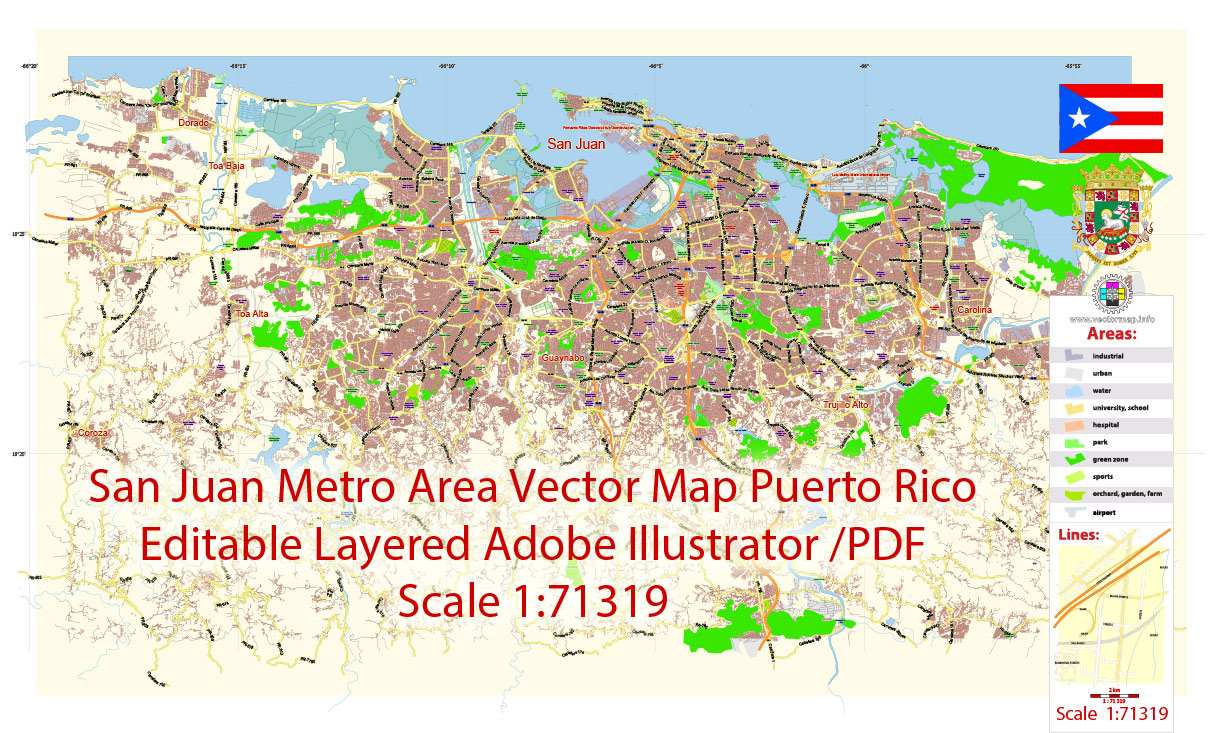
Urban Planning: San Juan metro map, Puerto Rico
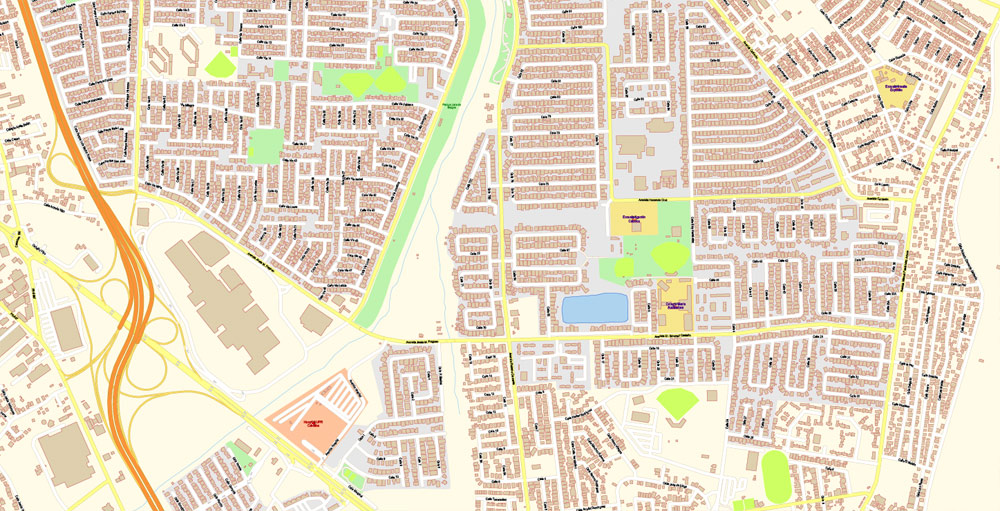
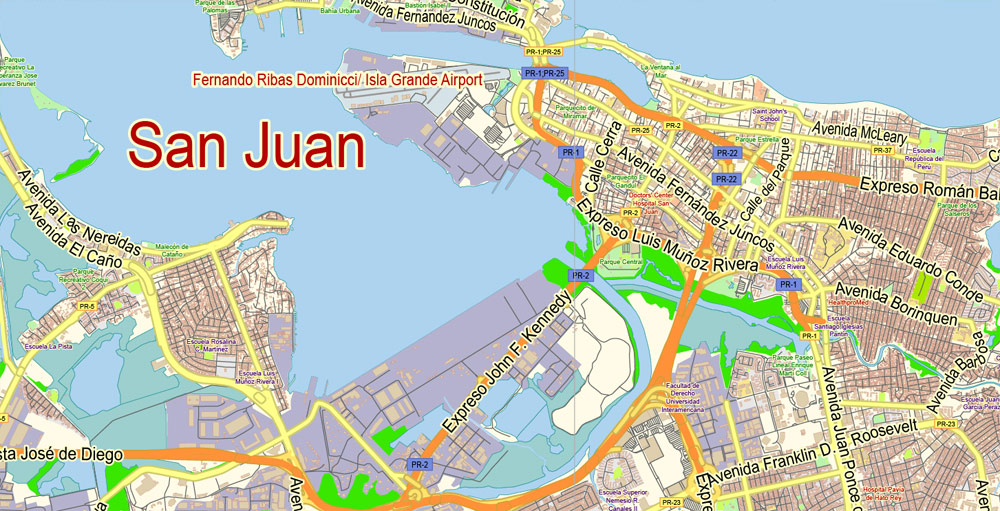
Urban plan San Juan metro area Puerto Rico: Digital Cartography
San Juan is the oldest city in the United States founded by Europeans, it traces its history back to 1508, when one of the first settlements on the shores of the New World was founded in its place. Moreover, it was founded by the legendary Juan Ponce de Leon, who owns the right to discover Florida and who, as the legend says, found the Source of Eternal Youth (on a small island near Puerto Rico). But the city received its name only in 1521 in honor of John the Baptist.
San Juan is very lucky: despite the long history of colonial wars, pirate raids, uprisings and looting, the old city has been perfectly preserved. Ancient forts and wonderful examples of colonial architecture create an extraordinary historical atmosphere, which rare cities in America can boast of.
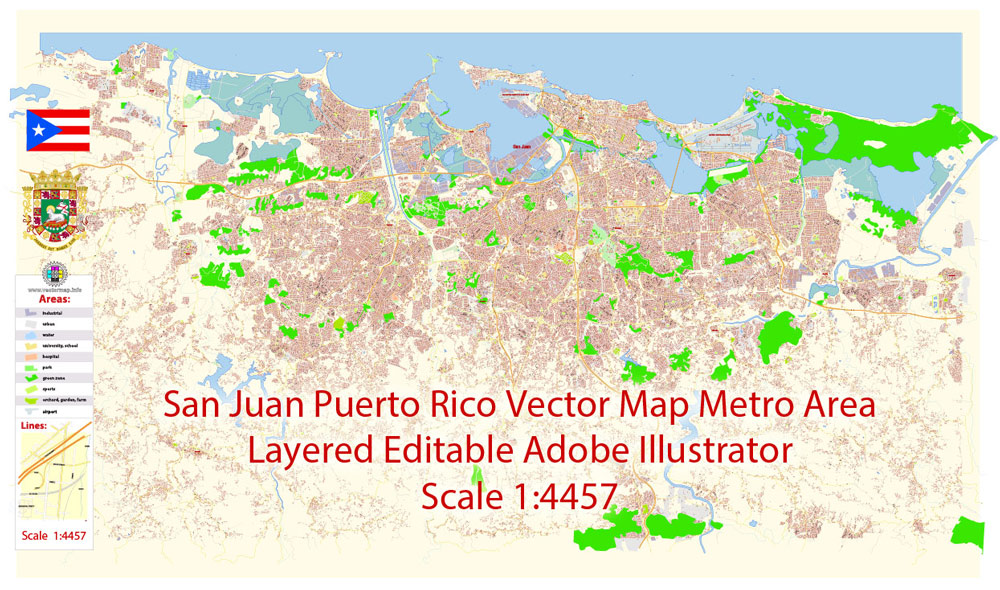
San Juan is divided into 18 administrative districts (barrios). The main area is considered to be the Old Town. Old San Juan is located on the western tip of the peninsula at the mouth of San Juan Bay. This area is the main historical area and resembles an open-air museum. Here you can see the main historical and cultural attractions: buildings of the Spanish colonial era, fortress walls, and forts. And also - to walk along the narrow cobbled streets and mentally go back several centuries.
If you move east of Old San Juan, you can get into the lively tourist area of Condado. There are magnificent beaches here, such as Ocean Park, Condado, and others. Swimmers, surfers, and outdoor enthusiasts often come here. There are also many hotels, restaurants, walking and entertainment areas in this area.
Miramar is a prestigious residential area located south of the Condado Lagoon. There are business centers, a large port and a wide picturesque embankment connecting the area with the Old Town. And yet, it was here that the first airport of San Juan was built - Isla Grande. In 2005, Miramar was designated a Puerto Rico Historic District.

Isla Verde is an area of wide beaches with snow-white sand and green palm trees. The territory is also famous for its well-developed tourist infrastructure and a wide range of entertainment for every taste. Thanks to the many shops, restaurants, bars, hotels, comfortable and picturesque places to relax, this area have become a favorite of many tourists.
A large number of multi-story buildings and business centers are concentrated in the Ato-Ray area. In addition to high-rise buildings, there is the Luis Munoz Marina Park with bicycle and jogging paths, ponds and picnic areas. Among the entertainment facilities, the tourist will find many restaurants and bars here, as well as a cinema and a cable car.
Rio Piedras is an area that boasts many shopping areas, shops, and picturesque walking areas. The largest university of Puerto Rico and the Roosevelt Bell Tower are located here. Another asset of Rio Piedras is the Botanical Garden, where you can see hundreds of species of tropical plants.
Population
The population of San Juan is about 400 thousand people. The racial composition of the city is numerically dominated by Latinos, African Americans, and representatives of the Caucasian race. The majority of local residents are Catholics, but religious freedom for all faiths is guaranteed in the territory of the city and the country.
History
In 1508, the Spanish conquistador Juan Ponce de Leon founded a settlement, which he named Caparo. A year later, it was moved to a place that was then called Puerto Rico (in Spanish - "rich port"). In 1521, the new settlement was officially named Puerto Rico de San Juan Bautista.
At the beginning of the XVI century, San Juan was the starting point for Spanish expeditions to unexplored parts of the New World. The city survived the attacks of the British, led by Francis Drake in 1595 and George Clifford in 1598. Fort San Juan's artillery repelled Drake's attack, but Clifford managed to land his troops and besiege the city.
Various circumstances, including liberalized trade with Spain, the opening of the island to immigrants, and colonial revolutions, led to the expansion of San Juan and other Puerto Rican colonies in the late XVIII and early XIX centuries.
In the 20th century, the city expanded beyond the walls known as Old San Juan to include the suburban territories of Miramar, Santurce, Condado, Ato Rey and Rio Piedras.
Today, San Juan is one of the largest natural ports in the Caribbean and one of the oldest cities in America.
Related Images "Urban plan San Juan metro area Puerto Rico":
Metro Discover Puerto Rico: For tourism and business
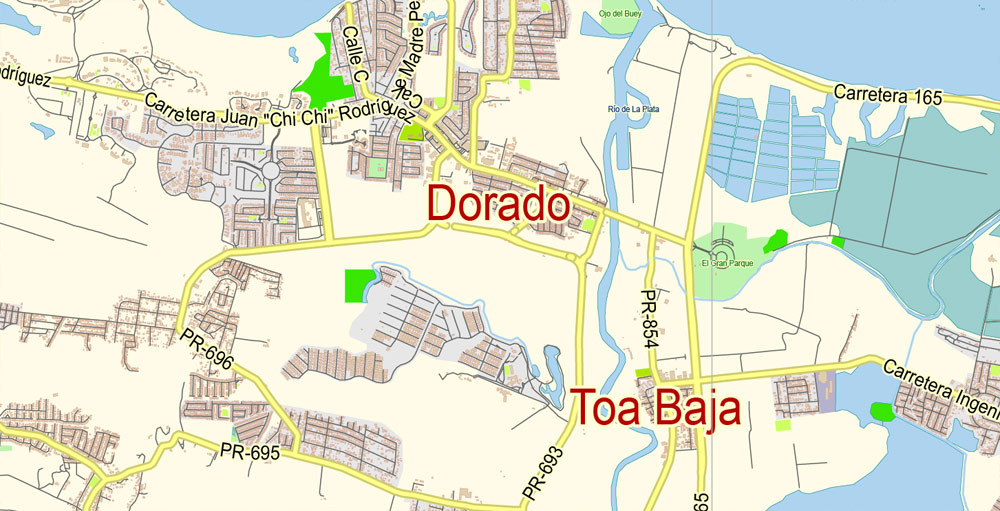
San Juan Puerto Rico Train Map, Travel Maps, City Plans
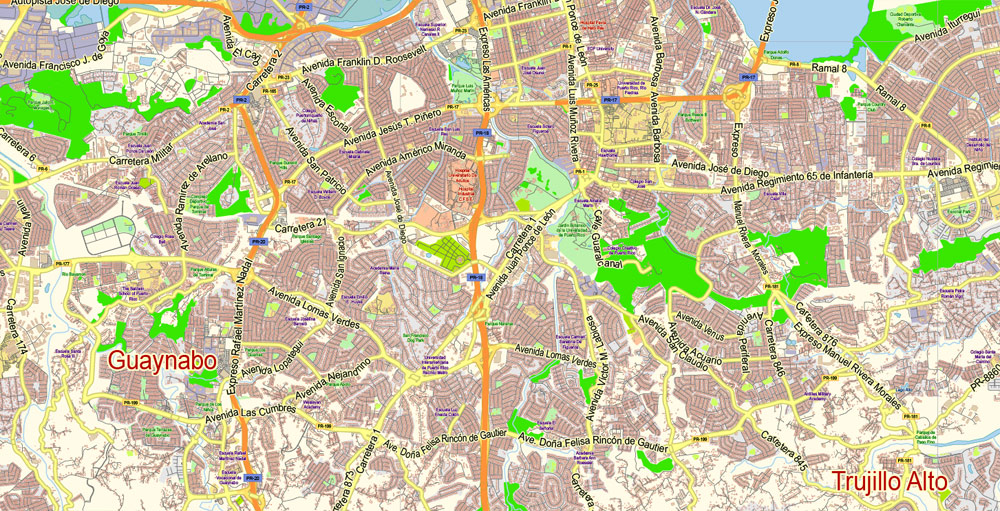

Puerto Rico Editable Digital Maps: Wall Decor
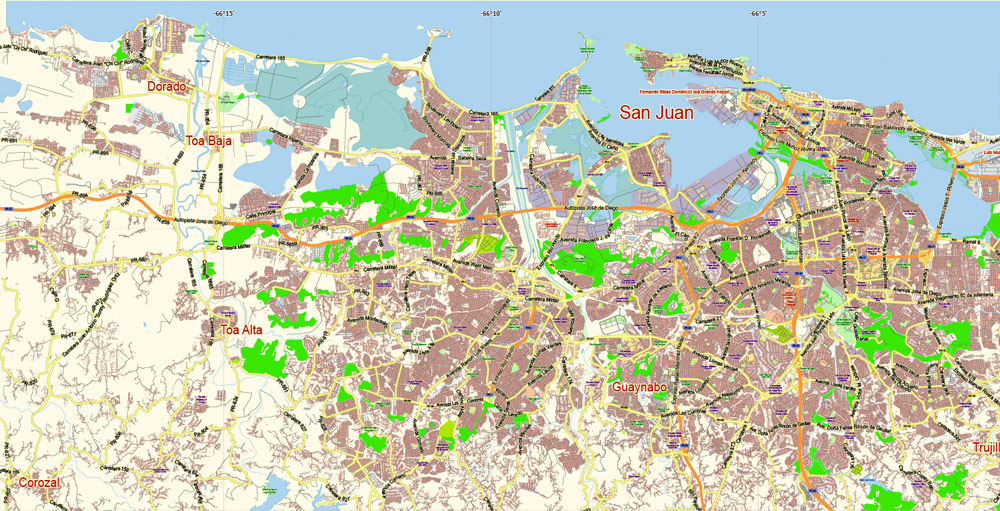
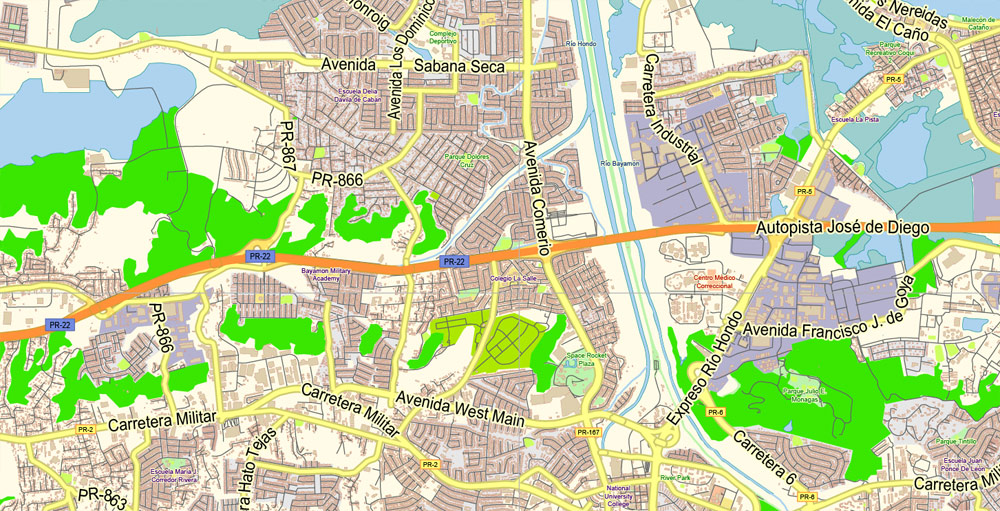
Puerto Rico Cartography: for business and logistics
- Urban plan Izhevsk Russia
- Urban plan Evansville Indiana 120 PDF
- Urban plan Bangkok Thailand
- Urban plan Barnstable Massachusetts
- Urban plan Belfast PDF
- Urban plan Norilsk PDF Russia
- Urban plan Seattle Washington PDF
- Urban plan Macau China 125 PDF
- Urban plan Osaka Japan
- Urban plan Evansville Indiana CDR
- Urban plan Olympia Washington PDF
- Urban plan Lille France
- Urban plan Kansas City CDR
- Urban plan Gdansk Sopot Gdynia Poland PDF
- Urban plan Yokohama Japan 16 ai
- Urban plan Helena Montana PDF
- Urban plan Long Beach California PDF
- Urban plan Madrid Spain
- Urban plan Little Rock Arkansas PDF
- Urban plan Bismarck North Dakota
- Urban plan San Jose California pdf
- Urban plan Wellington New Zealand 13
- Urban plan Rotterdam Netherlands
- Urban plan Bremen
- Urban plan Brisbane Australia PDF
- Urban plan Vilnius Lithuania
- Urban plan Stanford University PDF
- Urban plan Nizhny Novgorod pdf
- Urban plan Reno Nevada PDF
- Urban plan Adelaide Australia PDF 13
- Urban plan San Diego Tijuana
- Urban plan Oklahoma City PDF
- Urban plan Minsk Belarus
- Urban plan Denver Metro PDF
- Urban plan Mountain View California 13 PDF
- Urban plan Darwin Australia PDF
- Urban plan South Carolina State PDF
- Urban plan Montreal Canada 25
- Urban plan Java Indonesia autocad dwg
- Urban plan Annapolis Maryland
- Urban plan New Haven Connecticut
- Urban plan Boston
- Urban plan Macau China 12 AI ENG
- Urban plan Houston Texas PDF
- Urban plan Vienna
- Urban plan Voronezh PDF
- Urban plan Macon Georgia PDF
- Urban plan Budapest Hungary
- Urban plan Jamaica full DWG DXF
- Urban plan Athens Pireas Greece PDF
- Urban plan Augusta Maine PDF
- Urban plan Melbourne Australia PDF
- Urban plan Palo Alto Mountain View California ai
- Urban plan Eugene Oregon 3 10
- Urban plan Jefferson City Missouri
- Urban plan San Jose California
- Urban plan Veracruz Mexico
- Urban plan Liege Belgium
- Urban plan Manchester New Hampshire
- Urban plan Naples Napoli Italy PDF
- Urban plan Tehran Iran PDF
- Urban plan Minneapolis Saint Paul Minnesota PDF
- Urban plan Jerusalem Israel Hebrew 12 PDF
- Urban plan Philadelphia Pennsylvania pdf 309
- Urban plan Gothenburg Sweden Goteborg Sverige
- Urban plan Beijing China PDF 13
- Urban plan Newport Rhode Island
- Urban plan Gdansk Gdynia Sopot Poland
- Urban plan Flags Countries PDF
- Urban plan Richmond Virginia
- Urban plan Helena Montana
- Urban plan Sacramento California pdf
- Urban plan Dresden Germany
- Urban plan Portland Maine
- Urban plan Victoria Canada AI
- Urban plan Madison Wisconsin 3 10
- Urban plan San Francisco
- Urban plan Pforzheim Germany pdf
- Urban plan Dayton Ohio
- Urban plan Beirut Lebanon pdf
- Urban plan Fairbanks PDF
- Urban plan Jerusalem Israel
- Urban plan Asuncion Paraguay
- Urban plan Montreal 4P
- Urban plan Chita Russia
- Urban plan Oslo Norway pdf
- Urban plan Las Vegas Nevada PDF
- Urban plan Moscow low detailed pdf
- Urban plan Newport Norfolk Virginia Beach CDR
- Urban plan Gdansk Poland CDR
- Urban plan Fiji PDF
- Urban plan New York City
- Urban plan Cannes France
- Urban plan Birmingham Alabama
- Urban plan Rouen France
- Urban plan Tomsk pdf
- Urban plan Delray Beach PDF