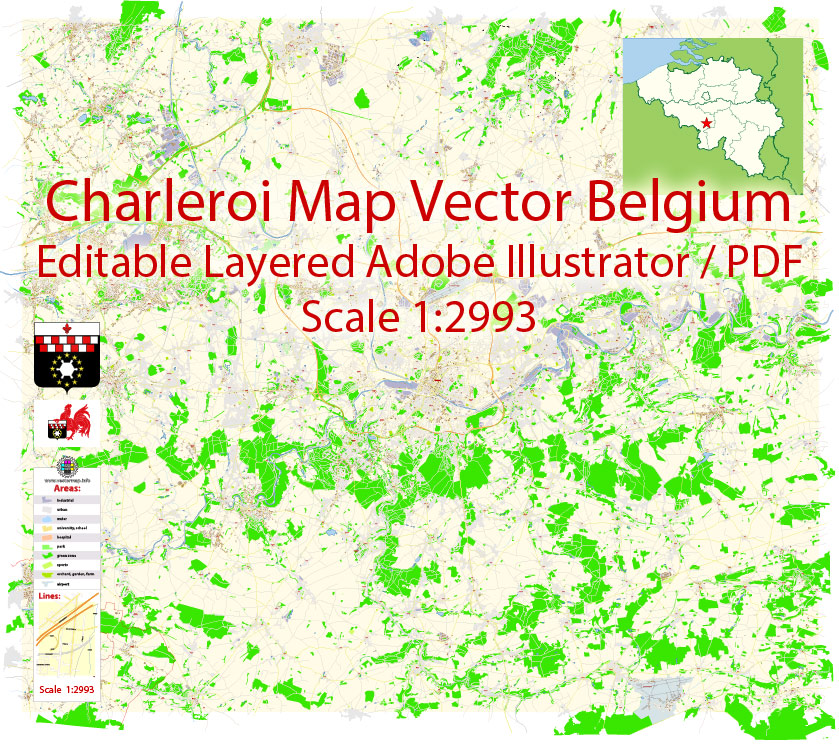
Urban plan Charleroi Belgium pdf: Fully Editable Layered City Map
Related Video "Urban plans Cities of Belgium pdf":
Urban plan Charleroi Belgium pdf
City of Charleroi
Charleroi, a city in the Belgian province of Hainaut, is one of the five largest in the country. And to be more precise, he is the "bronze medalist", that is, the third-largest. The settlement is located on the Sambre River, it is only 50 km south of the Belgian capital Brussels. In the city of Charleroi, which, by the way, belongs to the Walloon part of the kingdom, 212 thousand people live. The population with suburbs is, even more, half a million. If we consider Charleroi on the scale of not the whole state, but only Wallonia, then it is the second largest at all, second only to Liege in this indicator.
DESCRIPTION OF THE CITY
Charleroi, population 201.000, with suburbs 500.000 is an industrial town on the Sambre River, the second-largest in Wallonia after Liege.
The capital of the "Black Country" (so named because of the coal mines), Charleroi is one of the poorest and most unattractive cities in Belgium. In 2006, unemployment in the city reached 30%. The city has a bad reputation due to the high crime rate and corruption of the ruling socialist politicians.
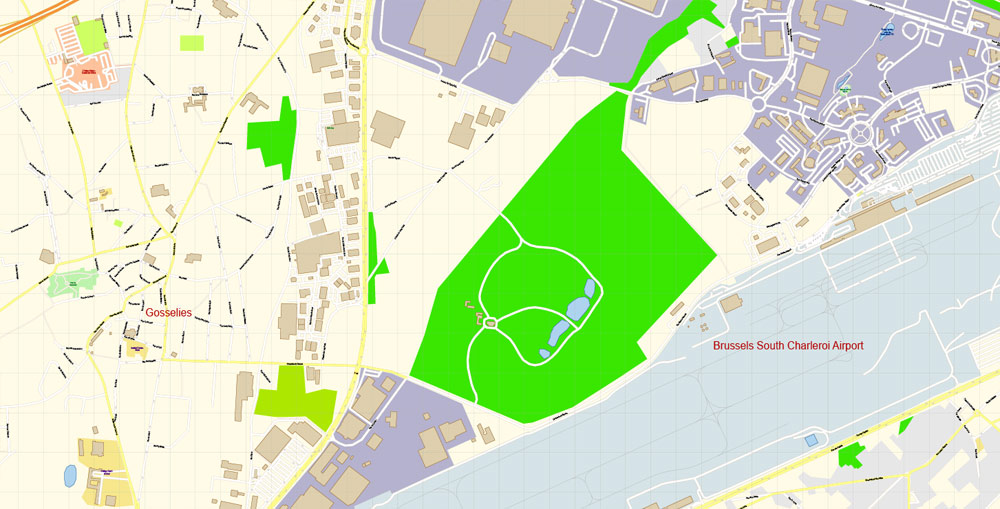
Brussels-Charleroi Airport is the largest airport in the French-speaking part of Belgium - Valonia. It is located in the north of the country, 50 kilometers from Brussels. The airfield serves flights to the southern Mediterranean and the UK. Brussels-Charleroi Airport is the second largest in Belgium, it is second only to Brussels International Airport. Today, the renovated Charleroi terminal, built-in 2008, is able to serve up to 6 million passengers per year.
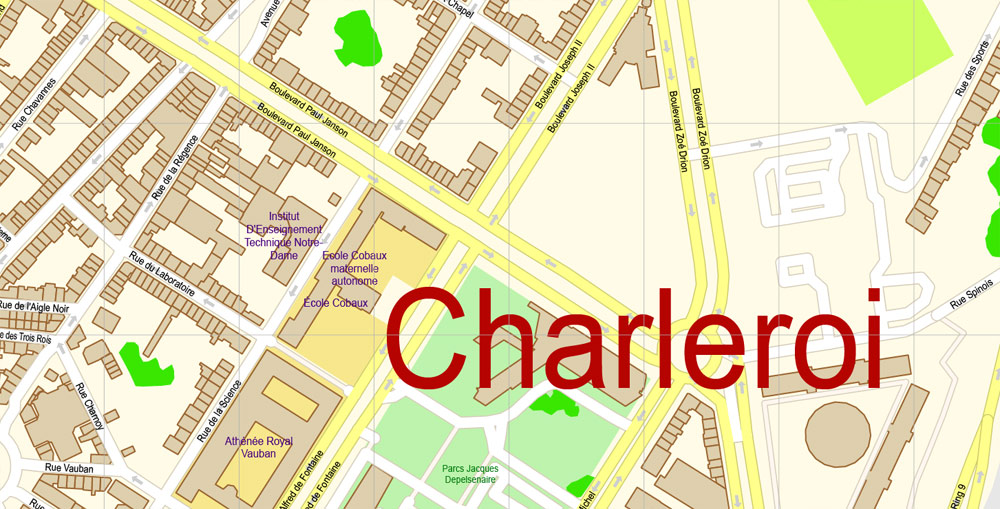
Charles II Square is located in the upper part of the Belgian city of Charleroi. It is the main square of the city. The main shopping street Montagne leads here, which is pedestrian. The square was named after King Charles of Spain (Duke of Bourbon), the last of the Spanish branch of the Habsburgs, in 1912. It used to be called the Square of Arms. Its main decorations are the neoclassical town hall and the Basilica of St. Christopher. The Town Hall was built in 1936.
Albert I Square (Place Albert 1er) was named after the great and courageous King of Belgium, who ruled from 1909 to 1934. It is the dividing line between the upper and lower part of the city of Charleroi. Albert I Square is the main shopping area of the city. Most commercial and financial companies are located here. The square is always noisy and crowded. Every year there are folk festivals in honor of the Mardi Gras holiday
Belgium's third-largest city Charleroi is located in the Walloon French-speaking part of the country. There is an opinion among Belgians that Charleroi is a poor and polluted city that cannot boast of anything interesting. He lures tourists with the Museum of Photography, which has achieved world recognition, as well as the annual festival of modern dance.
Charleroi has gained some popularity among low-cost airline passengers because Brussels-Charleroi airport is located a few kilometers north of the city.
How to get
Brussels-Charleroi Airport is located 7 kilometers north of the city center, serving budget airlines Ryanair, Jet4you, Jetairfly, and Swizzair, operating flights to Europe and North Africa.
The main railway station is Charleroi-South, where the first railway line connecting the city with Brussels opened in 1843. Currently, the station has connections with Paris, Liege, Tournai, Bren-le-Comte, Mons, Antwerp, Essen, and other cities.
Charleroi-West is considered a secondary railway station and, due to its proximity to the southern railway station, which takes on the main "blow", serves very small passenger flows.
Entertainment and attractions of Charleroi
With its pedestrian zones, squares, parks, shopping centers, and developed infrastructure, Charleroi has earned the status of a well-maintained city - an ideal place for walking and shopping. And the reputation of his Museum of Fine Arts, the Museum of Photography and Ballet is recognized far beyond the borders of Belgium.
Museum of Glass
An echo of the "past" life of Charleroi, once the former city of glass masters, is the Glass Museum, whose exposition traces the history of the origin, development, and use of this "substance", as well as its composition and application features. The museum's collection covers an extensive time frame - from the origins to the present. The museum presents products made of Venetian glass, 19th-century crystal, fine glass from Germany and Bohemia, as well as magnificent "copies" in the Art Nouveau style.
Museum of Fine Arts
The already mentioned Museum of Fine Arts (Musée Des Beaux-Arts) is represented by a rich collection covering the main Belgian schools of painting: neoclassicism, realism, socialist realism, Impressionism, Expressionism, and Surrealism. And among the outstanding artists whose works have replenished the museum's exposition, one can single out Rene Magritte, Felicien Rops, Eugene Bosch, Konstantin Meunier.
The museum is open to visitors: Tue.-Fri. 09:00-17:00; Sat.-Sun.: 10:00-18:00. Guided group visit — 50-65 EUR per group. Visiting without a group — on the first Saturday of the month at 11:00 (8 EUR), or any day by prior reservation (at least 4 visitors).
Museum of Photography
In the southwestern part of Charleroi, in the Mont-Sur-Marchienne area, a large museum of photography is located in the building of a former monastery. The museum's collection covers the history of photography: from the formation to the latest modern developments. Exploring the museum's exposition, as if through a camera lens, the visitor plunges into the rich and dynamic world of photography. The museum is open: Tue.- Fri.: 09:00-12:30, 13:15- 17:00; Sat.- Sun.: 10:00-12:30, 13:15-18:00. The entrance fee is 7 EUR.
Cartier Castle
One of the "pearls" of Charleroi is considered to be Cartier Castle. Located in Marchienne-aux-Ponts (a former commune, now the Charleroi district), the castle served as the residence of more than one aristocratic family. Built by order of the Honore family in the 17th century, the castle has repeatedly passed "from hand to hand" and changed its owners.
Walking around the city center
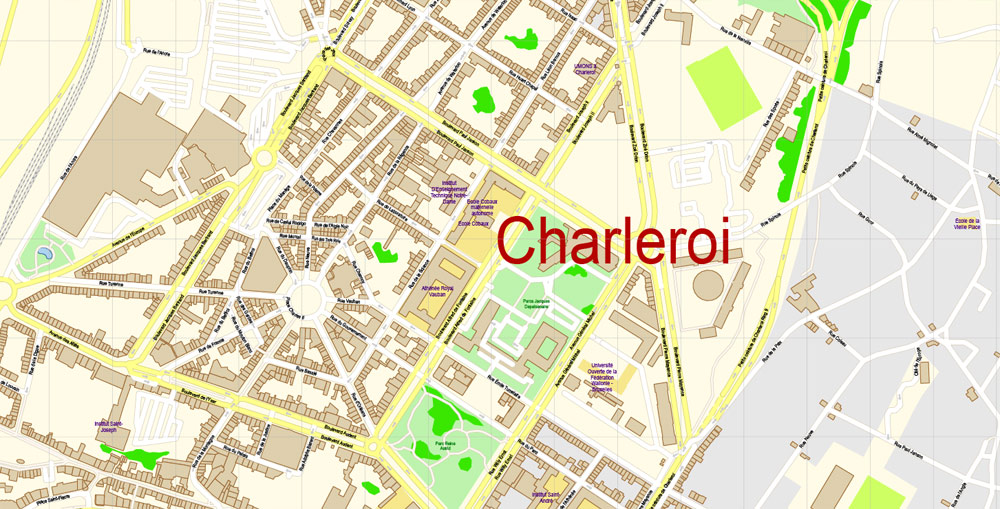
Let's start our walkthrough Charleroi from the Upper Town: namely, from the Manege Square (Place du Manège), to the west of which stands the Palace of Fine Arts. From Manezhnaya Square, across rue du Dauphin, we move towards Place Charles II, where we admire the Town Hall building (1936), look into the Jules Desire Museum located in it, dedicated to the life of a Belgian politician; and contemplate the Basilica of St. Christopher (1801)
Then we move along the semi-pedestrian shopping street Neuve (Rue Neuve), turn left onto Boulevard Paul Janson, then right, and, following the Boulevard Gustave Roulier, we get to the University of Paul Pastour (1901).
At the end of Gustave Roulier Boulevard, we cross the square and get to the Boulevard Dewandre. Then we take the right and get to Boulevard Joseph II, from where we move towards Boulevard Alfred de Fontaine, where the mandatory Museum of Glass is located.
You can have a little rest and catch your breath in the nearby Queen Astrid Park.
Turning right onto Boulevard Audent, we continue to move until we reach the monument to Jules Desire. Then you can return to Charles II Square or, after walking along with Rue de la Montagne, which is a pedestrian shopping area, go down to the Lower Town.
Going down Montagne Street, we follow straight to Rue de Dampremy, where the facades of houses built in 1694 and 1731, respectively, hide behind numbers 67 and 69. Going a little forward, on the right you can find the ruins of an ancient fortress, and turning left, at the end of the street — the chapel of St. Fiacre (17th century).
Turn onto Boulevard Joseph Tirou, once the former bed of the Sambre River, and turn left in the direction of Albert I Square (Place Albert I). After passing along the Rue du Collège, we move in the direction of Place Emile Bisset and exit to the monument of Constantin Meunier.
From Bisset Square, we move along Leopold Street (Rue Léopold), then turn left onto Rue des Peines Perdues and go to Rue Navez, where the magnificent facade of the Notre Dame Institute (18th century) flaunts, returning back to Boulevard Joseph Tiru, turn left, move along Rue Pont de Sambre, then up from Montagne Street to Charles II Square, from where we return to Manezh Square, where our walk is coming to an end.
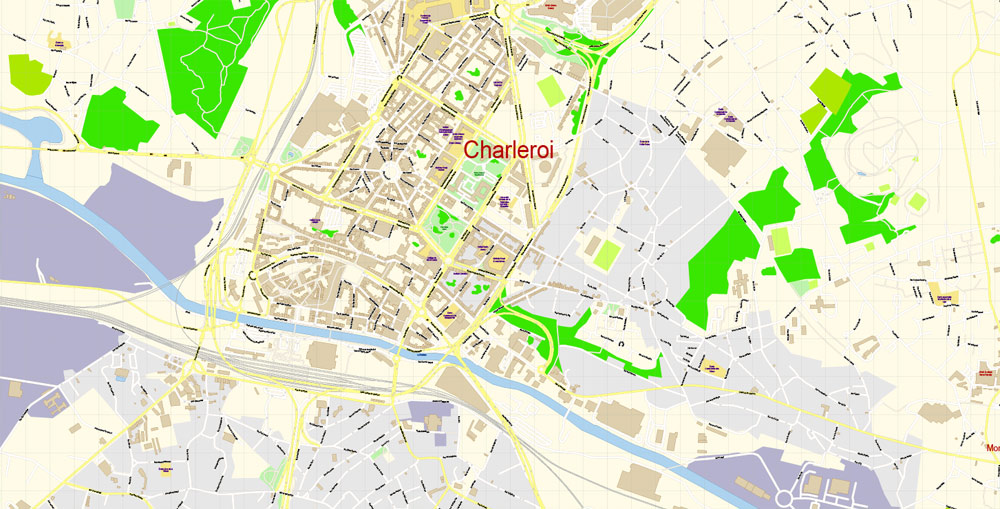
Gallery of Images "Urban plan Charleroi Belgium pdf":
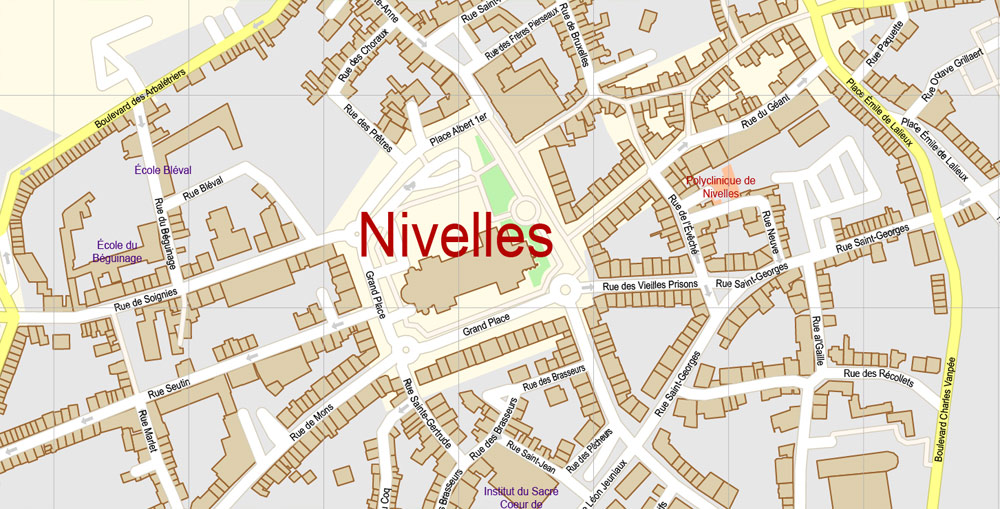
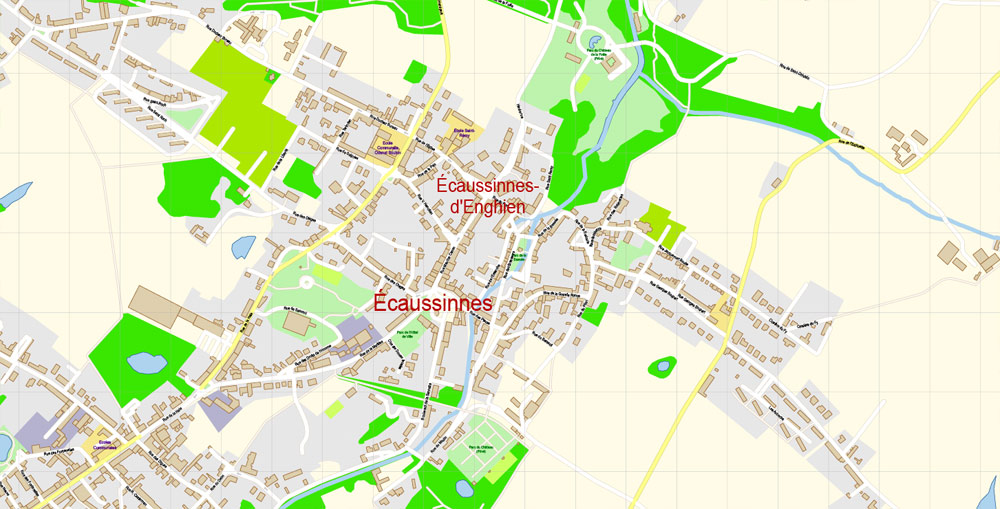
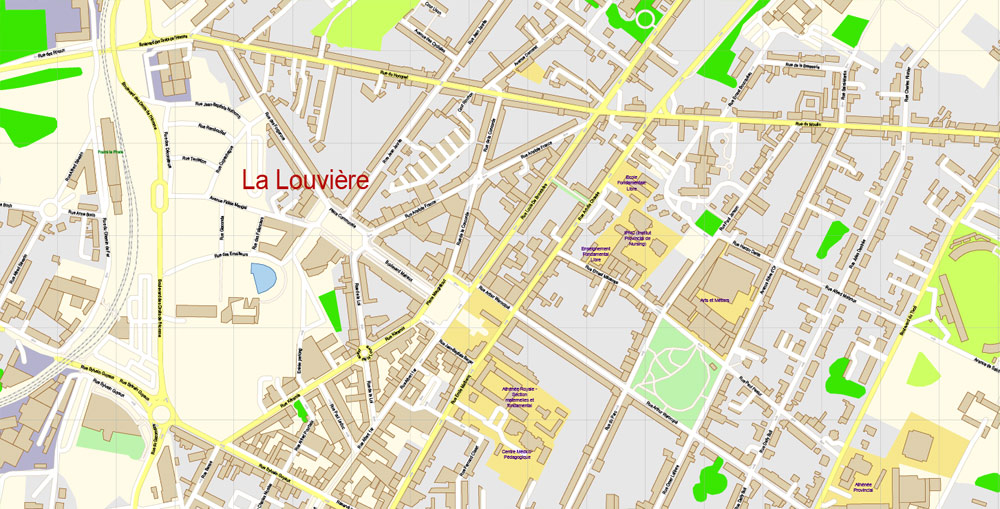
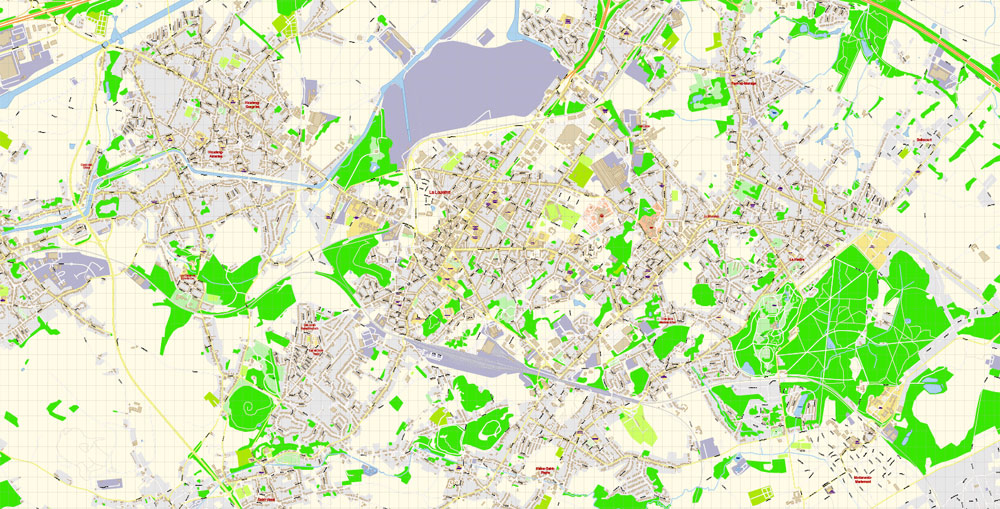
Charleroi Map Vector Belgium Exact City Plan Extra High Detailed
Belgium Charleroi Urban Planning: Digital Cartography
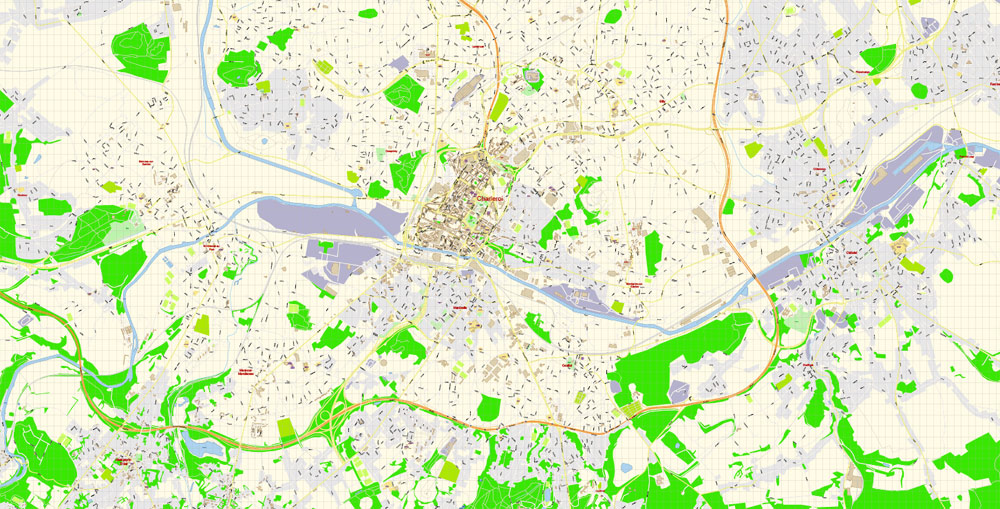
Charleroi Belgium GIS-Service: Digital Maps for Business and Education
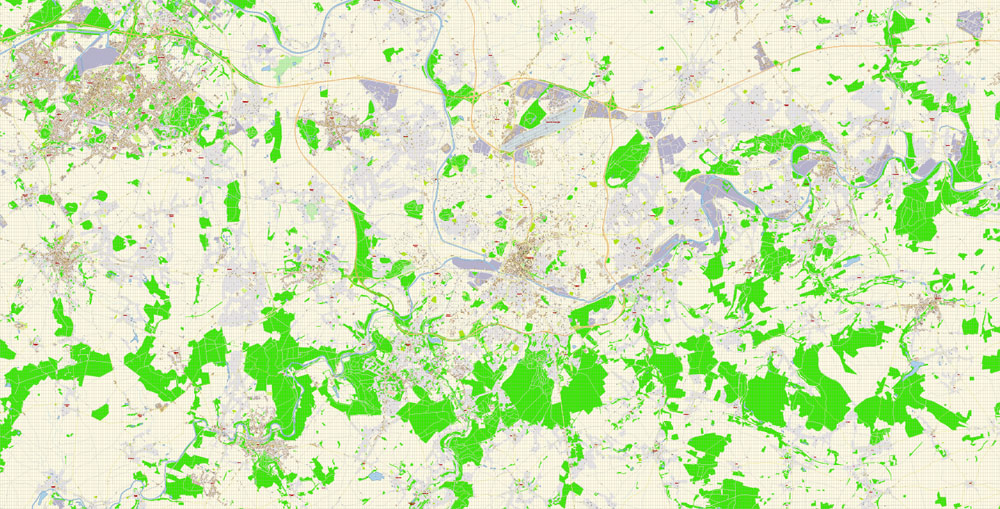
Charleroi Extra High Detailed Maps: Cartography in Adobe Illustrator, PDF, AutoCAD DWG DXF
- Urban plan Wollongong Australia PDF
- Urban plan Chicago Illinois PDF
- Urban plan Kingston Jamaica
- Urban plan Pforzheim Germany pdf
- Urban plan Derby UK
- Urban plan Stavropol pdf
- Urban plan Honolulu Oahu Hawaii pdf
- Urban plan New York Grande
- Urban plan Tucson Arizona ai
- Urban plan Springfield Illinois PDF
- Urban plan Louisville Kentucky
- Urban plan Bend Oregon CDR
- Urban plan Aarhus Denmark pdf
- Urban plan Tuscaloosa Alabama
- Urban plan Saint Louis Missouri
- Urban plan Islamabad Rawalpindi PDF
- Urban plan full Italy Roads
- Urban plan Richmond Virginia PDF
- Urban plan Evansville Indiana
- Urban plan Portland Oregon
- Urban plan Kazan PDF Russia
- Urban plan London Greater UK 13
- Urban plan Flags Countries
- Urban plan Pakistan Full
- Urban plan Launceston Tasmania
- Urban plan London Center PDF
- Urban plan Montreal Canada
- Urban plan Syracuse New York
- Urban plan Lipetsk Russia
- Urban plan Santo Domingo Part PDF
- Urban plan Trenton New Jersey PDF
- Urban plan Helena Montana PDF
- Urban plan Minneapolis StPaul Minnesota pdf
- Urban plan Little Rock Arkansas 3 10
- Urban plan New Orleans Louisiana pdf
- Urban plan Tel Aviv Israel ai
- Urban plan Bruges Brugge Belgium pdf
- Urban plan Long Beach California PDF
- Urban plan Prague 25
- Urban plan Dallas Texas pdf
- Urban plan Madison Wisconsin
- Urban plan Wroclaw Poland
- Urban plan Golden Gate Park San Francisco PDF
- Urban plan Venezia Venice
- Urban plan Abu Dhabi United Arab Emirates
- Urban plan Florence Firenze Italy
- Urban plan Indianapolis Metro
- Urban plan Onancock Virginia
- Urban plan UK Admin
- Urban plan Gdansk Gdynia Sopot Poland
- Urban plan Delhi India ENG PDF
- Urban plan Leeds UK
- Urban plan Karlsruhe Germany PDF