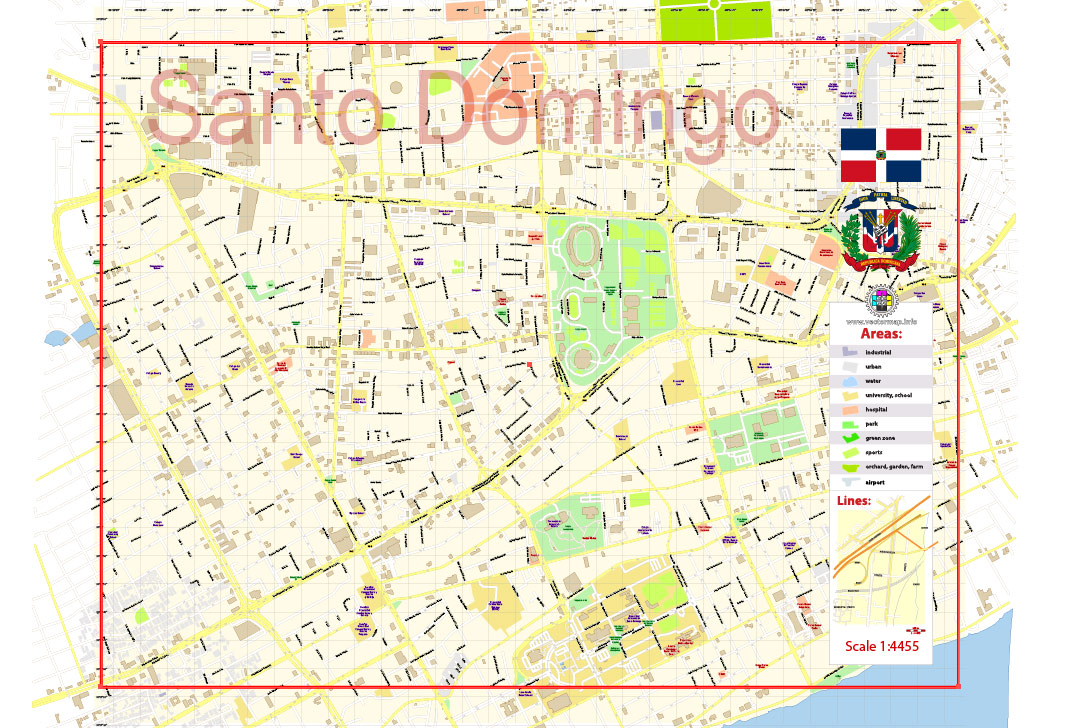
Urban plan Santo Domingo: Digital Cartography
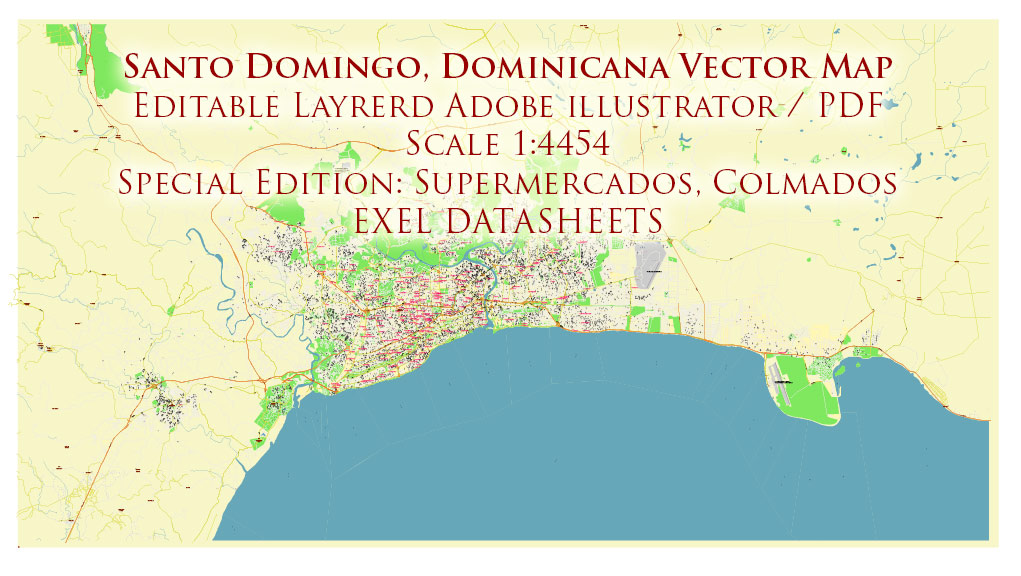
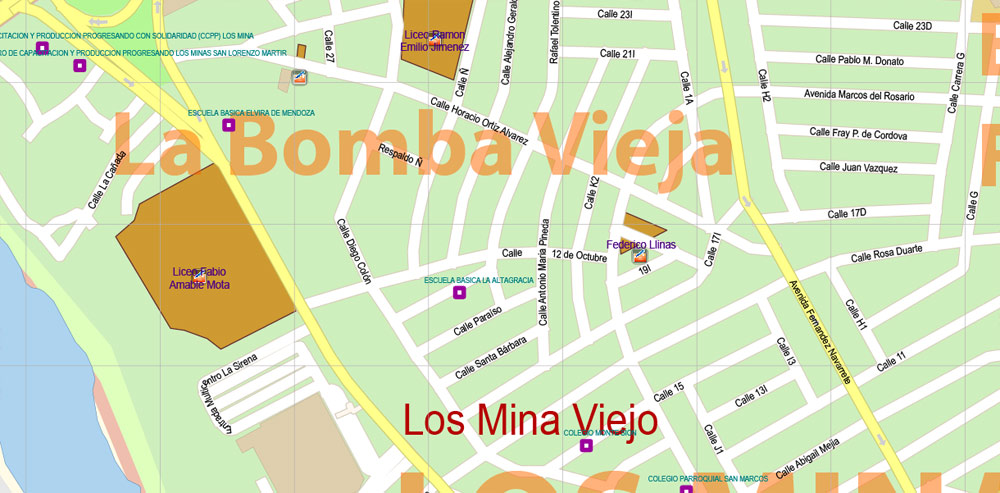
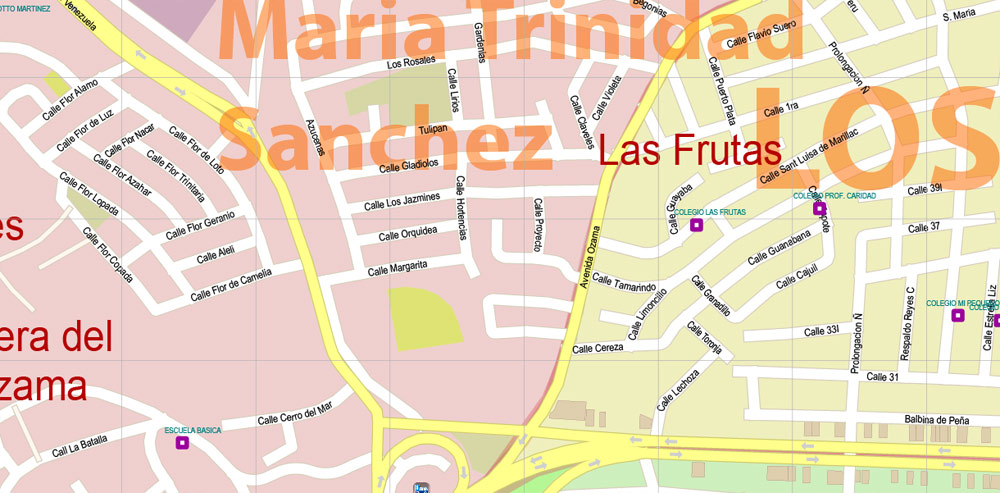
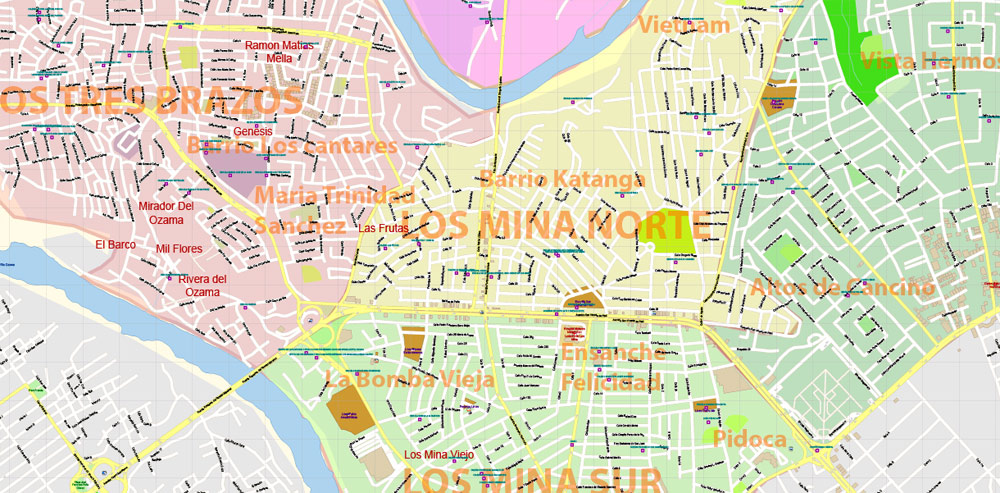
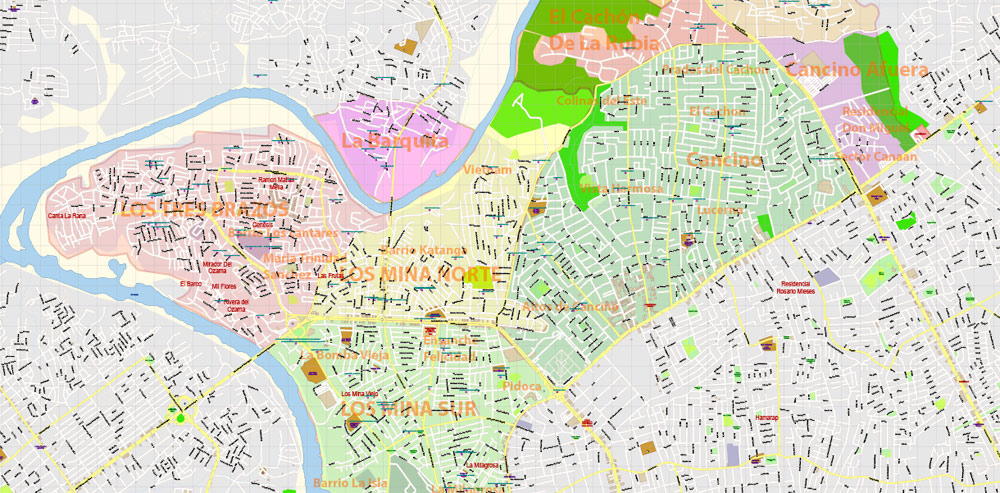
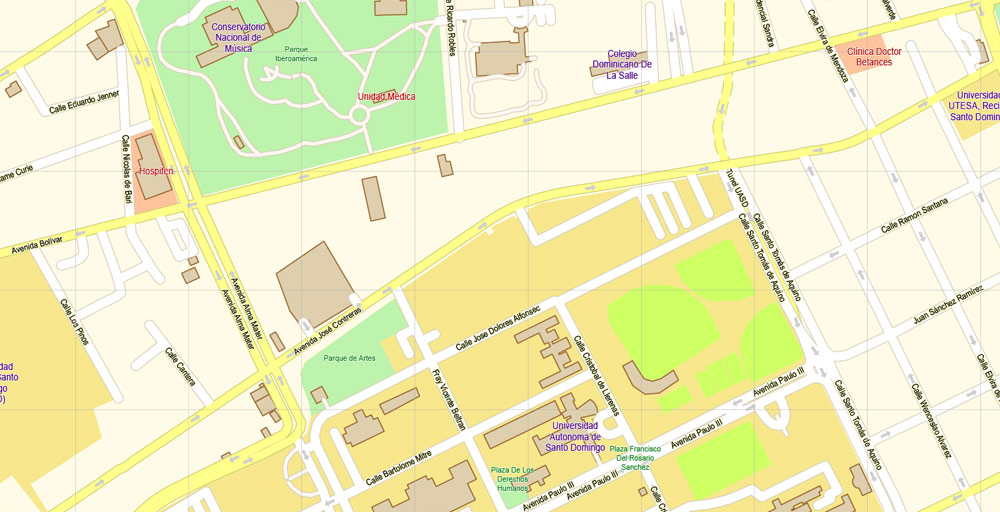
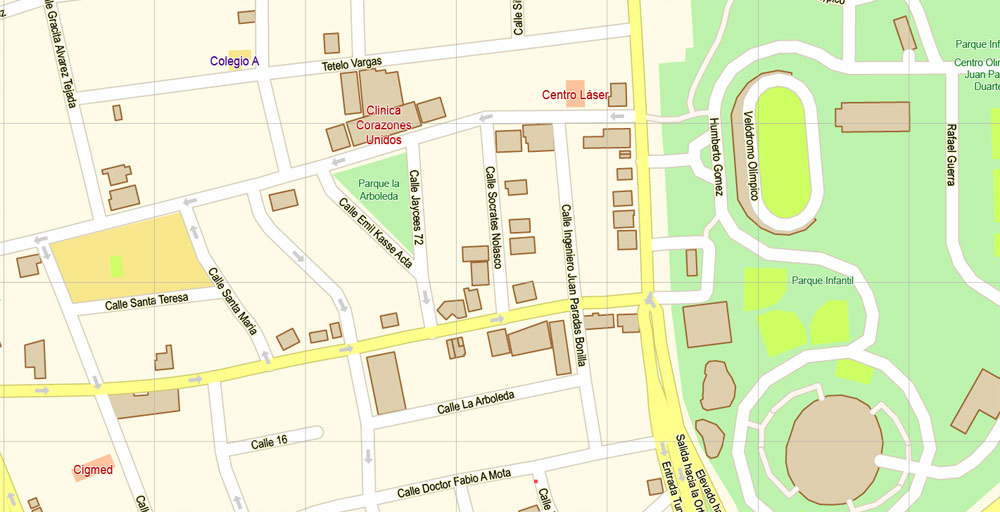
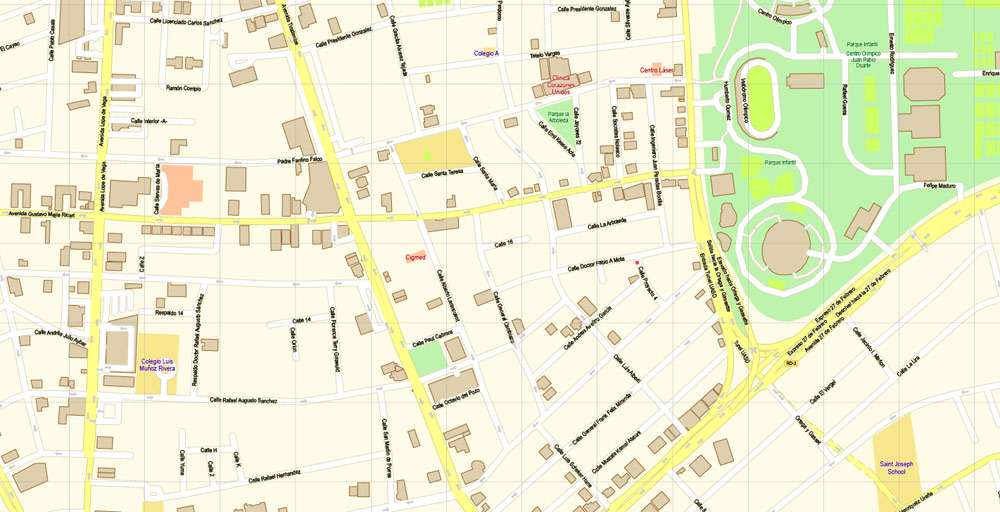
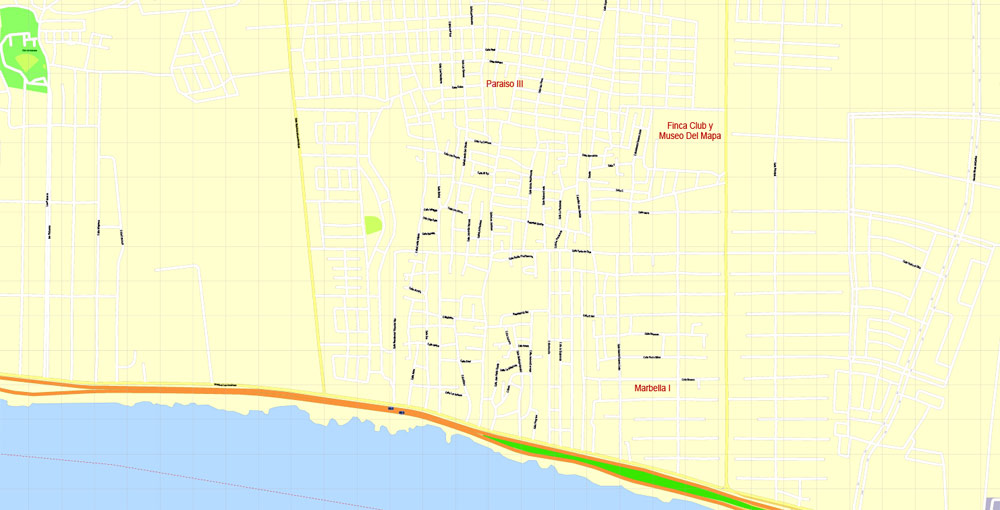
Gallery of Images "Urban plan Santo Domingo 2" :
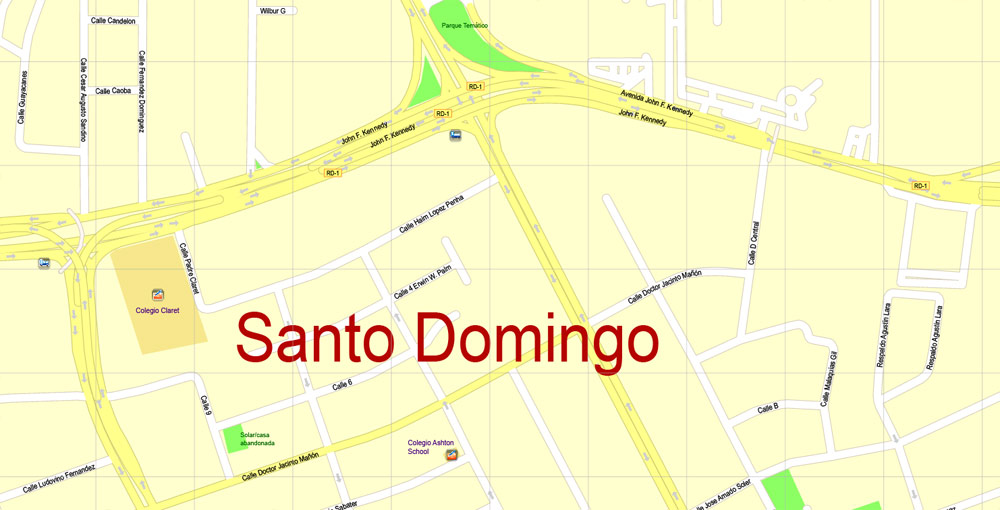
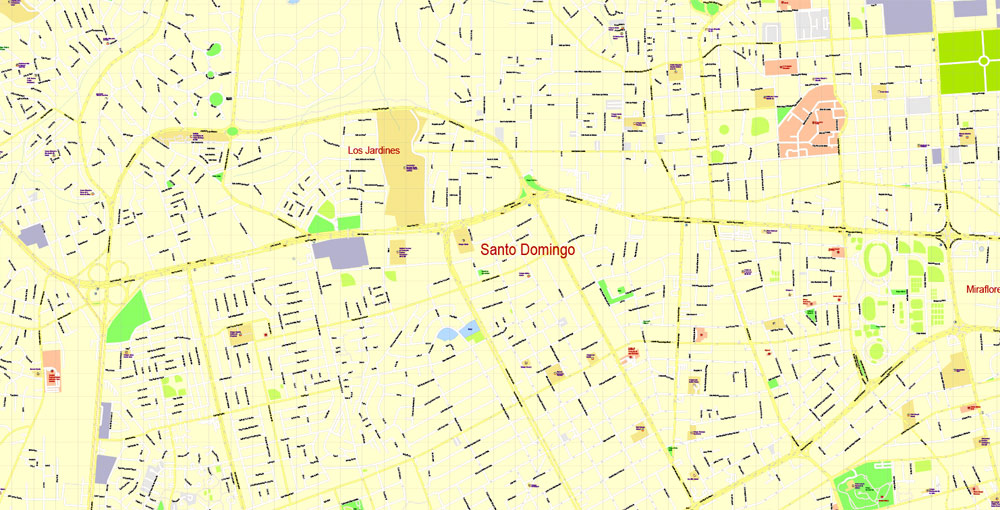
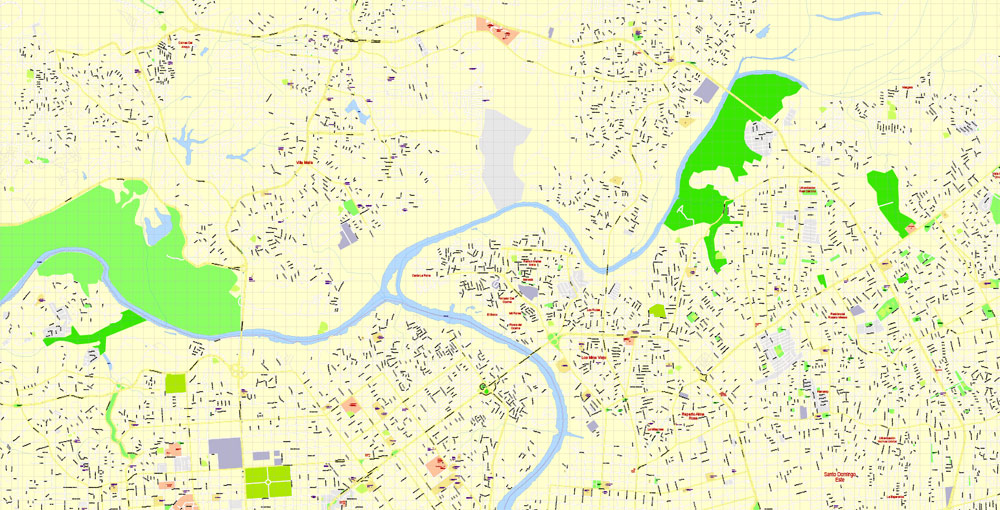
Urban plan Santo Domingo Digital Cartography
Santo Domingo is the largest city in the Dominican Republic - it is home to about a third of the total population of the country - more than 3 million people
The colonial part of the city is included in the UNESCO World Cultural Heritage List
It is the first city built by Europeans on the American Continent
In 2010, the city received the title of "Cultural Capital of America"
In addition to the most interesting historical part, there are many modern shopping centers, business districts and cultural attractions in the city
This is the only Dominican city that has a metro
The city of Santo Domingo is home to the country's largest passenger and cargo port, as well as two international airports
There are stadiums, a race track, a racetrack, theaters, concert venues and modern art galleries
It will be interesting for families with children to visit the zoo and the botanical garden - they are located on the territory of a real tropical forest and are a great place for walking
There are also many city parks and natural attractions: for example, the Three Eyes Cave with a system of underground lakes
1. THE HOUSE OF DIEGO COLUMBUS IN SANTO DOMINGO (ALCÁZAR DE COLÓN)
If you are interested to find out what the everyday life of the Spanish nobility of the 16th and 17th centuries was like, be sure to take a look at this house-palace, which belonged to the son of the legendary traveler Christopher Columbus.
The building was erected by the titanic efforts of one and a half thousand Indians from blocks of coral limestone. Interestingly, not a single nail was used in the construction, even when installing doors and windows.
The construction was completed in 1514, and Diego Columbus, the viceroy of the New World, settled there with his family.
But already at the end of the 16th century, this palace was looted by pirates and was revived only in the second half of the 20th century. Today there is a museum there, demonstrating the furnishings of the house of the era of the stay of the Columbus family there.
2. DAM STREET (CALLE LAS DAMAS)
This beautiful cobbled street is famous as America's first street. At first, however, it was called "fortress", because it was from this street that one could get to the territory of the Osama Fortress.
And the current name - "Ladies Street" was given due to the fact that the court ladies who came with the noble wife of Diego Columbus liked to walk along with it. Especially for them, this street was paved with stone, so that the ladies would not get their outfits dirty in the mud.
Walking along this street, you will find a lot of interesting things:
the only surviving sundial from colonial times
houses of noble and important persons
Osama Fortress
the house where Christopher Columbus spent one night during one of his travels
And also be sure to visit the National Pantheon in Santo Domingo, which was established on the site of a Jesuit monastery by the order of dictator Trujillo.
There are few burials of national heroes in it, but state symbols are presented in abundance. The massive cast-iron chandelier and the "eternal flame" deserve special attention.
If you find yourself near the Pantheon around noon, you will be able to witness the changing of the guard and listen to the Dominican national anthem, which always accompanies this event.
3. PALACE OF KINGS (MUSEO DE LAS CASAS REALES)
Originally, this majestic building of the 16th century was the Governor's Residence, on the territory of which were also located:
Royal Court
Accounting Chamber
Reception of the governor and major military officials
In the 70s of the 20th century in Santo Domingo, a historical museum was organized in this building, in which a collection of things from the colonial era was presented.
These exhibits clearly illustrate the main historical milestones of the colonial period of the country:
objects of Indian culture
Columbus travel map
the first European settlements
pirate artifacts
items used by slaveholders
main agricultural crops
Also on the territory of this complex, a medieval pharmacy has been recreated, and on the second floor, there is a collection of weapons.
4. OSAMA FORTRESS (FORTALEZA OZAMA)
A very good place was chosen for the construction of the first defensive fortress on the island: where the Osama River flows into the Caribbean Sea. The order for the construction was given by the then governor of Hispaniola - Nicolas de Ovanda. This man was a cruel ruler, but a competent administrator. So at the end of the 16th century, the Osama Fortress appeared - the first defensive structure of the New World.
The fortress performed its direct functions for five centuries, and only in the 20th century did it loses them. For some time there was a prison in the main tower.
Be sure to climb to the top of this tower - from there you can enjoy a magnificent view of the colonial city, the Osama River and the port.
The entrance to the fortress is through the gates of Charles III, decorated with beautiful carvings.
In the middle of the fortress square there is a statue of the commander of the fortress Gonzalo Fernandez Oviedo, who wrote his famous book here - "The General History of the West Indies".

5. CATHEDRAL OF SANTO DOMINGO (BASILICA MENOR DE SANTA MARÍA)
This church was consecrated in honor of the Blessed Virgin Mary and is also known as the First Catholic Cathedral of America ("Primada de America").
The construction project changed, and the cathedral acquired its final appearance in 1541. And five years later, Pope Paul III granted him the status of the main Cathedral over all the churches of the New World. Thus, this temple became the real religious center of the new continent.
Enjoying the architectural forms of the cathedral, you will find in it a combination of different styles: from Baroque to Gothic and Renaissance.
On an area of 3000 m2 there are 12 chapels with the graves of archbishops, presidents, and other important persons.
At the end of the 16th century, pirates looted the cathedral and used it as a temporary shelter and warehouse for the loot.
During the restoration work in 1877, remains were found, presumably belonging to Christopher Columbus.
The temple itself is located on Columbus Circle, which is decorated with a monument dedicated to this famous navigator.

6. COLUMBUS LIGHTHOUSE
Columbus Lighthouse, Faro o Colon, Columbus Tomb are the names of the same place. Perhaps this grandiose structure can be called the most monumental and ambiguous monument in the Dominican Republic!
After all, the Columbus Lighthouse has become famous as the most expensive and long-under construction project!
So, the budget for the construction of this structure cost, according to various estimates, 40 to 70 million dollars! Well, the construction itself stretched for many decades.
THE POSTHUMOUS ADVENTURES OF CHRISTOPHER COLUMBUS
But let's start with the background, which is directly related to the name of one of the greatest travelers in history - Christopher Columbus! The famous sailor loved to travel so much that he continued to do it even after his death!
In his endless wanderings, the great navigator always dreamed of returning to his beloved island - Hispaniola (where Dominicana is located today), and bequeathed to bury his ashes on the territory of this new Spanish colony.
However, Columbus's death overtook him in Spain, where he was buried in the Valladolid monastery.
It happened in 1506, and 5 years later the remains of the traveler were reburied in Seville. And only after 2 decades the will of Columbus was fulfilled: his ashes were sent to the New World and buried in the Cathedral of Santo Domingo.
Well, then there was a lot of everything: pirates, battles, the cathedral was repeatedly looted. At the end of the 18th century, Columbus' ashes migrated to Cuba, and from there to Seville.
However, in 1887, during the restoration of the cathedral, a burial was accidentally discovered, on which it was indicated that it was the ashes of Christopher Columbus.
Since then, disputes have not subsided - where is the real ashes of the greatest pilgrim? In the Dominican Republic, Cuba or Spain? It's been so many years that it's already difficult to figure it out. But in the Dominican Republic, no one doubts that the great navigator rests where he wanted - on his beloved island.
The found remains were placed in a beautiful and powerful chest, which was placed in a marble mausoleum installed at the entrance to the cathedral.
LIGHTHOUSE PROJECT
The idea to perpetuate the memory of Christopher Columbus arose at an international conference in Chile in 1923.
We decided to organize the financing jointly, with the participation of the countries of North and South America.
To implement this idea, a competition was announced, in which architects from 48 countries of the world took part, presenting more than 450 projects.
The project of the Scottish architect John Gleave won. He proposed to create a cruciform monument-lighthouse, which with the help of many spotlights will project a light image of the cross in the night sky.

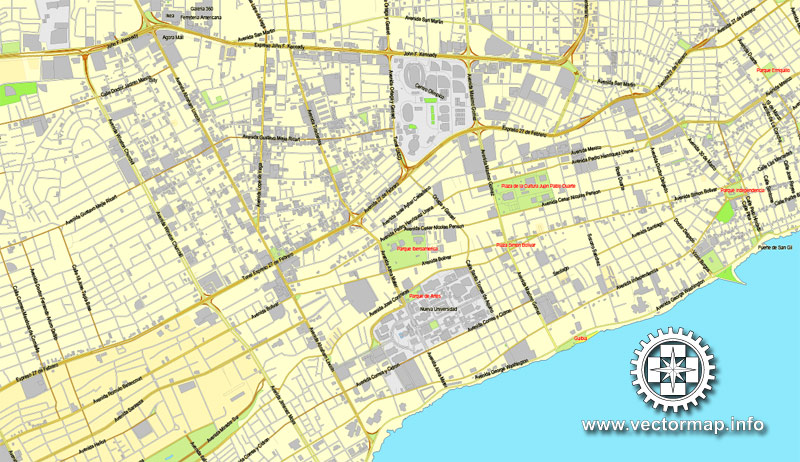
Gallery of Images "Urban plan Santo Domingo 2":
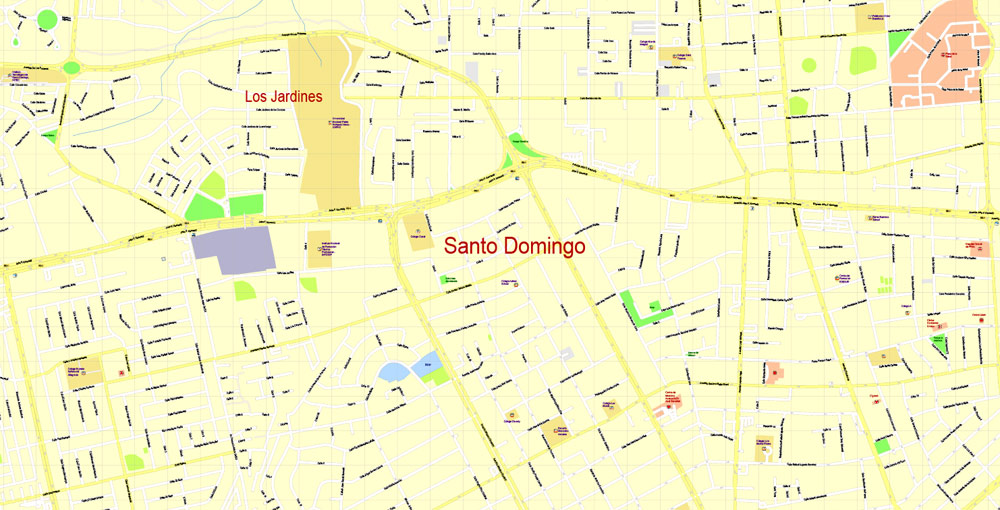
Santo Domingo maps for logistics, business, education
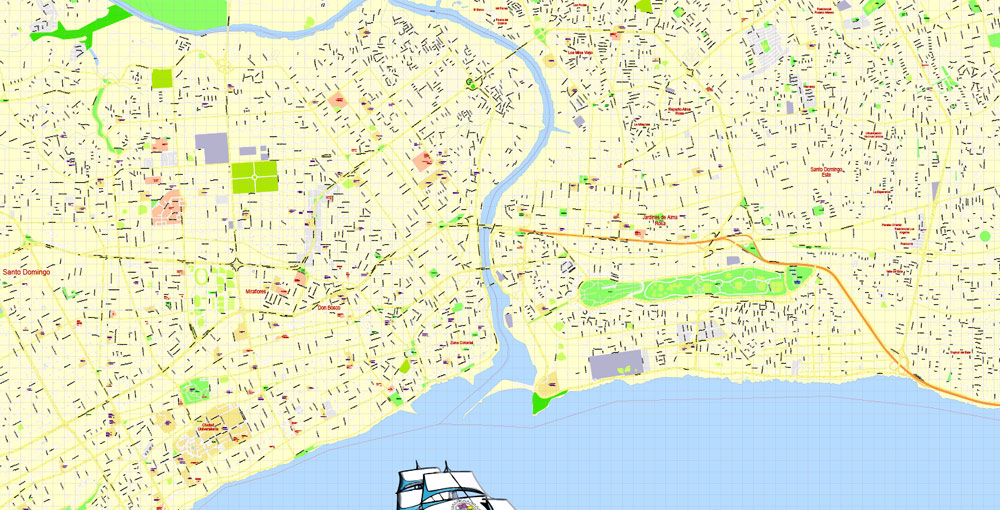
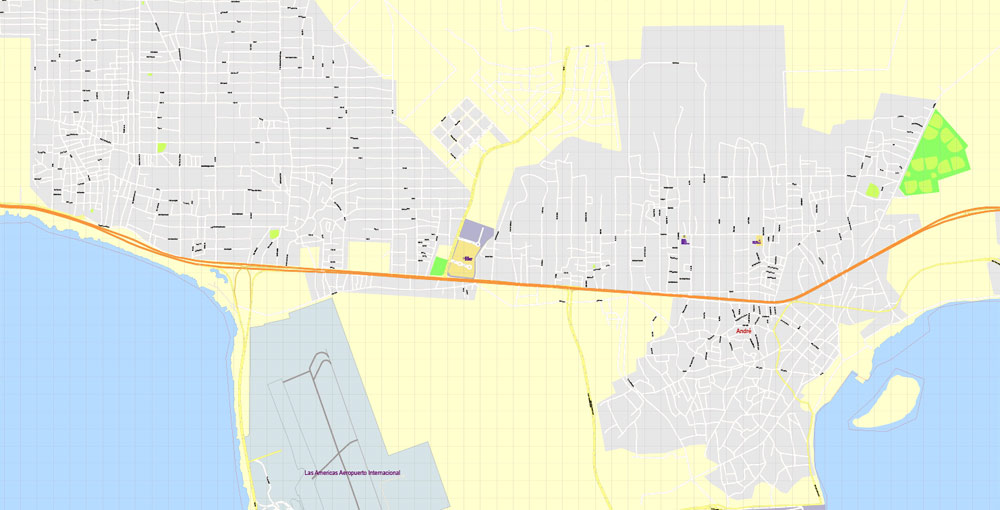
Zona Colonial Santo Domingo: Precinct Vector Map
- Urban plan Vigo County Terre Haute Indiana
- Urban plan Jerusalem Israel Hebrew PDF
- Urban plan Amsterdam Netherlands 49
- Urban plan Cherepovets pdf
- Urban plan Kyoto Japan 16 ai
- Urban plan Laval Mayenne
- Urban plan Toronto Canada PDF
- Urban plan Canada Admin Districts PDF
- Urban plan Rochester New York PDF
- Urban plan Vancouver Canada
- Urban plan Karachi Pakistan
- Urban plan Calgary City SVG
- Urban plan Albuquerque ai
- Urban plan Pittsburgh Pennsylvania PDF
- Urban plan Zurich Switzerland
- Urban plan Biertan Romania PDF
- Urban plan Kelowna PDF
- Urban plan Columbus Ohio
- Urban plan Yuzhno Sakhalinsk pdf
- Urban plan New York City Autocad
- Urban plan Indianapolis Metro
- Urban plan Luxembourg City PDF
- Urban plan Gdansk Poland
- Urban plan full Poland 2
- Urban plan Khabarovsk Russia
- Urban plan St Petersburg Florida pdf
- Urban plan Vasteras Sweden ai
- Urban plan Moscow S1
- Urban plan Lima Peru 2 parts
- Urban plan South Africa Admin AI
- Urban plan Ghent Belgium pdf
- Urban plan Toulouse France
- Urban plan Athens Pireas Greece
- Urban plan Mykonos Island
- Urban plan Albany NY
- Urban plan New York Grande
- Urban plan Port Moresby Papua New Guinea
- Urban plan Salisbury UK PDF
- Urban plan Israel
- Urban plan Canberra Australia 17
- Urban plan Evansville Indiana
- Urban plan Tokyo Japan 13 pdf
- Urban plan Pakistan Full
- Urban plan Austin Texas pdf
- Urban plan Sydney Australia ai
- Urban plan Galway Ireland
- Urban plan Salem Oregon PDF
- Urban plan Sydney Australia ZIP PDF
- Urban plan Aarhus Denmark pdf
- Urban plan Austria Roads
- Urban plan Detroit Michigan