Urban plan Novokuznetsk PDF Russia Vector Map

Urban plan Novokuznetsk PDF Russia
Novokuznetsk is the 31st most populous city in Russia; an important economic, transport and cultural center of Siberia. Population — 544,583 people (2021). ... The city is the center of the Novokuznetsk (Kuzbass) agglomeration, which has a population of more than 1.3 million people, it is the 12th largest in Russia.
In 1617, the boyar's son Ostafei Kharlamov with 45 Cossacks was sent from Tomsk to build a prison. And in 1618, according to the tsar's instructions, the Kuznetsky Ostrog appeared on the right bank of the Tom, opposite the mouth of the Kondoma.
The construction of the prison is closely connected with the government decree on the expansion of tributaries and an increase in the amount of tribute collected in the form of furs. However, the Southern lands were under the control of warlike tribes – the "Kuznetsk Tatars", who were delaying the spread of Russians. After repeated failed attempts to collect tribute from the local population, it was decided to build.
Russian borders did not "take place" immediately – the local population refused to accept Russian citizenship, and for a long time the Russians, fearing physical violence, did not go far from the prison. And only in 1622 Kuznetsk was declared a city. To protect against nomadic steppe dwellers, the military garrison of Kuznetsk contained 550 serving people. Kuznetsk is the first city founded by Russians on the territory of modern Kuzbass.
The study of the industrial capabilities of the Kuznetsk Region began in the 18th century. The discovery of gold mines in the region turned the city into an important economic center. However, already in the 40s of the 19th century, Kuznetsk loses its economic importance and turns into a provincial town.
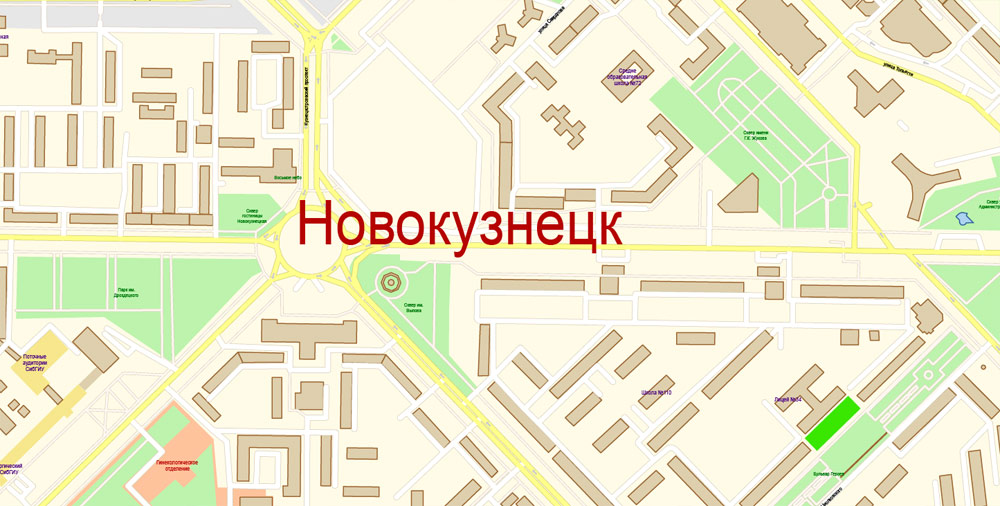
The revival of Kuznetsk began in the late 20s of the 20th century with the construction of the Kuznetsk Metallurgical Combine, an industrial giant of the All-Union scale. In 1932, Kuznetsk merged with the workers' settlement of the Garden City and received a common name - Stalinsk.
The reverse renaming of the city to Novokuznetsk will take place in 1961.
The area of the city is 424 km2. The height above sea level is 200 m . The distance to the Regional center — Kemerovo is 190 km (in a straight line). The specified path is overcome in an average of 3 hours thanks to a good four-lane road that connects the two cities. The distance to Moscow is 3117 km .
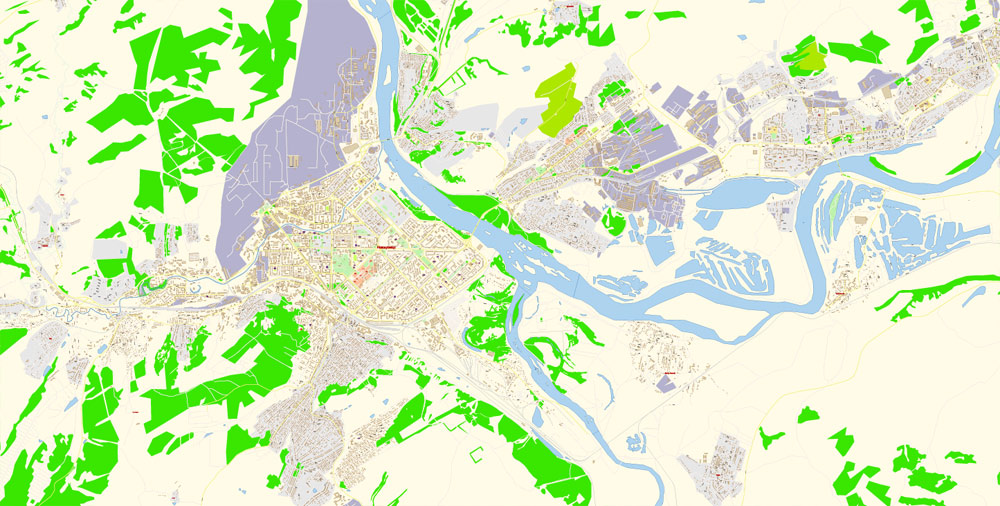
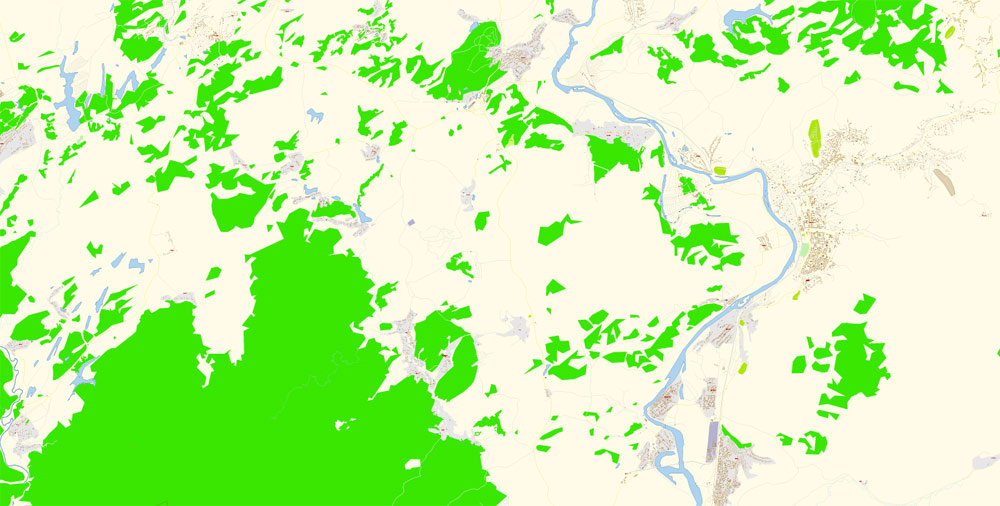
Novokuznetsk is located on the southern edge of the Kuznetsk Basin, surrounded by the prisons of the Kuznetsk Alatau, the Mountain Shoria and the Salair Ridge. The city is surrounded by mountains on all sides. The city stretches along the Tom River for almost 50 km . In total, Novokuznetsk has more than 20 watercourses - rivers, streams and streams. The largest are Tom, Kondoma, Aba, Hunchback. Many of them have lost their pristine condition and are used for wastewater discharge, to be more precise, everything.

Due to the development of Novokuznetsk as a large industrial city, natural vegetation has been preserved only in small areas. These are mainly birch-aspen forests, pine forests, meadows and swamps. It is difficult to talk about gardening without mentioning poplars. Every resident is looking forward to a big seasonal pile of fluff coming down on his shoulders and head.
The geological structure of Novokuznetsk is complex: a deep tectonic fault passes through the city, which is associated with the formation of earthquakes. Numerous coal workings located in the Novokuznetsk district also increase the possibility of disturbance of the Earth's crust. However, recently all earthquakes come from the southern neighbor of Kuzbass - the Altai Mountains.

Climate and ecology of Novokuznetsk
The average annual temperature is +2.1. The extreme recorded temperatures are from -52 C in winter to +38 C in summer. There are 280 sunny days a year. The duration of the frost-free period is 123 days. Novokuznetsk has favorable climatic conditions. However, due to the sharply continental climate, residents are familiar with both Siberian frosts and unbearable heat. Although, frost is relatively easy to tolerate here – the climate is dry. There were, of course, days when the population crossed the area with scarves tied around their faces from small to large, but on the whole it was tolerable.
Novokuznetsk is an industrial giant. There are 42 enterprises in the city that emit more than a hundred names of pollutants into the atmosphere. It should also be noted that the state of technological and cleaning equipment of industrial enterprises of the city leaves much to be desired – only 85% of emissions are captured and neutralized. The rest remains in the atmosphere and wastewater. And this is neither more nor less - 550 kilograms per year per person. Well, at least this weight is distributed over the days of this year. They wouldn 't have taken it out…
Recently, an increased fleet of cars has contributed to atmospheric pollution. Carbon monoxide, sulfur dioxide, nitrogen dioxide, hydrogen fluoride, formaldehyde, soot, phenol and even acetic acid are present in air samples. The ecological situation is further aggravated by the peculiarity of climatic conditions and the geographical location of the city – the mountains surrounding Novokuznetsk contribute to "calm" weather, and this leads to the formation of smog.
The ecological situation in Novokuznetsk is difficult. Novokuznetsk ranks 7th in Russia in terms of waste generation and is among the top five cities in the country in terms of chemical pollution of the atmosphere. After all, a manganese plant was opened, but nevertheless the population was reassured by the conclusion of an independent commission on its safety. The construction of a mercury plant is rumored to be on the agenda. Officially refuted. We'll wait and see.
Related Images "Urban plan Novokuznetsk PDF Russia":
- Urban plan Laval Mayenne
- Urban plan Albuquerque NM
- Urban plan Quebec City Canada ai 17
- Urban plan Auckland New Zealand PDF
- Urban plan Belfast Ireland PDF
- Urban plan Ottawa
- Urban plan Beirut Lebanon ai
- Urban plan Edmonton
- Urban plan Evansville Indiana
- Urban plan Jackson Mississippi PDF
- Urban plan Guangzhou China PDF ENG
- Urban plan Jackson Mississippi
- Urban plan Vienna
- Urban plan Tel Aviv Yafo Israel ENG PDF
- Urban plan Tallinn Estonia pdf
- Urban plan Dallas Texas pdf
- Urban plan Shenzhen China 17 AI ENG
- Urban plan Aarhus Denmark PDF
- Urban plan Poznan Poland
- Urban plan Namur Belgium PDF
- Urban plan Rouen Metro France PDF
- Urban plan Evansville Indiana CDR
- Urban plan Cleveland Ohio Low
- Urban plan Murmansk Russia
- Urban plan Terre Haute Indiana ai
- Urban plan Albany NY
- Urban plan Denver Colorado CDR
- Urban plan Cherepovets pdf
- Urban plan Milwaukee Wisconsin
- Urban plan Vienna Wien Buildings Austria
- Urban plan Brunswick Georgia PDF
- Urban plan Oakland Berkeley Richmond Alameda San Leandro Albany CDR
- Urban plan Asuncion Paraguay
- Urban plan Madrid Spain AI
- Urban plan Rome Italy
- Urban plan Albuquerque New Mexico
- Urban plan Zurich Switzerland
- Urban plan Hague den Haag Netherlands 4P ai
- Urban plan Sioux Falls South Dakota PDF
- Urban plan Richmond Virginia CDR
- Urban plan South America Topo
- Urban plan Launceston Tasmania
- Urban plan Wollongong Australia
- Urban plan Onancock Virginia
- Urban plan Monaco France
- Urban plan Tasmania Full Roads
- Urban plan Antwerpen Belgium PDF
- Urban plan Saint Petersburg Tampa PDF
- Urban plan Guangzhou China ENG AI
- Urban plan Cleveland Ohio 25
- Urban plan Eugene Springfield Oregon PDF
- Urban plan Massachusetts State PDF